The Quinault Indian Nation won a decision against the Contanda Company, which had planned to use the terminal to ship oil from Washington's Pacific cost.


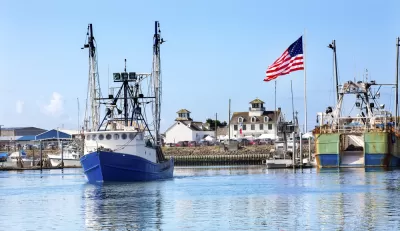
Citing the Oceans Management Act, the Washington Supreme Court "effectively canceled" the Grays Harbor Oil Terminal according to reporting from Lynda V. Mapes in the Seattle Times. The decision will set a precedent as it is the first time the act, written after the Exxon Valdez spill, has been used for a shore side development.
"The Quinault Indian Nation (QIN) opposed the oil terminal on the grounds that it threatens the tribe’s treaty-protected fishery in Grays Harbor," Mapes writes. Grays Harbor which sits on the Pacific Ocean west of Olympia Washington was to transport 17.8 million barrels of oil a year. "The justices reversed decisions by a state board and the state Court of Appeals, which held the Ocean Resources Management Act did not cover plans by Houston-based Contanda to ship crude out of the Port of Grays Harbor at Hoquiam, Grays Harbor County," Mapes reports.
Read the full story: State court rules against plans for big Grays Harbor oil terminal

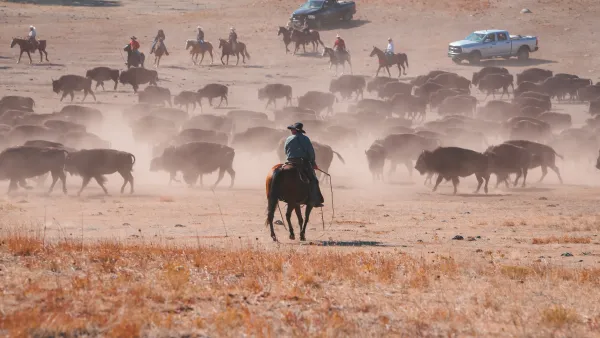
Feds want to stop notifying landowners about drilling under their land
The proposal also asks to reduce the public comment period for the BLM’s leasing decisions from 90 days to 10.
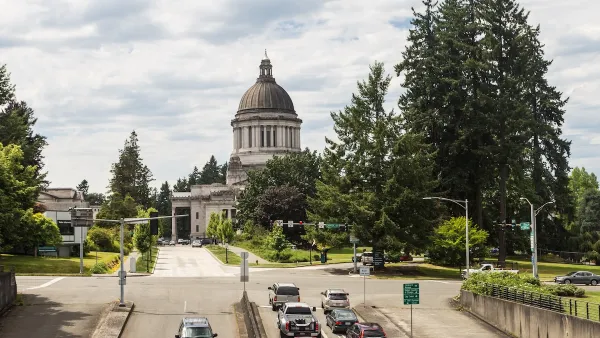
Olympia Draft Transportation Plan Zeroes in on Complete Streets, Bike Infrastructure
The city’s comprehensive plan update could signal a shift in transportation planning priorities to a more comprehensive approach that ensures safer roads for all users.

Oil Industry Withdraws Ballot Measure, Shifts to Legal Fight Over California Well Restrictions
California's oil industry has withdrawn its ballot measure challenging a law that restricts oil and gas wells near homes and schools, opting to contest the law in court.

Planetizen Federal Action Tracker
A weekly monitor of how Trump’s orders and actions are impacting planners and planning in America.

The state-sanctioned urbicide of Austin
People don’t kill cities. Freeways do.

US to reduce Colorado River water deliveries to Mexico
A new Colorado Treaty amendment reduces Mexico’s Colorado River water allocation by 250,000 acre feet.

Nation's most wind-powered state turns to coal as data centers increase energy demand
For the first time in decades, Iowa has increased its generation of coal power.

NYC cools commuters with city's first rain garden above a bus stop
New York City officials say the plants in the rain garden can absorb 16 gallons of rainwater during heavy storms.

Brightline West’s future may rely on $6 billion federal loan
The company has until Nov. 2 to make a $400 million equity investment into its proposed high-speed rail line.

FREE Course: Walkable City 1: Why Walkability?
After describing his path towards focusing on walkability as the essence of good planning, Jeff Speck marches through his five principal reasons for making more walkable places.
Reinventing Malls: Planning Alchemy—Turning Gray Fields Into Gold
The course focuses on the opportunities and imperatives that shape reinvention of mall sites.

Eagle County Government
Harvard University Graduate School of Design
Nashville Planning Department
The Architects Foundation
University of Cincinnati Online
The Pocatello Development Authority
The Urban Renewal Agency of the City of Pocatello
Journal of the American Planning Association