East Harlem Rezoning Could Add New Retail to Public Housing Projects


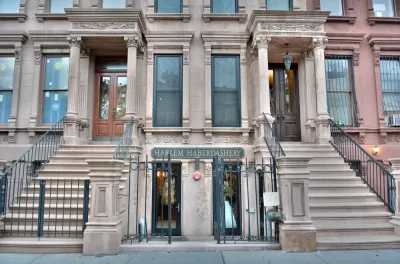
"The de Blasio administration's plan to rezone East Harlem would allow nearly half-a-million square feet of retail to be developed in three public-housing complexes," reports Joe Anuta, citing data found in city documents.
"The Department of City Planning has proposed a rezoning for roughly 95 blocks in East Harlem, which would allow commercial retail development in parts of the Taft, Jefferson and Johnson houses that border four major thoroughfares," explains Anuta of the proposed rezoning. The proposal has already inspired plenty of commentary. In November 2016, Rebecca Baird-Remba reported that the rezoning could generate an estimated 7,500 new apartments. The rezoning could also mean the end of parking minimums and the demise of a quarter of the area's affordable housing stock.
As for the current focus on the retail businesses that could be enabled on properties currently owned by the New York City Housing Authority (NYCHA), there are no current plans to develop the sites. But, writes Anuta, "the authority would have the leeway to come up with a more targeted plan down the road, though it would likely only use a fraction of the 489,000 square feet that the rezoning could make available."
FULL STORY: City's East Harlem plan would allow retail development on NYCHA properties


Transfer of Air Rights Sought to Finance Public Housing Improvements in Brooklyn
The rezoning of the neighborhood of Gowanus in Brooklyn is providing opportunities for local politicians to address local needs.

Rezoning Coming to East Harlem
New York City has commenced a Uniform Land Use Review Procedure (ULURP) in the neighborhood of East Harlem. This would be the second rezoning toward Mayor de Blasio's goal for 15 rezonings.

East Harlem Rezoning Could Bring 7,500 New Apartments
Planners released new details of a proposed rezoning on the East Harlem neighborhood in New York City.

The state-sanctioned urbicide of Austin
People don’t kill cities. Freeways do.

US to reduce Colorado River water deliveries to Mexico
A new Colorado Treaty amendment reduces Mexico’s Colorado River water allocation by 250,000 acre feet.

New Jersey’s second-largest city bans standalone data centers
Jersey City will continue to allow co-location facilities, such as those meant for research institutions that store their own data.

Amtrak not solely to blame for New Jersey commuter rail's unreliability, report finds
A new study from the Garden State Initiative found that NJ Transit’s budget grew 20% across a 4 year period, but reliability declined significantly over the same period.

EPA erases limits on planet-warming pollution from power plants
Under Monday’s plan, power plants would still have some limits on how much mercury, arsenic and other contaminants they can emit.

Phoenix announces new on-demand transit service, more frequent RAPID buses
Both new services will launch in October, and are part of Phoenix's Project Effective Access Solutions for Easing Congestion.

FREE Course: Walkable City 1: Why Walkability?
After describing his path towards focusing on walkability as the essence of good planning, Jeff Speck marches through his five principal reasons for making more walkable places.
Reinventing Malls: Planning Alchemy—Turning Gray Fields Into Gold
The course focuses on the opportunities and imperatives that shape reinvention of mall sites.

Eagle County Government
Harvard University Graduate School of Design
Nashville Planning Department
The Architects Foundation
University of Cincinnati Online
The Pocatello Development Authority
The Urban Renewal Agency of the City of Pocatello
Journal of the American Planning Association