Roofstock is an online marketplace where investors can buy, sell, and trade homes that tenants are living in.



"Roofstock’s platform allows users to invest in the $2 trillion single-family rental home sector in a manner similar to traditional asset classes like stocks," reports Bizjournals.
Prospective buyers don't necessarily visit the home or meet the tenants; instead, they can view 3D walkthroughs of properties on Roofstock's website. Third-party inspectors certify the condition of the property and the performance of the property managers.
They also conduct background checks on current tenants, looking for unpaid rents and verifying that they earned at least three times the rent at the time they signed the lease, according to the San Francisco Chronicle.
Rents in Oakland are estimated to be the fourth highest in the nation; the lack of affordable housing in the area recently led county officials to declare a public health crisis.
Roofstock's co-founder and CEO called the company's model "a win-win-win situation" for buyers, sellers, and tenants.
Investors seem to agree: The company recently raised $20 million in Series B financing, and has raised $33.25 million in equity funding since its founding last year.
Read the full story: Oakland startup raises $20 million to trade houses like stock

After Brexit, London's Fintech Future Foggy at Best
Over half of Europe’s financial technology "unicorns" are in the London area. The decision to quit the EU is already threatening the ecosystem that allows London to trade within the EU, as well as its status as hub for fintech jobs and technology
Speculators Scoop Up 42% of Oakland, CA Foreclosures
A new report by Oakland, CA nonprofit Urban Strategies Council reveals that a massive surge has occurred in investor-speculator ownership in the city's low-income neighborhoods in the wake of the foreclosure crisis.
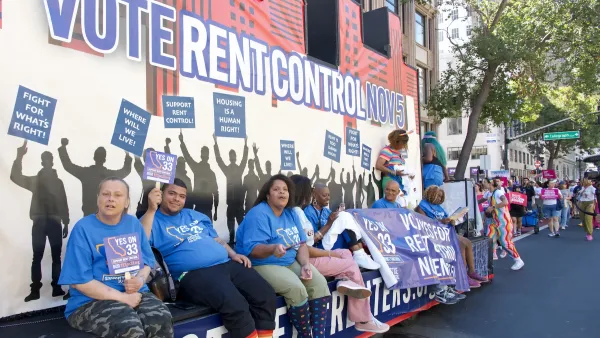
Oakland residents fear AI-fueled gentrification
The new tech boom that's driving up rents in San Francisco could have rippling impacts on East Bay communities.

Planetizen Federal Action Tracker
A weekly monitor of how Trump’s orders and actions are impacting planners and planning in America.

Amtrak, CN end decades-long dispute with eight-year agreement
The new operating agreement establishes an updated framework for the companies to work together, including processes to resolve disputes.

Judges permit Denver to divert 77,000 acre feet from the Colorado River for reservoir expansion
Overuse and climate change have caused the Colorado River’s water levels to plummet.

Idaho may see an 18% drop in federal surface transit funding — the largest estimated cut in the US
Transit systems in rural communities are much more reliant on federal funding to provide their services.

How ‘post-disaster gentrification’ alters neighborhoods after natural calamities
After hurricanes, fires or other calamities, the original residents of a community are often replaced by younger, wealthier residents.

Maryland local governments examine if they should have more power to raise property taxes
Maryland’s housing market is out of reach for the majority of moderate-income residents.

FREE Course: Walkable City 1: Why Walkability?
After describing his path towards focusing on walkability as the essence of good planning, Jeff Speck marches through his five principal reasons for making more walkable places.
Reinventing Malls: Planning Alchemy—Turning Gray Fields Into Gold
The course focuses on the opportunities and imperatives that shape reinvention of mall sites.

Harvard University Graduate School of Design
KFH Group Inc.
Greater Baltimore Committee
The Architects Foundation
University of Cincinnati Online
The Pocatello Development Authority
The Urban Renewal Agency of the City of Pocatello