Rutland, Vermont is scheduled to become home to 100 Syrian refugees, a prospect that has awoken passionate responses from the town's residents.


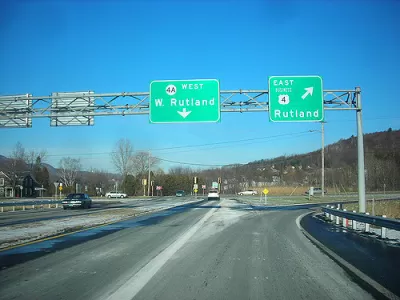
Rutland, Vermont is small and shrinking, "Thirty years ago, the city’s population was roughly 19,000. By 2015, it had dropped to just under 16,000," writes Daniel Judt for The Nation. But it's about to get a 100 new residents from Syria. When Vermont's governor Peter Shumlin announced the state would take in Syrian refugees Rutland's mayor, Christopher Louras, asked to be part of that effort. "The city seemed a good fit… community business leaders, who said there were entry-level jobs available—at the hospital, for example—and no one to take them," Judt says.
But not everyone was in favor of the move. A group called "Rutland First" formed in response to the mayor's decision, another group called "Rutland Welcomes" formed as a response to the response. What Rutland is and what its attitudes are, depend very much on who is describing them. "Over a single weekend in November, I heard residents call Rutland 'Rutvegas,' a 'backwater town,' 'the Rust Belt of Vermont,' the 'solar capital of New England,' 'boring,' 'poor,' 'magical,' a 'conservative bastion in a very blue state,' 'welcoming,' 'biased and racist,' 'inclusive.' A 'genuine town' that is 'constant' and 'slow-changing,'" Judt reports. Regardless of the views of the either of the two factions the refugees will arrive in Rutland in the second week of January.

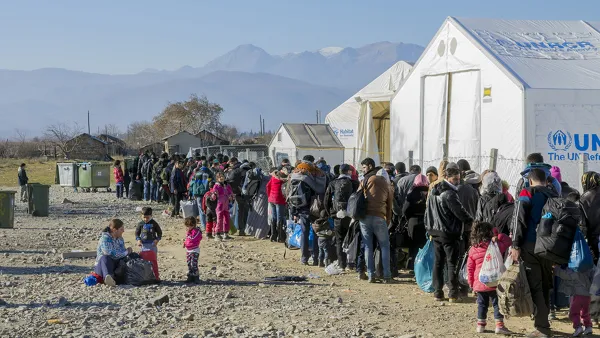
Record Number of People Displaced Around the World in 2015
The United Nations is calling for action in the face of a record number of people were displaced—more than half of all refugees around the world came from Syria, Afghanistan, or Somalia.
New York Town Makes English the Law
Jackson, New York and several other small upstate towns have entered the immigration wars by passing a law requiring all official town business to be conducted in English.
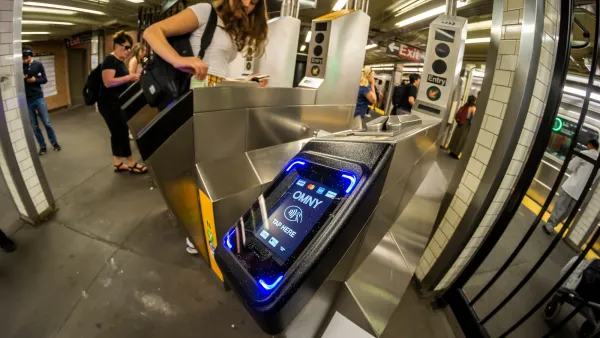
Popular transit payment system linked to Palantir could give ICE access to rider data
The tap-to-pay system is being used widely in transit systems including New York City, Boston and Chicago.

Planetizen Federal Action Tracker
A weekly monitor of how Trump’s orders and actions are impacting planners and planning in America.

The state-sanctioned urbicide of Austin
People don’t kill cities. Freeways do.

US to reduce Colorado River water deliveries to Mexico
A new Colorado Treaty amendment reduces Mexico’s Colorado River water allocation by 250,000 acre feet.

5 New England states march closer to 800 megawatt wind energy project
Securing federal approval for the project may be complicated under the Trump administration, which has historically been hostile towards domestic wind power.

Baltimore to break ground on $50 million Transit Priority Project
The project will bring faster bus trips, safer streets and better bike connections to Baltimore.

Airbnb launches $250 million 'last-dollar financing' housing accelerator, makes first investment in Austin
The company will put $6.4 million towards affordable housing development in Texas’ capital.

FREE Course: Walkable City 1: Why Walkability?
After describing his path towards focusing on walkability as the essence of good planning, Jeff Speck marches through his five principal reasons for making more walkable places.
Reinventing Malls: Planning Alchemy—Turning Gray Fields Into Gold
The course focuses on the opportunities and imperatives that shape reinvention of mall sites.

Eagle County Government
Harvard University Graduate School of Design
Nashville Planning Department
The Architects Foundation
University of Cincinnati Online
The Pocatello Development Authority
The Urban Renewal Agency of the City of Pocatello
Journal of the American Planning Association