Construction on the Downtown Los Angeles Streetcar could begin as soon as 2018.


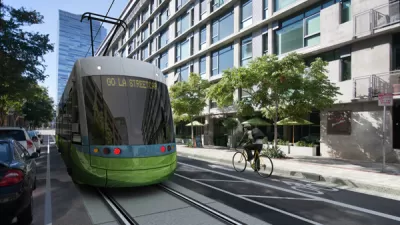
The environmental impact study for the Downtown Los Angeles Streetcar, as well as a preferred route, received unanimous approval from the Los Angeles City Council.
The 3.8-mile route includes stops to popular sites like historic Broadway, Grand Central Market, and Grand Park—connecting the Civic Center with the Fashion District in South Park.
Streetcars were once a dominant mode of transportation in Los Angeles; this revival of the historic transit system has been making its way to fruition since 2011. Construction is slated to begin in 2018 and be completed in 2020.
Estimated to cost $282 million, the project will receive $200 million in funding from Measure M—the sales tax approved by county voters this month—as well as funding from the previous sales tax, Measure R. The city also plans to apply for federal grants and seek public-private partnerships to manage the streetcar during construction and once it is built.
Read the full story: Proposed Streetcar Project for Downtown L.A. Clears Major Hurdle

Streetcar Moving Along in Downtown Los Angeles
The Los Angeles City Council voted to allow the Los Angeles Streetcar project to begin preliminary engineering.
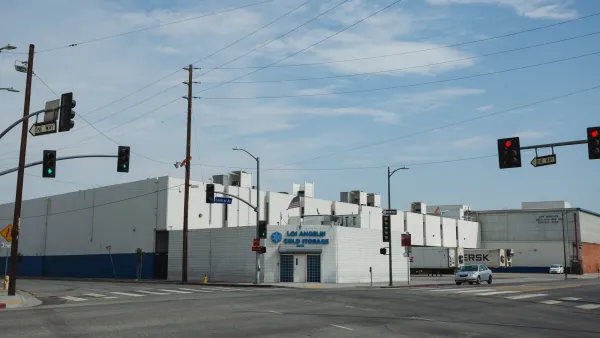
LA approves $2B 'urban village' plan for former cold storage facilities
The project promises an interconnected neighborhood with a focus on public space.

Downtown Los Angeles Gears Up for Growth
A new report highlights Downtown L.A.’s ongoing revival through major housing projects, adaptive reuse, hospitality growth, and preparations for global events in the years ahead.

Planetizen Federal Action Tracker
A weekly monitor of how Trump’s orders and actions are impacting planners and planning in America.

‘Going backwards:’ Baltimore mayor, students rally against state's transit funding plan
Maryland's proposed six-year plan provides no funding for Baltimore’s BMORE bus program and reduces its road maintenance funding.

Detroit to transform waterfront with $2.2 billion investment
Developers will convert about 18 acres of unused parking lot space into civic spaces.

Trump-backed startup wants 9,000 acres of public land for data center
If approved, developers will build 456 small nuclear reactors on federally-owned land in Utah.

'Fertilization president' to reward areas with high birthrates more transit funding
The Federal Transit Association plans to cover up to 10% more of a transit project's costs if the community’s birth rates meet or exceed national thresholds.

25 states, cities sue the EPA over erased power plant emissions limits
The coalition also intends to sue the EPA for not regulating emissions from gas-fired power plants.

FREE Course: Walkable City 1: Why Walkability?
After describing his path towards focusing on walkability as the essence of good planning, Jeff Speck marches through his five principal reasons for making more walkable places.
Reinventing Malls: Planning Alchemy—Turning Gray Fields Into Gold
The course focuses on the opportunities and imperatives that shape reinvention of mall sites.

City of Thousand Oaks
City of Wisconsin Rapids
Harvard University Graduate School of Design
The Architects Foundation
University of Cincinnati Online
Northern Illinois Transit Authority (NITA)
The Pocatello Development Authority
The Urban Renewal Agency of the City of Pocatello