Car2Go has pulled out of several cities recently, making even carsharing's most ardent believers wonder if the business model is built to last.


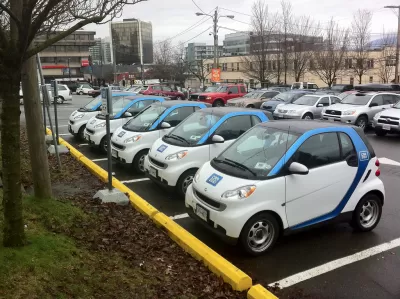
David Levinson follows up on the news that Car2Go is departing the Twin Cities by revisiting a post from 2013 in which he wrote that carsharing is the mode of the future. In that post, Levinson "basically made the claim that this is a network-effects driven business, for this to work, the access costs must be low, generating demand, which will increase vehicle availability (as suppliers respond to demand), which will lower access costs, which will increase demand."
In Minneapolis, however, the Car2Go fleet spent as much time idle as private cars, according to reports. In the case of Minneapolis, Levinson believes "[that] access costs were insufficiently low to get this positive feedback network effect going here. Perhaps a greater investment would have juiced the market, I am not sure. Gas prices are exceptionally low, the economy is at the peak of expansion, so people readily buy and drive private cars."
The fact that Car2Go has pulled out of other cities (though it's growing in some) might mean that the carsharing model is having trouble fitting in with the current market of mobility options, and it's unclear whether Levinson's prediction about the durability of carsharing will prove prescient.
Hat tip to Angie Schmitt for sharing the Levinson article.
Read the full story: CAR2GONE: ON THE DECLINE OF CARSHARING IN THE LATE 2010S.

Car2Go Pulls Out of Five North American Cities
As the company plans to cease operations in a number of markets, carsharing’s future in the rapidly shifting world of mobility is unclear.
How Vehicle Ownership Impacts Roadway Design
New research assesses the potential implications of reduced car ownership on the design of roads and communities.
California Launches E-Bike Incentive Program
The state is directing $13 million to a program to help low-income Californians purchase electric and cargo bikes, but limited bike infrastructure keeps many California streets unsafe for cyclists.

Planetizen Federal Action Tracker
A weekly monitor of how Trump’s orders and actions are impacting planners and planning in America.

Northwest rail fans eager for Sept. 30 debut of Amtrak’s Airo fleet
Get ready for that new train smell and more seats. But they won’t go faster or run more frequently on the Cascades route in Washington and Oregon.
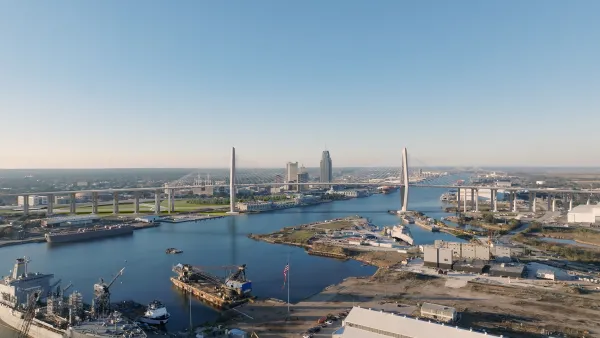
Alabama scores up to $2.5 billion federal loan for largest infrastructure project in state’s history
The Mobile River Bridge and Bayway Project aims to ease congestion at Alabama’s worst bottleneck.

Novel study finds extreme state-by-state disparity in housing construction timelines
The first comprehensive working paper on U.S. construction timelines also found that the permitting process for multi-family projects has slowed nationwide.

California may destroy its beaches trying to save homes from El Niño
Boulders and seawalls can protect homes from waves, but ultimately destroy sandy beaches.

California high-speed rail accomplishes only one legislative goal in 2026
The majority of the agency's failed pitches were never developed into written proposals.

FREE Course: Walkable City 1: Why Walkability?
After describing his path towards focusing on walkability as the essence of good planning, Jeff Speck marches through his five principal reasons for making more walkable places.
Reinventing Malls: Planning Alchemy—Turning Gray Fields Into Gold
The course focuses on the opportunities and imperatives that shape reinvention of mall sites.

City of Thousand Oaks
City of Wisconsin Rapids
Harvard University Graduate School of Design
The Architects Foundation
University of Cincinnati Online
Northern Illinois Transit Authority (NITA)
The Pocatello Development Authority
The Urban Renewal Agency of the City of Pocatello