Traffic police in Mumbai have launched a campaign to cut down on unnecessary honking by motorists in the city of Mumbai


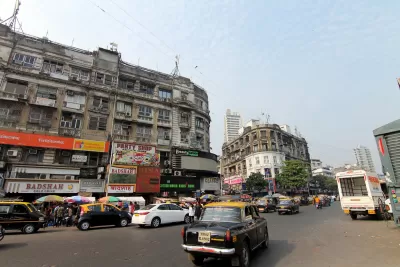
Tying high noise levels to an increase in heart and mental health issues, traffic police in Mumbai are hoping to reduce car honking to improve the health of residents of the city. A report in The Indian Expressstates that a new campaign is being launched to reduce noise pollution in the city from vehicle honking, following the success of noise reduction efforts from fire crackers during Diwali.
Dr John Panicker, national coordinator of the Indian Medical Association’s Safe Sound Initiative said that noise from excessive honking can lead to heart and mental health problems.
Sumaira Abdulali of Awaaz Foundation said, “The slump in noise levels during Diwali was a relief. Mumbai was low on noise and air pollution compared to several other cities.” She said the Awaaz Foundation is hoping noise pollution levels will go down further once motorists cut down on honking.
The report notes that there have already been 12,000 cases of drivers being cited for causing "incessant and unexplained honking," with 1,000 cited for causing noise pollution.
Read the full story: Mumbai traffic police launch anti-honking campaign
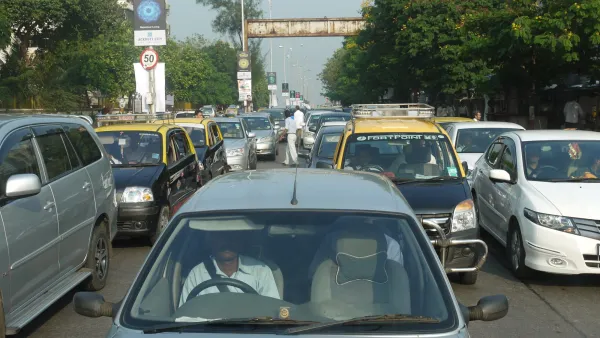
To Curb the Honking, Mumbai’s 'Punishing Signal'
Incessant honking just adds to the chaos on city streets, so Mumbai police put up a clever device to remind drivers that making noise will not ease traffic woes.

A noise limit on data centers is only as good as its measurement
Counties and states must make conscious decisions about when, where and how they measure data center noise if they want to meaningfully improve residents’ lives.

'I can't live in this:' Mississippi town besieged by power plant noise
A plant powering Elon Musk’s xAI data centers is subjecting Southaven, Mississippi residents to ceaseless noise.

Planetizen Federal Action Tracker
A weekly monitor of how Trump’s orders and actions are impacting planners and planning in America.

Eastern Nebraska is running out of electricity
Data centers and electrification are straining eastern Nebraska’s grid, throttling economic development.

Study reveals best places in the U.S. for cycling, walking
New research from Streetlight Data examines bicycle and pedestrian miles per capita in the 100 largest U.S. cities by population.

Federal government nominates new FTA administrator
Mark Aesch is currently the founder and CEO of a transportation management consulting firm.

Developers reveal $10 billion stadium plan as ‘Hail Mary’ to keep Bears in Chicago
The plan would also boast a public park, high- and mid-rise buildings and a youth sports complex.

As Texas embraces carbon storage, a Black community questions the risks
Texas now issues permits for companies to store carbon dioxide underground. East Texas residents fear safety risks, and skeptics doubt the climate benefits.

FREE Course: Walkable City 1: Why Walkability?
After describing his path towards focusing on walkability as the essence of good planning, Jeff Speck marches through his five principal reasons for making more walkable places.
Reinventing Malls: Planning Alchemy—Turning Gray Fields Into Gold
The course focuses on the opportunities and imperatives that shape reinvention of mall sites.

City of Rosemead
Rutgers University, Edward J. Bloustein School of Planning and Public Policy
One Hundred Miles
University of Michigan School for Environment and Sustainability (SEAS)
Hunter College, City University of New York (CUNY)
The Architects Foundation
City of Cambridge
The Pocatello Development Authority
The Urban Renewal Agency of the City of Pocatello