Thirty years following the start of a project designed to build back land that was slowly being lost to the Gulf of Mexico, Louisiana is celebrating a rare success.


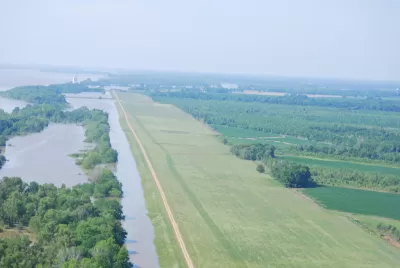
Todd Masson of the New Orleans Times-Picayunereports that a project launched in 1986 by the Louisiana Department of Wildlife and Fisheries continues to exceed expectations in new land creation in southern Louisiana. The Louisiana Crevasse Project involved cutting holes into natural levees in the Pass a Loutre Wildlife Management Area to allow sediment from the Mississippi River to flow into the sinking marshland. Since then, the department has been stunned by the ongoing land creation which may be a model for how the state can claw back land that has rapidly been sinking into the Gulf of Mexico.
This natural process of land creation comes at virtually no cost once the cut has been made and allows for a natural gradient of marsh to form. This low-cost restoration technique is unique as it continues to build additional acreage over time rather than eroding away. It is also the cheapest land-creation technique currently in the coastal-wetland-restoration toolbox, the department said. Having a marsh slowly and naturally recreate itself with varying elevations allows for more diversity in the species that use the habitat.
Read the full story: Cutting holes in levees has created more land than expected south of Venice

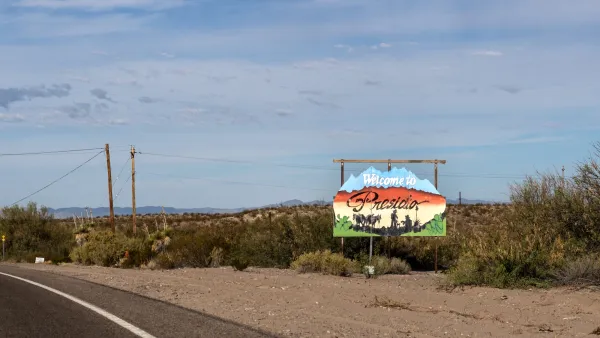
Texas town says border wall could compromise flood prevention infrastructure
Presidio is suing the Trump administration, saying its plan to replace a levee with a concrete wall could put the town at risk of catastrophic floods.
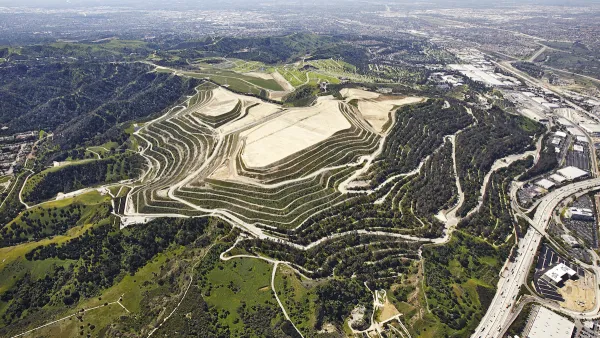
Puente Hills Landfill Redevelopment Plan Wins Award for Transformative, Climate-Responsive Design
This project to transform a former landfill into a climate-resilient public space has won the 2024 Global Impact Award from ASLA and IFLA for its innovative, community-driven design that addresses environmental and social challenges.
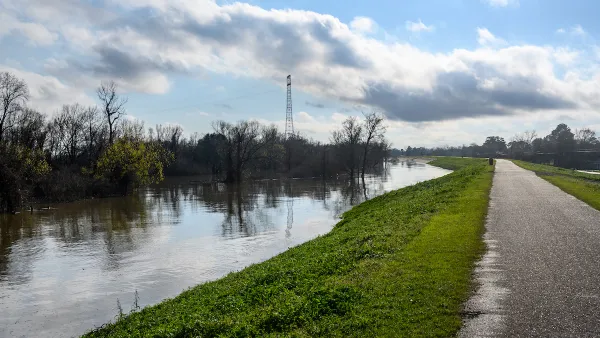
Louisiana Coastal Protection Agency Under Threat
The state’s new governor wants to shrink the power of the agency, which has spearheaded essential flood protection and mitigation efforts since the aftermath of Hurricane Katrina.

Planetizen Federal Action Tracker
A weekly monitor of how Trump’s orders and actions are impacting planners and planning in America.

The state-sanctioned urbicide of Austin
People don’t kill cities. Freeways do.

US to reduce Colorado River water deliveries to Mexico
A new Colorado Treaty amendment reduces Mexico’s Colorado River water allocation by 250,000 acre feet.

Brightline West’s future may rely on $6 billion federal loan
The company has until Nov. 2 to make a $400 million equity investment into its proposed high-speed rail line.

LA Metro’s ultimatum: no extra buses for LA28 if federal funding isn’t imminently secured
If Metro does not provide additional buses, LA28 organizers will have to find a new way to manage Olympic traffic. LA28’s budget does not include a line item for transit.

Colorado’s Largest Data Center Could Rise Next to Homes — Without a Public Hearing
The proposed campus would consume 11 times the power of Denver International Airport; as it has across the country, opposition mounts.

FREE Course: Walkable City 1: Why Walkability?
After describing his path towards focusing on walkability as the essence of good planning, Jeff Speck marches through his five principal reasons for making more walkable places.
Reinventing Malls: Planning Alchemy—Turning Gray Fields Into Gold
The course focuses on the opportunities and imperatives that shape reinvention of mall sites.

Eagle County Government
Harvard University Graduate School of Design
Nashville Planning Department
The Architects Foundation
University of Cincinnati Online
The Pocatello Development Authority
The Urban Renewal Agency of the City of Pocatello
Journal of the American Planning Association