It's clear that New Jersey’s economic development planners didn't spend much time thinking about opportunity costs when they approved $1.1 billion in tax incentives under the Grow NJ program.


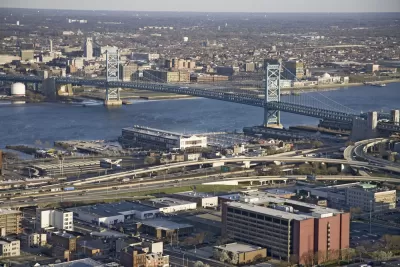
Camden is one of the most distressed cities in the United States, and if any city needs state help to build its economy, it’s Camden. While the state of New Jersey has responded, the way it has done so adds up to one of the most egregious examples of misuse of economic development incentives in recent memory. At the same time, it offers some useful lessons for thinking about urban economic development, especially about a concept that people working in this field don’t think about enough—opportunity costs.
New Jersey has created what it calls the Grow NJ program, a suite of incentives to encourage corporations to move into or stay in the state. It targets certain areas, with the most generous incentives offered for companies to stay in or move to the state’s four poorest major cities: Camden, Trenton, Paterson, and Passaic. So far so good.
Under this program, New Jersey has given out $1.1 billion in tax incentives to 16 companies in the city of Camden since late 2013. Five account for $900 million of this total, as shown in the table below. All are major, well-heeled corporations. With the exception of EMR, which is a scrap metal facility already located in Camden, all of the companies were already operating in nearby suburbs. The businesses are being paid nearly $400,000 per job, on average, to move operations 5 or 10 miles into new buildings in Camden, along with creating a few additional jobs once the companies relocate.
What’s wrong with this picture?
Read the full story: How *Not* To Do Economic Development
Cleveland announces new Midline industrial investment district
The plan calls for at least 1.5 million square feet of new industrial and commercial space alongside housing.
Report: California's density bonus is a 'win-win' for developers and affordable housing
Almost half of new multifamily projects in 2024 relied on a density bonus.

Idaho Bill Would Offer More Property Tax Breaks to Affordable Housing Developers
The proposal would loosen regulations on developments with rent affordable to households making 60% AMI or less.

Planetizen Federal Action Tracker
A weekly monitor of how Trump’s orders and actions are impacting planners and planning in America.

California plans to bury El Niño’s downpour
If the state plays its cards right, it may be able to store a billion acre-feet of El Niño’s water in aquifers.

Desperate measures: Advocates weigh draining Lake Powell to fill Colorado River
Draining the reservoir could reduce evaporation losses by a couple hundred thousand acre-feet.

Mamdani’s pied-à-terre tax survives legal challenge
A panel of judges found that the plaintiffs failed to demonstrate injury as a result of New York City's implementation of the tax.

Eastern Nebraska is running out of electricity
Data centers and electrification are straining eastern Nebraska’s grid, throttling economic development.

Seattle passes record-breaking transit services expansion
Proposition 1 will double the city’s transit tax to add 95,000 more bus trips and preserve 180,000 bus trips annually.

FREE Course: Walkable City 1: Why Walkability?
After describing his path towards focusing on walkability as the essence of good planning, Jeff Speck marches through his five principal reasons for making more walkable places.
Reinventing Malls: Planning Alchemy—Turning Gray Fields Into Gold
The course focuses on the opportunities and imperatives that shape reinvention of mall sites.

City of Rosemead
Rutgers University, Edward J. Bloustein School of Planning and Public Policy
One Hundred Miles
University of Michigan School for Environment and Sustainability (SEAS)
Hunter College, City University of New York (CUNY)
The Architects Foundation
City of Cambridge
Montrose County
The Pocatello Development Authority