An EU irective calls for charging stations in all new European homes.


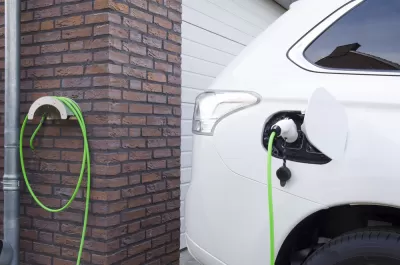
According to a story in The Guardian by Arthur Neslen, "Every new or refurbished house in Europe will need to be equipped with an electric vehicle recharging point, under a draft EU directive expected to come into effect by 2019." If this initiative goes into effect, the desired outcome would be to even the infrastructure playing field for electric cars, which compete with the established infrastructure already in place for diesel and regular gas. "The EU initiative is intended to lay the infrastructure for the sort of electric car boom envisaged by Norway and the Netherlands, which both plan to completely phase out vehicles with diesel engines by 2025," Neslen reports.
As electric or hybrid electric cars become more powerful, there will be consequences for patterns in electricity use. Power isn't "green" just because it is electric, and Neslen cites a study that concludes, "In the short term, they may lead to a higher than expected sulphur dioxide (SO2) emissions from road transport." Another change in energy needs will likely come from the use of second-life batteries (which can be topped up with local power from wind and solar generators). Local power storage can radically increase the range of an electric vehicle and Neslen concludes his story with details of a strategic partnership with a second-life project by Renault and a battery operated power station initiative by BMW.
FULL STORY: Plans for an electric car charging point in every new home in Europe

How Much Will a 'Fill-up' Cost for an Electric Car?
With only 50,000 electric cars on the road now, many charging stations are free - but what happens when the number multiplies? Electric car charging companies are counting on the number increasing and are determining "how to charge for the charge."

Swapping your gas car for an EV is greener than keeping it, research shows
An EV repays the 'carbon debt' caused by building it after 4,400 miles.

Florida wants to shift its entire EV charger budget to air taxi 'vertiports'
FDOT argues the private sector is already building out the state's fast-charging infrastructure, so the state could redirect those funds elsewhere.

Planetizen Federal Action Tracker
A weekly monitor of how Trump’s orders and actions are impacting planners and planning in America.

The state-sanctioned urbicide of Austin
People don’t kill cities. Freeways do.

US to reduce Colorado River water deliveries to Mexico
A new Colorado Treaty amendment reduces Mexico’s Colorado River water allocation by 250,000 acre feet.

5 New England states march closer to 800 megawatt wind energy project
Securing federal approval for the project may be complicated under the Trump administration, which has historically been hostile towards domestic wind power.

Baltimore to break ground on $50 million Transit Priority Project
The project will bring faster bus trips, safer streets and better bike connections to Baltimore.

Airbnb launches $250 million 'last-dollar financing' housing accelerator, makes first investment in Austin
The company will put $6.4 million towards affordable housing development in Texas’ capital.

FREE Course: Walkable City 1: Why Walkability?
After describing his path towards focusing on walkability as the essence of good planning, Jeff Speck marches through his five principal reasons for making more walkable places.
Reinventing Malls: Planning Alchemy—Turning Gray Fields Into Gold
The course focuses on the opportunities and imperatives that shape reinvention of mall sites.

Eagle County Government
Harvard University Graduate School of Design
Nashville Planning Department
The Architects Foundation
University of Cincinnati Online
The Pocatello Development Authority
The Urban Renewal Agency of the City of Pocatello
Journal of the American Planning Association