Heretofore preservationists in the City of Brotherly Love have been focused on finding new uses for vacant, historic buildings, but the city's economic resurgence now threatens five, occupied low-rise buildings city's in vibrant Jewelers Row.


Philadelphia is rebounding after decades of decline. A high-end urban developer wants to capitalize on the city's revitalization to the chagrin of some jewelers who stand to lose their businesses so the district may prosper more.
"A plan by Toll Brothers City Living, a developer, to make way for 80 new residential units on the 700 block of Sansom Street, the center of Jewelers Row, is challenging some of the district’s businesses and is shifting priorities for activists in the city," writes Jon Hurdle for The New York Times.
Toll Brothers plans to demolish five three- and four-story buildings erected in the late 19th and early 20th centuries to build a 16-story condominium tower. It has promised to preserve the appearance of the street by building a new facade on the site of the demolished buildings. Demolition is scheduled to start in mid-2017, and construction is expected to take about two years.
"The project is another signal of soaring demand for residential and commercial retail space in a city that had decades of economic decline after a manufacturing slump, starting in the mid-20th century, but which is now seeing a renaissance in its central area," adds Hurdle.
"For most of the last half century, we were fighting the forces of depopulation and decline, and so preservation was often about finding new uses for vacant buildings before we lost them," said Paul Steinke, executive director of the Preservation Alliance for Greater Philadelphia,
Like most older, large cities in America, Philadelphia's population peaked after World War II and then declined until relatively recently.
Year Population Percentage Change from Prior Decade
1950 2,071,605 +7.3%
1960 2,002,512 −3.3%
1970 1,948,609 −2.7%
1980 1,688,210 −13.4%
1990 1,585,577 −6.1%
2000 1,517,550 −4.3%
2010 1,526,006 +0.6%
2014 1,560,297 +2.2%
Credit: Demographics of Philadelphia - Wikipedia.
“Jewelers Row is symbolic of a new reality, which is that occupied, functioning, taxpaying buildings with businesses and residences already in them for a century or more are now being targeted for developers for demolition and new construction,” Steinke said.
Hurdle interviews some of the jewelers who stand to be displaced by the development. For them, location is key, and many suspect they will lose their livelihood if forced to vacate from their buildings.
One term not found in the article is gentrification, although that it is used in an earlier post on the project by Planetizen contributing editor Philip Rojc.
“The Jewelers Row situation is definitely a wake-up call that our preservation, planning and zoning apparatus is out of sync with contemporary needs in a historic city that’s undergoing a building boom,” Mr. Steinke said
"The city’s zoning board last week declined an appeal against the development by the Preservation Alliance," adds Hurdle.
Related on Planetizen:
- Preservation in Philly Is Attracting a Younger Generation, October 21, 2015
-
Luxury Condos Versus Philadelphia's Jewelers' Row, April 14, 2015
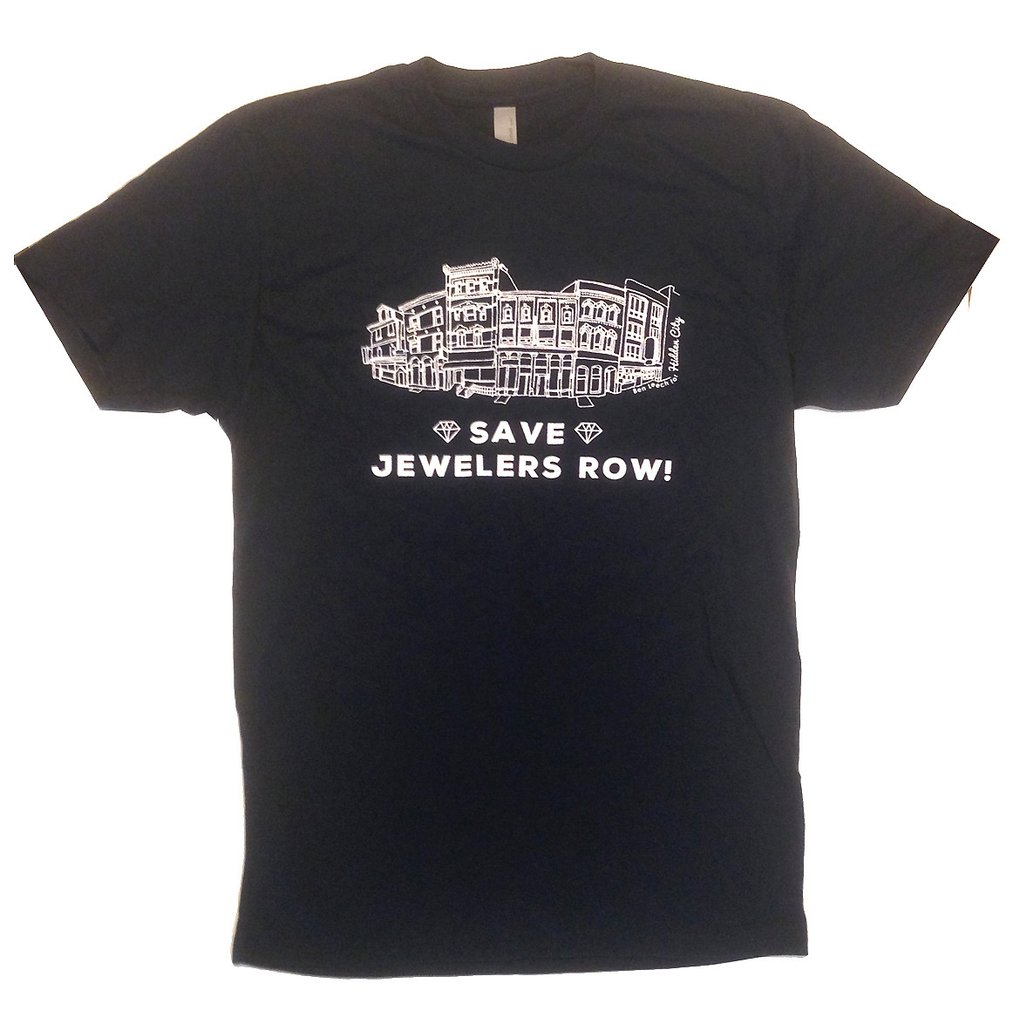
Correspondent's footnote: 'Save Jewelers Row' T–shirt can be purchased from Preservation Alliance.
Read the full story: In Jewelers Row in Philadelphia, Condo Plan Worries Preservationists
Philadelphia's downtown parking lots are a 'valuable, untapped resource'
Over two dozen city-owned parking lots could be developed into housing or other uses.
San Francisco Mayor’s ‘Family Zoning’ Plan Faces Pushback, Displacement Concerns
Newly proposed legislation aims to protect long-term tenants from displacement caused by Mayor Lurie’s proposed zoning reform plan, which would allow for more housing construction in parts of the city.

Denver Pauses Multifamily Development in Westside Neighborhoods Amidst Gentrification Concerns
City officials say the pause on permits for redevelopment projects aims to stop the displacement of long-term residents.

Washington state to charge fee to drivers with fuel-efficient cars
Revenue from the fee will go towards supporting the state’s highways.

Illinois considers spending $1 billion in taxpayer money on data center
A quantum computing campus and data center are currently under construction in Chicago.

Trump to blast ‘hydrocarbon highway’ through ‘world’s longest art gallery’
Environmental and historic preservation groups are suing to stop the project.

NYC, state sue feds over mixed-immigration-status housing assistance rule
The state’s lawsuit argues that the rule change violates the Administrative Procedure Act.

Michigan to turn neighborhood into virtual power plant
Residents will soon be able to divert their excess energy to the grid in exchange for compensation.

Data center, mining project swarm to long-awaited Alaska railroad line
The state-owned railroad approved final plans for the spur line this week; the project is expected to cost $311 million, mostly funded by the federal government

FREE Course: Walkable City 1: Why Walkability?
After describing his path towards focusing on walkability as the essence of good planning, Jeff Speck marches through his five principal reasons for making more walkable places.
Reinventing Malls: Planning Alchemy—Turning Gray Fields Into Gold
The course focuses on the opportunities and imperatives that shape reinvention of mall sites.

City of Charlotte
City of Rosemead
Rutgers University, Edward J. Bloustein School of Planning and Public Policy
University of Michigan School for Environment and Sustainability (SEAS)
Hunter College, City University of New York (CUNY)
The Architects Foundation
University District Partnership