Recent development controversies in New York City inspired one writer to set some priorities.


"So many development battles in major cities around the world fall into easy narratives (villainy versus virtue, for instance) that we tend to imagine them all possessing moral fault lines that are clearly visible: a set of capitalist savages on one side, and on the other, the marginalized agents of a more noble civic mission," begins an article by Gina Bellafante, who seeks to poke holes in that scenario.
The target of Bellafante's critique, are debates surrounding issues like a campaign called Save Manhattan Valley.
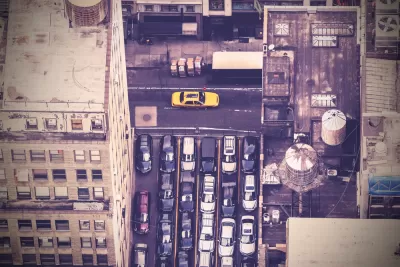
In this instance, the enemy was not a future condominium tower with an in-house aromatherapist and windows the height of an Italian cypress. Instead, it was the city’s planned demolition of three parking garages it owns on West 108th Street, to make space for the construction of an 11-story building that would add 258 units of affordable and supportive housing for the poor and the elderly.
There is another similar example from Sunnyside, Queens, of a proposed development made up entirely of affordable housing that would replace an existing parking lot. That project, according to Belafante, is likely to be "scotched," as residents complain about the loss of parking. Sally Goldenberg and Gloria Pazmino have since reported that the developer of that project has withdrawn a request for a zoning change.
With these examples as evidence, Bellafante makes a controversial claim, even in the nation's home of public transit: "It seems as if the moment has arrived for drivers to take the back seat."
FULL STORY: Parking Concerns Take a Back Seat in Pursuit of Affordable Housing

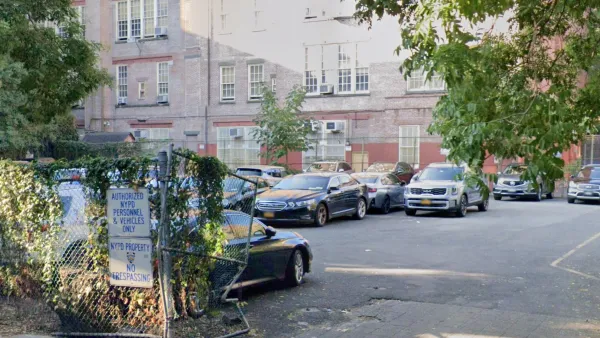
NYPD parking lot to become affordable housing as part of Mamdani's Block by Block initiative
The city awarded the lot to a group of developers to build a mixed-use project with 131 housing units.
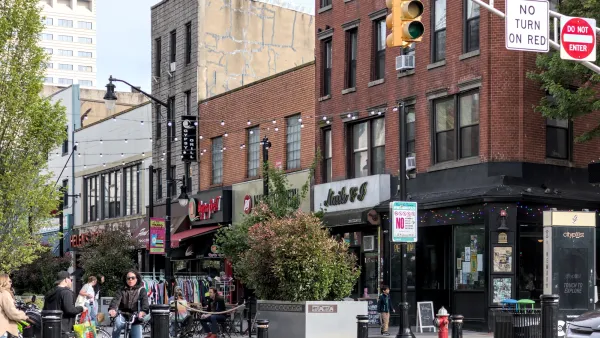
Jersey City could build 700 homes on city-owned parking lots
If approved, a redevelopment proposal would build hundreds of new homes on a pair of city parking lots.
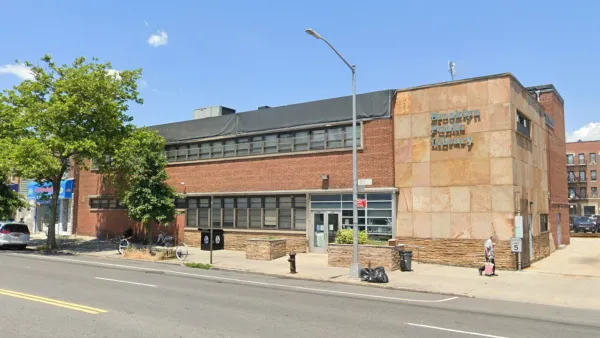
Mayor Mamdani unveils map of 100 public lots that could become housing
The city identified properties that could be available for new housing development.

The state-sanctioned urbicide of Austin
People don’t kill cities. Freeways do.

US to reduce Colorado River water deliveries to Mexico
A new Colorado Treaty amendment reduces Mexico’s Colorado River water allocation by 250,000 acre feet.

New Jersey’s second-largest city bans standalone data centers
Jersey City will continue to allow co-location facilities, such as those meant for research institutions that store their own data.

Amtrak not solely to blame for New Jersey commuter rail's unreliability, report finds
A new study from the Garden State Initiative found that NJ Transit’s budget grew 20% across a 4 year period, but reliability declined significantly over the same period.

EPA erases limits on planet-warming pollution from power plants
Under Monday’s plan, power plants would still have some limits on how much mercury, arsenic and other contaminants they can emit.

Phoenix announces new on-demand transit service, more frequent RAPID buses
Both new services will launch in October, and are part of Phoenix's Project Effective Access Solutions for Easing Congestion.

FREE Course: Walkable City 1: Why Walkability?
After describing his path towards focusing on walkability as the essence of good planning, Jeff Speck marches through his five principal reasons for making more walkable places.
Reinventing Malls: Planning Alchemy—Turning Gray Fields Into Gold
The course focuses on the opportunities and imperatives that shape reinvention of mall sites.

Eagle County Government
Harvard University Graduate School of Design
Nashville Planning Department
The Architects Foundation
University of Cincinnati Online
The Pocatello Development Authority
The Urban Renewal Agency of the City of Pocatello
Journal of the American Planning Association