New leadership at the Texas Medical Center in Houston, along with new land use covenants, is paving the way for unprecedented development in the highly trafficked area.


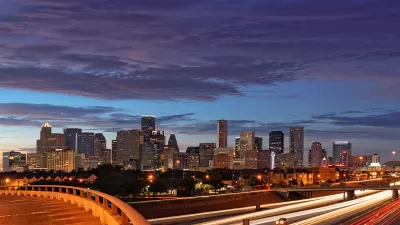
"Parking lots and grassy patches are interspersed with non-descript office buildings and medical towers along Old Spanish Trail, one of Houston's main arteries into the gleaming Texas Medical Center," according to an article by Erin Mulvaney, to describe the context for a story about change coming to the area.
Land-use covenants allowed the Medical Center to flourish into the world's largest health care complex, but they also discouraged private enterprises from catering to the 100,000 people who work there and the more than 8 million guests, patients and family members who use it each year.
That's the old way of life in the area, but change is coming, according to Mulvaney:
Signs offering real estate for sale suggest change may be coming. Construction cranes herald such projects as a high-rise apartment building and a luxury hotel along with several major medical expansions. Brokers are actively marketing large parcels of land for a revitalization that is considered long overdue. They envision top-notch restaurants, residential complexes and new places to shop.
The article maps out the potential development investments and describes the hopes for how the investment might impact the local and regional economy.
Read the full story: Private development set to capitalize on Med Center strength
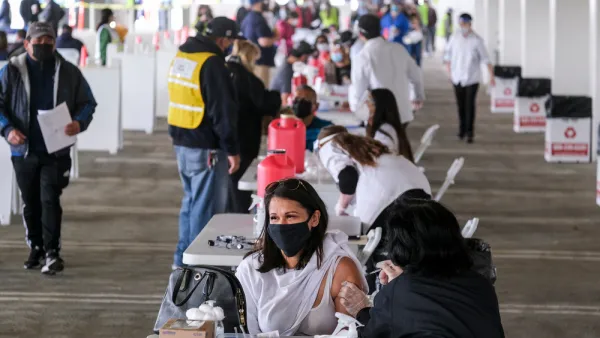
Coronavirus Litigation: Can Employers Require Employee Vaccinations?
The plaintiffs in one of the nation's first court cases over employer-required COVID vaccinations are among the heroes of the pandemic—nurses fighting to remain unvaccinated. Houston Methodist Hospital suspended unvaccinated employees on June 6.
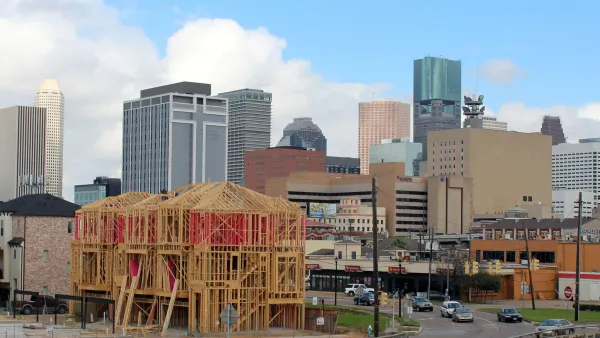
Watch: Debunking Myths About Houston's Lack of Zoning
A video published last week by City Beautiful reveals the myths and misconceptions of Houston's land use regulation system.
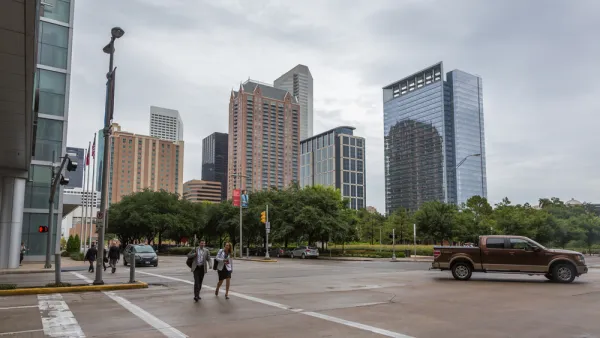
Walkability Plan, Including Parking Reform, Adopted in Houston
The city of Houston is embarking on an ambitious plan to reshape how new development in the city prioritizes walkability, and deprioritizes the automobile.

Planetizen Federal Action Tracker
A weekly monitor of how Trump’s orders and actions are impacting planners and planning in America.

Eastern Nebraska is running out of electricity
Data centers and electrification are straining eastern Nebraska’s grid, throttling economic development.

Study reveals best places in the U.S. for cycling, walking
New research from Streetlight Data examines bicycle and pedestrian miles per capita in the 100 largest U.S. cities by population.

DSA members accuse Mamdani of 'abandoning values' over housing redevelopment
New York City's mayor plans to replace about 2,000 units of public housing with private, mixed-income housing.

All sides of BRT debate unhappy with CDOT’s most recent move
The Colorado Department of Transportation is no longer considering center-running bus lanes for Colorado Boulevard.

Massachusetts bogs generate both power, and cranberries
Putting solar panels above farmland is one way Massachusetts is advancing toward its goal of net-zero carbon emissions by 2050.

FREE Course: Walkable City 1: Why Walkability?
After describing his path towards focusing on walkability as the essence of good planning, Jeff Speck marches through his five principal reasons for making more walkable places.
Reinventing Malls: Planning Alchemy—Turning Gray Fields Into Gold
The course focuses on the opportunities and imperatives that shape reinvention of mall sites.

City of Rosemead
Rutgers University, Edward J. Bloustein School of Planning and Public Policy
One Hundred Miles
University of Michigan School for Environment and Sustainability (SEAS)
Hunter College, City University of New York (CUNY)
The Architects Foundation
City of Cambridge
The Pocatello Development Authority
The Urban Renewal Agency of the City of Pocatello