Portland isn’t collecting a gas tax approved by voters in May yet, but the city is already finding a way to spend the money.


“Officials broke ground Monday on the first street-repair project funded by a new gas tax, even though the city won't begin collecting the tax until January,” reports Elliot Njus.
The first project: an excavation of a failed section of street at the intersection of Southeast 104th Avenue and Bush Street. The project was made possible by a 10-cent-a-gallon tax approved by voters in May. Over the next four years, the tax is expected to raise $64 million.
“Just over half the proceeds, $35.8 million, is set to be used for street paving and repair projects, while $28 million is earmarked for bicycle and pedestrian safety projects, including sidewalks, crosswalks and bicycle routes,” adds Njus.
Read the full story: Portland starts work on first gas tax-funded road repair
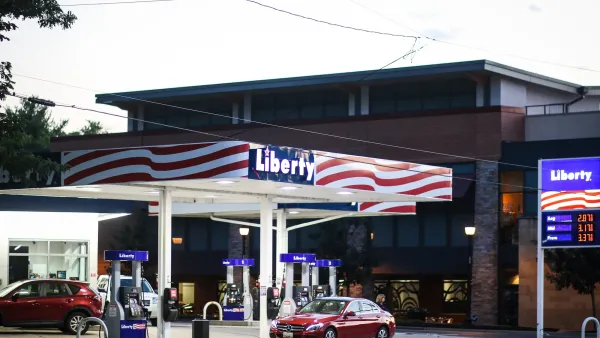
Why does Maryland's gas tax change every year?
The state's annual gas tax update may still not be enough to keep up with changes in the transportation sector and rising project costs.
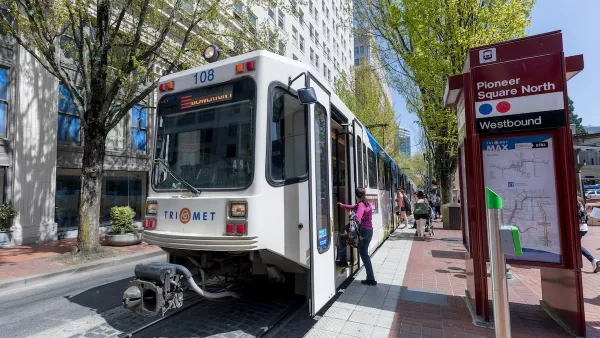
Oregon Transportation Bill Saves 500 ODOT Jobs, but Leaves Future Funding Uncertain
A bill passed in a special legislative session will raise over $4 billion for transportation and public transit in the next 10 years, but fails to establish a long-term funding solution.
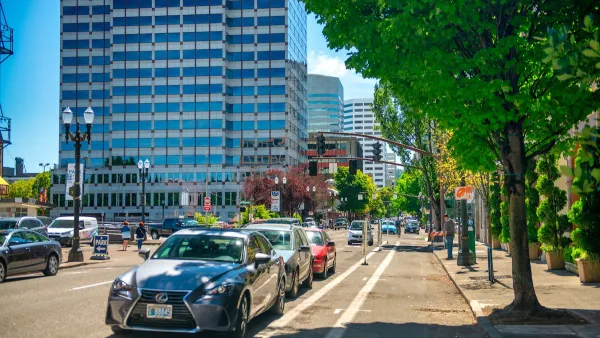
Portland Raises Parking Fees to Pay for Street Maintenance
The city is struggling to bridge a massive budget gap at the Bureau of Transportation, which largely depleted its reserves during the Civd-19 pandemic.

Desperate measures: Advocates weigh draining Lake Powell to fill Colorado River
Draining the reservoir could reduce evaporation losses by a couple hundred thousand acre-feet.

Eastern Nebraska is running out of electricity
Data centers and electrification are straining eastern Nebraska’s grid, throttling economic development.

Move over, LA: St. Louis gears up for Olympics, invests millions in downtown redevelopment
The Missouri city will host the 2028 Olympic soccer group stage and knockout matches.

Maryland’s $15 billion bridge project gains key approval
The Maryland Transit Authority said the project will create over 60,000 jobs and add $23 billion to the local economy.

‘No clear next steps’ for Chicago's permanent festival grounds
Eleventh Ward Ald. Nicole Lee has suggested Soldier Field as a possible location for the permanent event space.

California, Hawaii, Rhode Island approve housing propositions
Hawaii and Rhode Island each approved their sole proposition, while California approved two of its three.

FREE Course: Walkable City 1: Why Walkability?
After describing his path towards focusing on walkability as the essence of good planning, Jeff Speck marches through his five principal reasons for making more walkable places.
Reinventing Malls: Planning Alchemy—Turning Gray Fields Into Gold
The course focuses on the opportunities and imperatives that shape reinvention of mall sites.

City of Rosemead
Rutgers University, Edward J. Bloustein School of Planning and Public Policy
One Hundred Miles
University of Michigan School for Environment and Sustainability (SEAS)
Hunter College, City University of New York (CUNY)
The Architects Foundation
City of Cambridge
Montrose County
The Pocatello Development Authority