The Rhode Island Department of Transportation will go out to bid on a design-build contract to reconstruct the Routes 6 and 10 interchange in Providence, with the hope of completing construction in four years. Some will remember what might have been.


"Warning that further delay could put Rhode Islanders' safety at risk, Governor Raimondo Wednesday ordered a fast-tracked reconstruction of the Routes 6 and 10 interchange, knocking back dreams of an alternative to the maligned highway system," reports Patrick Anderson.
"The order scraps a $595-million capped highway design the R.I. Department of Transportation unveiled in March and called an 'innovative' approach indicative of a 'new DOT' that would help knit disconnected neighborhoods back together while keeping commuters moving," according to Anderson.
A much more progressive version of the plan, including capping the highway with parks, bike paths, new development, and potentially a mass transit line in the median, was announced in March. Two developments over the summer, however, scuttled those ambitions. The article includes more of the details delivered in a statement by Gov. Raimondo, as well as the unhappy responses from groups advocating for the previous, alternative plan.
Read the full story: State to fast-track Route 6-10 connector project, abandon surface boulevard + poll

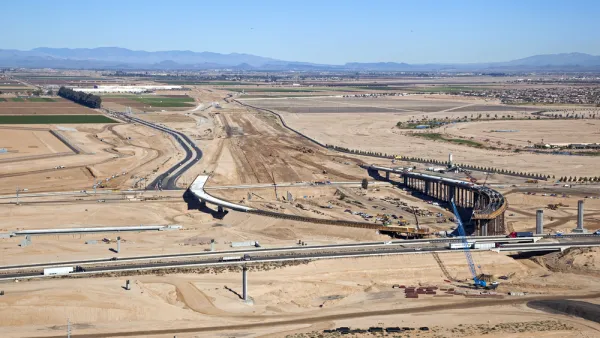
Infrastructure Funding Could Lead to Higher Carbon Emissions
Billions in federal infrastructure funding slated to go to states with few strings attached could fund roadway construction and widening projects that will raise greenhouse gas emissions and worsen climate change.

Proposed Toronto Highways Raise Environmental Concerns
Opponents of two new planned highways in greater Toronto argue the construction of new roads is 'short-sighted at best' and would threaten the region's greenbelt areas.
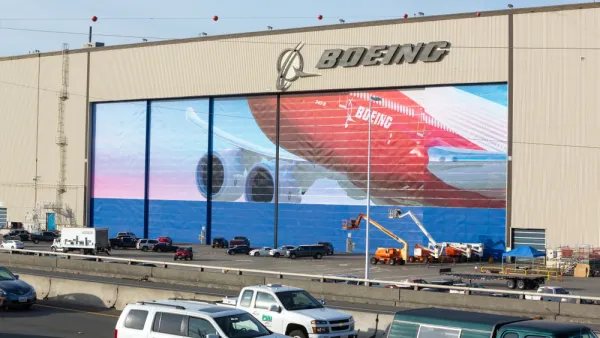
Widening, Other Improvements Planned for the 'Boeing Freeway'
The Washington State Department of Transportation is proposing a series of changes to State Route 526 that includes a new eastbound travel lane.

Planetizen Federal Action Tracker
A weekly monitor of how Trump’s orders and actions are impacting planners and planning in America.

California plans to bury El Niño’s downpour
If the state plays its cards right, it may be able to store a billion acre-feet of El Niño’s water in aquifers.

Chicago breaks ground on $3 billion megadevelopment
The new neighborhood, titled Foundry Park, will one day host 3,700 residences.

California High-Speed Rail Authority CEO resigns after $600,000 scandal
Under Ian Choudri, the authority used taxpayer dollars to fund first class flights and trips to nightclubs.

Want to study the Missouri River? Soon, you may need unanimous approval from 10 states
Legislation would require 10 governors’ permission to study or build projects moving water outside the basin.

Desperate measures: Advocates weigh draining Lake Powell to fill Colorado River
Draining the reservoir could reduce evaporation losses by a couple hundred thousand acre-feet.

FREE Course: Walkable City 1: Why Walkability?
After describing his path towards focusing on walkability as the essence of good planning, Jeff Speck marches through his five principal reasons for making more walkable places.
Reinventing Malls: Planning Alchemy—Turning Gray Fields Into Gold
The course focuses on the opportunities and imperatives that shape reinvention of mall sites.

City of Rosemead
Rutgers University, Edward J. Bloustein School of Planning and Public Policy
One Hundred Miles
Hunter College, City University of New York (CUNY)
The Architects Foundation
University of Cincinnati Online
City of Cambridge
Montrose County
The Pocatello Development Authority