The controversies emerging from Cherry Hill, New Jersey will likely strike a familiar chord for many Americans.



Kevin Riordan reports from Cherry Hill, New Jersey, where "Mayor Chuck Cahn's redevelopment strategies, largely focused on the township's older portions west of I-295, have angered some residents."
Two controversies in particular have been notable:
Earlier this year, fierce opposition deflated the administration's trial balloons for erecting a new town hall on Kings Highway and for encouraging high-density residential development near Park Boulevard.
And in July, after unanimous township council approval of a zoning code amendment that will permit gas stations as part of redevelopment projects on six west side tracts, some opponents shouted "shame" in the packed council chamber.
The redevelopment activities of the Cherry Hill City Council and mayor have prompted the creation of group local activists called Cherry Hill United, which faults the city government for "serving the needs of developers and chasing commercial tax ratables at the expense of residential neighborhoods," as Riordan describes their grievances.
The Cherry Hill experience offers a case study in suburban redevelopment politics—in this case, the city has passed through several development eras while still flourishing.
Read the full story: Reconciling all visions as Cherry Hill is reimagined
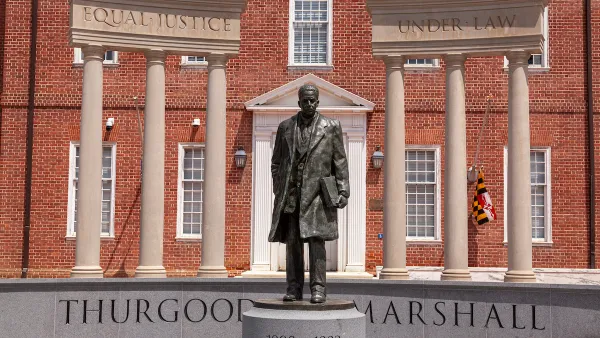
State Supreme Court Clears Way for Defunct Airport Redevelopment in Maryland
The legal controversies over a zoning amendment approved in 2019 went all the way to the top court in the state of Maryland, but by the time the court ruled, the Bowie City Council had already repealed the amendment in question.
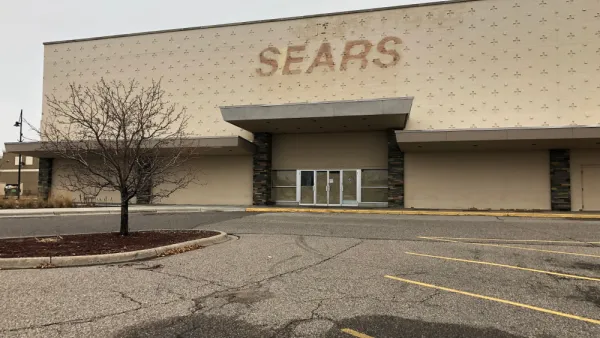
A Second Life for the American Mall
‘Dead’ suburban malls, with their existing infrastructure, offer a variety of opportunities for redevelopment into everything from housing to parks.
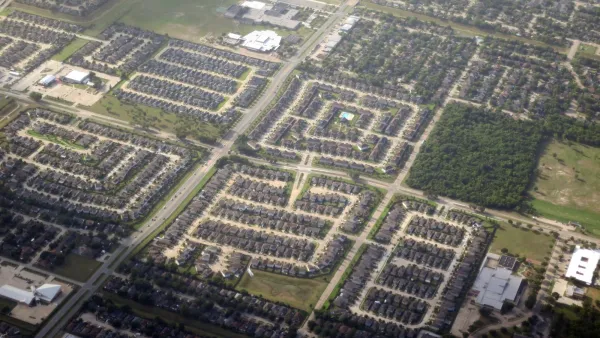
Houston Area's Center of Gravity Shifts Outside the Loop
The population center of Harris County is now outside central Houston, a shift that occurred over the last two decades as the region's suburbs blossomed.

Planetizen Federal Action Tracker
A weekly monitor of how Trump’s orders and actions are impacting planners and planning in America.

California plans to bury El Niño’s downpour
If the state plays its cards right, it may be able to store a billion acre-feet of El Niño’s water in aquifers.

Desperate measures: Advocates weigh draining Lake Powell to fill Colorado River
Draining the reservoir could reduce evaporation losses by a couple hundred thousand acre-feet.

Housing is the top priority of Seattle’s sole new councilmember
Jenks campaigned on building 1,000 new units of affordable housing.

New tax cuts may slash $1.5 billion in funding for Miami transit, public parks
Amendment 3 will save Miami-Dade homeowners $2,700 in 2028.

Arizona, Wisconsin, Pennsylvania hope to finally advance climate goals post-midterms
The three states have spent years under Republican or divided control.

FREE Course: Walkable City 1: Why Walkability?
After describing his path towards focusing on walkability as the essence of good planning, Jeff Speck marches through his five principal reasons for making more walkable places.
Reinventing Malls: Planning Alchemy—Turning Gray Fields Into Gold
The course focuses on the opportunities and imperatives that shape reinvention of mall sites.

City of Rosemead
Rutgers University, Edward J. Bloustein School of Planning and Public Policy
One Hundred Miles
University of Michigan School for Environment and Sustainability (SEAS)
Hunter College, City University of New York (CUNY)
The Architects Foundation
City of Cambridge
Montrose County
The Pocatello Development Authority