Downtown property owners are clashing with food truck operators over where the latter should park their businesses.


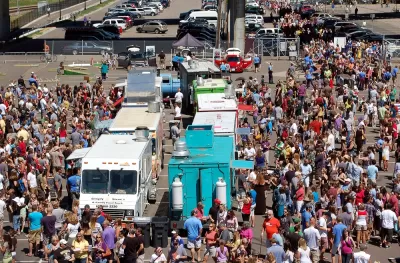
As mobile merchants, food trucks encounter practical and regulatory questions that neither other vehicles nor other vendors contend with. Now Minneapolis is trying to balance the needs of food trucks and property owners in its Downtown area.
Property owners want to limit the number of trucks that can operate in the same area. But food truck operators say business is best when they vend together, creating a "destination." They also want to expand the areas they can operate in, as well as the hours, to serve people leaving bars at closing time.
The city, according to MinnPost, comes down in the middle. It amended a local ordinance on food trucks in January—imposing some restrictions and removing others.
Some regulations are there for safety: Trucks can’t park in a space with a bike lane between it and the curb, which would put moving cyclists between the truck and the customer on the sidewalk.
Others—like prohibiting trucks from operating near fairs, parks, or sports stadiums—protect brick-and-mortar vendors from competition.
Though property owners say City Hall is soft on food trucks because of their popularity, the reporter says both mobile and stationary eateries appear to be thriving.
Read the full story: Does Minneapolis have too many — or too few — rules governing food trucks?

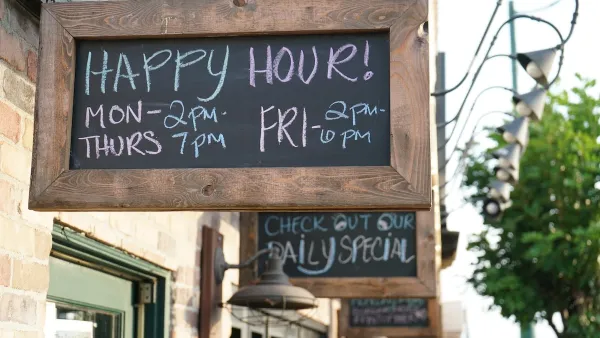
States Look to Eliminate Happy Hour Bans to Lure People Downtown
More than 20 states have laws banning or limiting happy hours at bars and restaurants. Now, some are revisiting these regulations in an effort to boost commerce in struggling downtown districts.
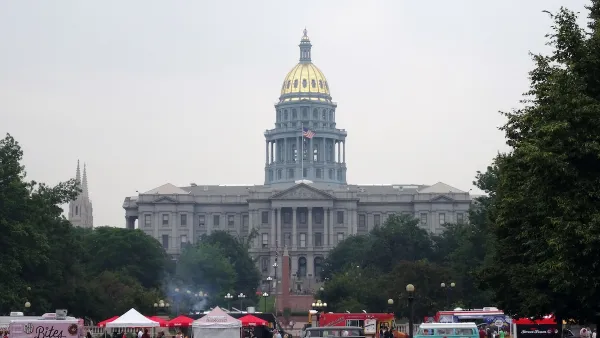
Denver Bans Downtown Food Trucks — Again
City officials say the controversial policy, first enacted in 2022, is an effort to reduce crime in the nightlife district.

Study: How to Revitalize Downtown Minneapolis
A proposal calls for a reevaluation of the city’s skyways, a focus on street-facing businesses, and an improved public realm.

Planetizen Federal Action Tracker
A weekly monitor of how Trump’s orders and actions are impacting planners and planning in America.

‘Going backwards:’ Baltimore mayor, students rally against state's transit funding plan
Maryland's proposed six-year plan provides no funding for Baltimore’s BMORE bus program and reduces its road maintenance funding.

Detroit to transform waterfront with $2.2 billion investment
Developers will convert about 18 acres of unused parking lot space into civic spaces.

Data center developers are using lawsuits, cash offers to ‘overwhelm’ rural America
Newsrooms in five states worked together to uncover the tactics big tech developers use to buy land from reluctant communities.

U.S.-Iran war may have ‘devastating’ impact on cost to warm homes
Vermont and Maine residents may see a 76% increase in the cost of warming their homes this winter.

Senate bill would ‘overhaul’ environmental permitting laws
Under the proposed act, government agencies would also not be able to suspend or rescind permits after granting them.

FREE Course: Walkable City 1: Why Walkability?
After describing his path towards focusing on walkability as the essence of good planning, Jeff Speck marches through his five principal reasons for making more walkable places.
Reinventing Malls: Planning Alchemy—Turning Gray Fields Into Gold
The course focuses on the opportunities and imperatives that shape reinvention of mall sites.

One Hundred Miles
County of Mendocino
planning NEXT
The Architects Foundation
University of Cincinnati Online
Montrose County
Northern Illinois Transit Authority (NITA)
The Pocatello Development Authority