Connecting affordable housing and healthcare programs can improve both—especially for seniors and disabled people.



As increasing numbers of seniors and disabled people rely on rental assistance, a new report suggests turning to a model of affordable housing that connects residents to healthcare services.
"Seniors and people with disabilities share many of the same non-housing needs; access to healthcare is perhaps the most crucial," Eillie Anzilotti explains in CityLab. "Affordable housing programs could act as a convener for less expensive and more sustainable health services for those in need."
Some HUD programs serve this purpose by siting health service coordinators in affordable housing developments, while private housing companies partner with non-profits to bring health services to their properties. The Public and Affordable Housing Research Corporation, which authored the report, wants Congress to consider these models when crafting housing policy.
Anzilotti notes that PAHRC's report is among the first to establish the benefits of linking housing and healthcare. Other research has shown that housing throughout the country—and particularly in the suburbs—is inadequate to meet the needs of aging populations, and that there is an insufficient supply of housing that accommodates disabled people.
FULL STORY: Connecting Health Services With Affordable Housing

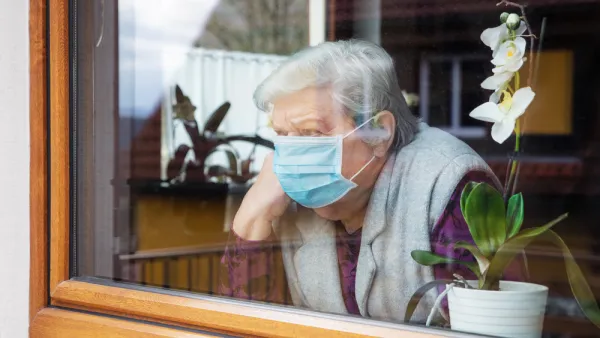
Study: Many American Seniors Can’t Afford to ‘Age in Place’
A lack of affordable housing and access to services and amenities make it difficult for many seniors to remain in their long-term homes or communities.

Middle-Class Seniors Losing Access to Housing and Healthcare
In the next decade, the number of middle-income seniors who can't afford assisted living will nearly double.
Parking, Density, and Affordable Housing in California
A bill to reduce parking minimums for residential or mixed-use developments that include affordable units passed a key Senate committee. AB 744 amends the state's density bonus law, itself controversial, that incentivizes building affordable housing.

The state-sanctioned urbicide of Austin
People don’t kill cities. Freeways do.

US to reduce Colorado River water deliveries to Mexico
A new Colorado Treaty amendment reduces Mexico’s Colorado River water allocation by 250,000 acre feet.

New Jersey’s second-largest city bans standalone data centers
Jersey City will continue to allow co-location facilities, such as those meant for research institutions that store their own data.

Amtrak not solely to blame for New Jersey commuter rail's unreliability, report finds
A new study from the Garden State Initiative found that NJ Transit’s budget grew 20% across a 4 year period, but reliability declined significantly over the same period.

EPA erases limits on planet-warming pollution from power plants
Under Monday’s plan, power plants would still have some limits on how much mercury, arsenic and other contaminants they can emit.

Phoenix announces new on-demand transit service, more frequent RAPID buses
Both new services will launch in October, and are part of Phoenix's Project Effective Access Solutions for Easing Congestion.

FREE Course: Walkable City 1: Why Walkability?
After describing his path towards focusing on walkability as the essence of good planning, Jeff Speck marches through his five principal reasons for making more walkable places.
Reinventing Malls: Planning Alchemy—Turning Gray Fields Into Gold
The course focuses on the opportunities and imperatives that shape reinvention of mall sites.

Eagle County Government
Harvard University Graduate School of Design
Nashville Planning Department
The Architects Foundation
University of Cincinnati Online
The Pocatello Development Authority
The Urban Renewal Agency of the City of Pocatello
Journal of the American Planning Association