Not everyone is buying in to the city of Columbus' vision for the future of transportation.


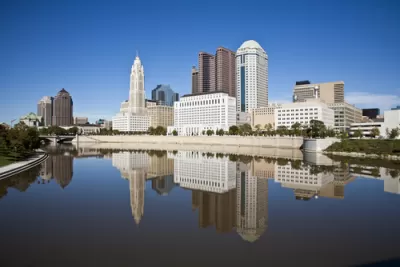
"Columbus, Ohio, is bucking trends when comes to mass transit — and not everyone is happy about it," according to an article by Katie Herzog.
The discontent stems from Columbus' victory in the Smart City's grant competition, as announced in June. Herzog explains the rub: "whereas most of the other cities proposed using the money for rail-based mass transit options like street cars, monorail, and light rail, Columbus plans to spend the money on a network of autonomous vehicles."
Herzog provides the links to the multiple sources criticizing the city's plans for deploying the $50 million grant money.
Read the full story: Columbus: “No light rail for us, please — just loads and loads of driverless cars”
Five Years Later, 'Smart Cities Challenge' Promise Unfulfilled
The "Smart Cities Challenge" paid Columbus, Ohio $50 million to kick start a revolution of urban technology. The revolution never arrived, according to a recent assessment by Wired writer Aarian Marshall.
Breaking: Columbus Wins $50 Million 'Smart Cities Challenge' Grant
The U.S. Department of Transportation has revealed the winner of a hotly-contested and widely-reported competitive grant funding opportunity.
'Smart Columbus Operation System' Looking for Developers
"Smart City" plans for the city of Columbus are taking shape.

Planetizen Federal Action Tracker
A weekly monitor of how Trump’s orders and actions are impacting planners and planning in America.

Washington state to charge fee to drivers with fuel-efficient cars
Revenue from the fee will go towards supporting the state’s highways.

Study reveals best places in the U.S. for cycling, walking
New research from Streetlight Data examines bicycle and pedestrian miles per capita in the 100 largest U.S. cities by population.

Mamdani unveils his ‘most ambitious bus lane project’ so far
The city has added two new bus lanes, which it expects to speed up tens of thousands of bus riders’ commutes.

New Jersey and New York suggest $10.3 billion budget for transit
Some of the budget is dedicated to replacing Manhattan's Midtown Bus Terminal.

States split over EPA’s proposal to drop greenhouse gas rules for power plants
The proposed rule drew over 165K comments, including from officials, health and environmental groups, and private citizens.

FREE Course: Walkable City 1: Why Walkability?
After describing his path towards focusing on walkability as the essence of good planning, Jeff Speck marches through his five principal reasons for making more walkable places.
Reinventing Malls: Planning Alchemy—Turning Gray Fields Into Gold
The course focuses on the opportunities and imperatives that shape reinvention of mall sites.

City of Charlotte
City of Rosemead
Rutgers University, Edward J. Bloustein School of Planning and Public Policy
University of Michigan School for Environment and Sustainability (SEAS)
Hunter College, City University of New York (CUNY)
The Architects Foundation
University District Partnership
City of Cambridge
The Pocatello Development Authority