A missed opportunity, famously criticized by Ada Louise Huxtable, will be rectified when the Kennedy Center's $175 million expansion project is complete.


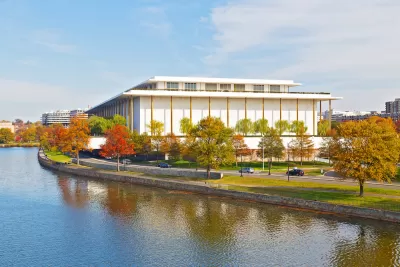
"Steven Holl Architects has won approval for a pedestrian bridge to accompany its expansion to Washington, D.C.'s John F. Kennedy Center for the Performing Arts," according to an article by Deane Madsen.
The approved plan will improve public access between the Kennedy Center and walkways along the Potomac River by creating a pedestrian bridge across the Rock Creek and Potomac Parkway.
Madsen describes more of the significance of the bridges to the expansion project: The Kennedy Center, which Ada Louise Huxtable criticized on the occasion of its opening as much for its scale and lack of imagination as for its isolated position between the Rock Creek and Potomac Parkway and the various on- and off-ramps for highways that link Washington, D.C. to Virginia, now attempts to rectify the latter issue by creating the Kennedy Center's own pedestrian on-ramp from beside the river. The article includes lots of renderings of he project.
The Associated Press also reports on the approval of the bridge, also reporting the expansion project's total cost of $175 million.
Read the full story: Home > Design > On The Boards > Steven Holl Architects Wins Planning Approval for Pedestrian Bridges in Kennedy Center Expansion


Planetizen Federal Action Tracker
A weekly monitor of how Trump’s orders and actions are impacting planners and planning in America.

California plans to bury El Niño’s downpour
If the state plays its cards right, it may be able to store a billion acre-feet of El Niño’s water in aquifers.

Desperate measures: Advocates weigh draining Lake Powell to fill Colorado River
Draining the reservoir could reduce evaporation losses by a couple hundred thousand acre-feet.

How a Chicago-sized wind farm beat the odds and powered on
The project spanned five presidential administrations and a standoff with a U.S. military base.

MTA gives itself 30 days to transform pit into basketball court
The site has been under construction since 2022; the city originally estimated it would finish the court in 2024.

Non-stop party: Chicago voters weigh permanent festival grounds
A stable place for bleachers, stages and drainage may streamline the setup and teardown of large events.

FREE Course: Walkable City 1: Why Walkability?
After describing his path towards focusing on walkability as the essence of good planning, Jeff Speck marches through his five principal reasons for making more walkable places.
Reinventing Malls: Planning Alchemy—Turning Gray Fields Into Gold
The course focuses on the opportunities and imperatives that shape reinvention of mall sites.

City of Rosemead
Rutgers University, Edward J. Bloustein School of Planning and Public Policy
One Hundred Miles
Hunter College, City University of New York (CUNY)
The Architects Foundation
University of Cincinnati Online
City of Cambridge
Montrose County
The Pocatello Development Authority