Anaheim Mayor Tom Tait says there is no legitimate reason to give Disney the tax break.


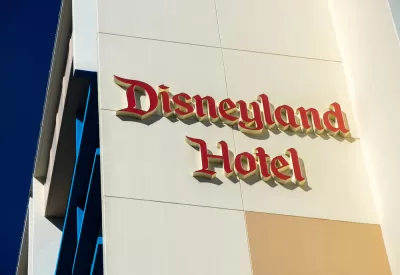
Adam Elmahrek reports: "When Disneyland officials unveiled plans this week for a massive new luxury hotel in Anaheim, they also applied for a room-tax subsidy worth well over $200 million, which would be the largest hotel tax subsidy in the city’s history."
The proposal would build a 700-room, 900,000-square-foot hotel on a parking lot adjacent to the hotel, according to Elmahrek.
The subsidy request was made through channels created by the city's hotel development incentive program, "which allows developers to collect 70 percent of the room taxes generated over 20 years by luxury hotels." Elmahrek shares the math for the Disney proposal, which would generate $14.7 million in room tax revenue, in the first year of operation. Thus, $10.3 million "would be rebated back to Disneyland."
Mayor Tom Tait is quoted in the article describing Disneyland's request as "insane."
FULL STORY: Disneyland Asking for Largest Hotel Tax Subsidy in Anaheim History


Disneyland's Autopia finally goes electric (sort of)
Today, the 'futuristic' ride still spews out gas fumes. Disney says it is testing new electric prototypes.

Anaheim Proposes Gondola Connecting Disneyland, Stadiums, Transit Center
The as-yet-unfunded project would connect major attractions along the city’s main artery.
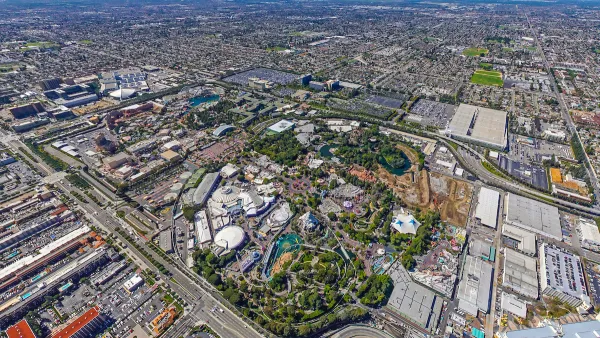
Impact Study Released for Disneyland Expansion
The theme park giant is one step closer to adding new sections to its Anaheim empire.

Planetizen Federal Action Tracker
A weekly monitor of how Trump’s orders and actions are impacting planners and planning in America.

The state-sanctioned urbicide of Austin
People don’t kill cities. Freeways do.

US to reduce Colorado River water deliveries to Mexico
A new Colorado Treaty amendment reduces Mexico’s Colorado River water allocation by 250,000 acre feet.

Baltimore to break ground on $50 million Transit Priority Project
The project will bring faster bus trips, safer streets and better bike connections to Baltimore.

Airbnb launches $250 million 'last-dollar financing' housing accelerator, makes first investment in Austin
The company will put $6.4 million towards affordable housing development in Texas’ capital.

Guerilla urbanists are building DIY bus stop benches in Chicago
A before-and-after of one of the bus stops with a new bench. The new benches are not officially sanctioned or permitted, but the residents who placed them hope they will be the start of a network of DIY benches across the city.

FREE Course: Walkable City 1: Why Walkability?
After describing his path towards focusing on walkability as the essence of good planning, Jeff Speck marches through his five principal reasons for making more walkable places.
Reinventing Malls: Planning Alchemy—Turning Gray Fields Into Gold
The course focuses on the opportunities and imperatives that shape reinvention of mall sites.

Eagle County Government
Harvard University Graduate School of Design
Nashville Planning Department
The Architects Foundation
University of Cincinnati Online
The Pocatello Development Authority
The Urban Renewal Agency of the City of Pocatello
Journal of the American Planning Association