It seems like behind every corner is a smart city waiting to happen. WNYC investigates.



"The Takeaway" podcast, published by WNYC, addresses the "smart cities" buzz this week by asking the question of whether it's smart to live in the city: "Is it dumb to be caught in this urban gridlock, billions of people jammed together in a post-industrial, 21st century mass?" asks host John Hockenberry at the outset of the podcast.
Setting aside the problematic conflation of everything non-rural under the term "urban" (the blog post introducing the podcast says 85 percent of the population will "likely live in a city by the end of the 21st century), the post surveys the fruits of the "smart cities" movement in six segments.
One segment, for instance, considers Hudson Yards as the dawn of New York City's "4th Era." Another segment details the recent victory of Columbus in the U.S. Department of Transportation's "Smart Cities Challenge." One segment addresses the case against smart cities. As with all buzzwords, the great potential envisioned for the "smart city" is not without its risks and reasons for skepticism.
Read the full story: The Future of The 'Smart City'

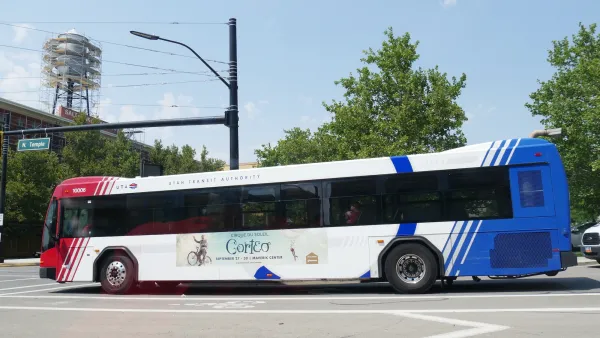
Salt Lake City debuts new bus rapid transit line
The third BRT line in the Utah Transit Authority system connects destinations from Taylorsville to the West Valley.

AI for Planners Explained: Urban Digital Twins
When AI stops talking and starts showing.

In Planning, the Possibilities With AI are High. So are the Stakes.
Planning history tells us that public trust is both fragile and essential. With AI, the time to set the right course is now.

Planetizen Federal Action Tracker
A weekly monitor of how Trump’s orders and actions are impacting planners and planning in America.

‘Going backwards:’ Baltimore mayor, students rally against state's transit funding plan
Maryland's proposed six-year plan provides no funding for Baltimore’s BMORE bus program and reduces its road maintenance funding.

Detroit to transform waterfront with $2.2 billion investment
Developers will convert about 18 acres of unused parking lot space into civic spaces.

MTA invests $1.1 billion in ‘nearly-impossible’-to-evade fare gates
The new technology marks the Metropolitan Transit Authority's first turnstile redesign in decades.

HUD modernizes 50-year-old manufactured housing framework
The Next Generation Manufactured Housing Action Plan establishes new energy-efficiency standards for manufactured homes, and new guidelines for anchoring them.

New CA housing laws tear down development red tape
Recently-signed legislation makes building starter homes and ADUs cheaper and faster in California.

FREE Course: Walkable City 1: Why Walkability?
After describing his path towards focusing on walkability as the essence of good planning, Jeff Speck marches through his five principal reasons for making more walkable places.
Reinventing Malls: Planning Alchemy—Turning Gray Fields Into Gold
The course focuses on the opportunities and imperatives that shape reinvention of mall sites.

One Hundred Miles
County of Mendocino
planning NEXT
The Architects Foundation
University of Cincinnati Online
Montrose County
Northern Illinois Transit Authority (NITA)
The Pocatello Development Authority