Intended to make the most of a planned light rail station, the city of Seattle has proposed a zoning overhaul for the University District.


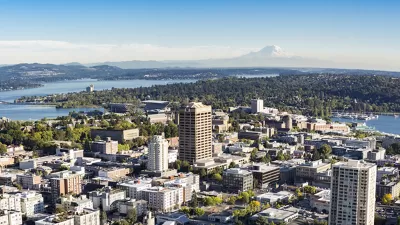
"Seattle’s Office of Planning and Community Development (OPCD) released draft recommendations on the University District rezone and urban design proposal in late May," reports Stephen Fesler. "The draft recommendations consist of a large breadth of changes to development regulations in the neighborhood and substantially increase development capacity," focusing especially near a light rail station expected to open in 2021.
This is the third article by Stephen Fesler, writing for The Urbanist, on the subject of the draft rezoning. The first provided an overview of key policy ideas, and the second focused on the proposed development regulations. The latter includes discussion of height limitations, setbacks, and open space requirements, among other urban design considerations.
The third article focuses on "how the proposal would regulate floor area and height, implement mandatory affordable housing and incentive zoning, and preserve historic and vulnerable masonry structures." [Emphasis in the original.]
Read the full story: Univeristy District Rezone Proposal: A Deeper Look At Incentive Zoning, Historic Preservation, And Affordable Housing
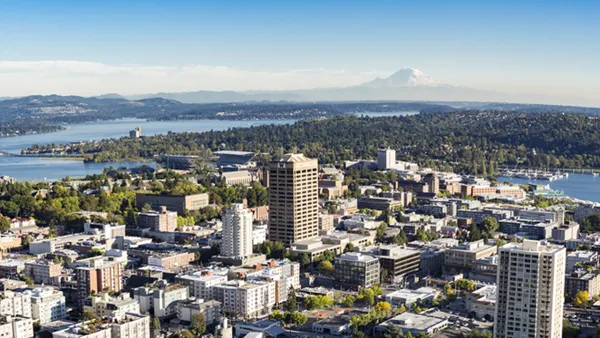
Seattle Councilmember Calls for Transit-Oriented Density
Seattle Councilmember Abel Pacheco writes on opinion piece for The Urbanist to make the case for transit-oriented density on The Ave in the city's University District.
Yet again, Seattle’s density zoning update is hit with delays
The city must now examine the ‘maximum possible development’ under a future zoning scenario, rather than the ‘maximum likely development.’

Seattle Ponders a New Approach to Zoning for its Comprehensive Plan Update
The city of Seattle will have an updated comprehensive plan by the end of 2024, with zoning changes to follow by 2025.

Planetizen Federal Action Tracker
A weekly monitor of how Trump’s orders and actions are impacting planners and planning in America.

Eastern Nebraska is running out of electricity
Data centers and electrification are straining eastern Nebraska’s grid, throttling economic development.

Study reveals best places in the U.S. for cycling, walking
New research from Streetlight Data examines bicycle and pedestrian miles per capita in the 100 largest U.S. cities by population.

DSA members accuse Mamdani of 'abandoning values' over housing redevelopment
New York City's mayor plans to replace about 2,000 units of public housing with private, mixed-income housing.

All sides of BRT debate unhappy with CDOT’s most recent move
The Colorado Department of Transportation is no longer considering center-running bus lanes for Colorado Boulevard.

Massachusetts bogs generate both power, and cranberries
Putting solar panels above farmland is one way Massachusetts is advancing toward its goal of net-zero carbon emissions by 2050.

FREE Course: Walkable City 1: Why Walkability?
After describing his path towards focusing on walkability as the essence of good planning, Jeff Speck marches through his five principal reasons for making more walkable places.
Reinventing Malls: Planning Alchemy—Turning Gray Fields Into Gold
The course focuses on the opportunities and imperatives that shape reinvention of mall sites.

City of Rosemead
Rutgers University, Edward J. Bloustein School of Planning and Public Policy
One Hundred Miles
University of Michigan School for Environment and Sustainability (SEAS)
Hunter College, City University of New York (CUNY)
The Architects Foundation
City of Cambridge
The Pocatello Development Authority
The Urban Renewal Agency of the City of Pocatello