It's a story of Goliath beating David in a preservationist fight in Seattle, but not before raising questions about how a university fits intot he city's regulatory environment.


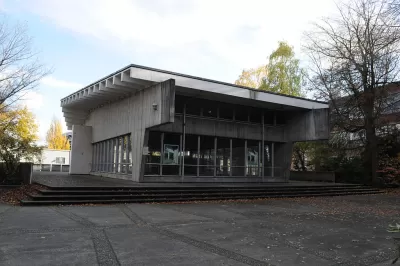
Knute Berger reports: "Outgunned and out financed, preservation advocates have given up on seeking a stay of execution for More Hall Annex, the historic structure on the University of Washington campus otherwise known at the Nuclear Reactor Building."
The Building is on the National Register of Historic Places, according to Berger, but the University of Washington wants to tear it down and replace it anyways. All of the early skirmishes in the legal battle to preserve the building went the way of the university, and preservationists have decided not to seek a stay against an April court case exempting the university from city's landmarks ordinance.
Read the full story: Preservationists throw in the towel on historic nuclear building

A Cutting-Edge Planning Hackathon in Seattle
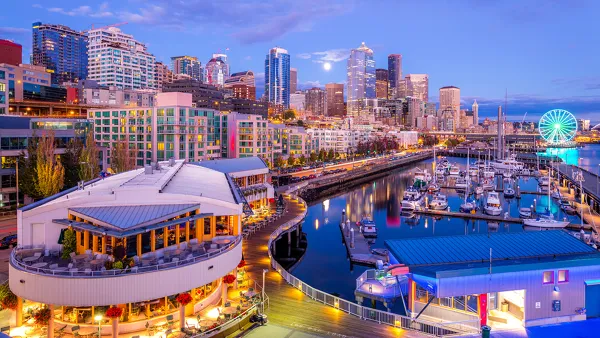
In GeekWire, Chuck Wolfe covers an atypical urban planning and policy gathering called an “Urban Resilience Hackathon,” which was held at the University of Washington in Seattle late last month. For a day, the event showcased collaborative problem solving and innovative thinking in addressing urban challenges.
University of Washington Gets Approval for Major Expansion
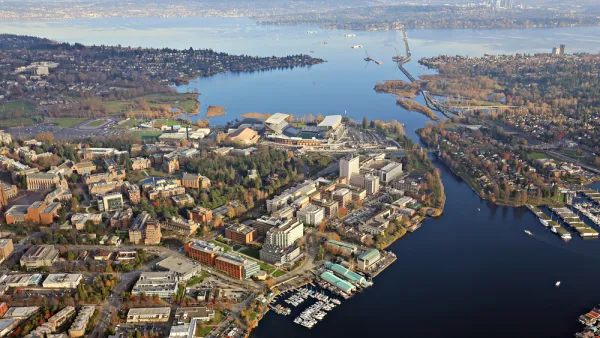
With several stipulations, Seattle City Council has signed off on the university's plans for up to 6 million square feet of new construction, including high-rises.

Addressing Online Retail's Ceaseless Curbside Deliveries
The rise of online retail has come with a flurry of delivery trucks that don't always have good places to stop. Researchers from Amazon's hometown are on the case.

Planetizen Federal Action Tracker
A weekly monitor of how Trump’s orders and actions are impacting planners and planning in America.

The state-sanctioned urbicide of Austin
People don’t kill cities. Freeways do.

Colorado’s Largest Data Center Could Rise Next to Homes — Without a Public Hearing
The proposed campus would consume 11 times the power of Denver International Airport; as it has across the country, opposition mounts.

Nation's most wind-powered state turns to coal as data centers increase energy demand
For the first time in decades, Iowa has increased its generation of coal power.

NYC cools commuters with city's first rain garden above a bus stop
New York City officials say the plants in the rain garden can absorb 16 gallons of rainwater during heavy storms.

Brightline West’s future may rely on $6 billion federal loan
The company has until Nov. 2 to make a $400 million equity investment into its proposed high-speed rail line.

FREE Course: Walkable City 1: Why Walkability?
After describing his path towards focusing on walkability as the essence of good planning, Jeff Speck marches through his five principal reasons for making more walkable places.
Reinventing Malls: Planning Alchemy—Turning Gray Fields Into Gold
The course focuses on the opportunities and imperatives that shape reinvention of mall sites.


Greater Baltimore Committee
Eagle County Government
Harvard University Graduate School of Design
The Architects Foundation
University of Cincinnati Online
The Pocatello Development Authority
The Urban Renewal Agency of the City of Pocatello
Journal of the American Planning Association