The Washington Post provides feature-length coverage of an ongoing, long-lasting controversy over a proposal by a wealthy landowner to donate 87,500 acres for the purposes of creating a new national park.


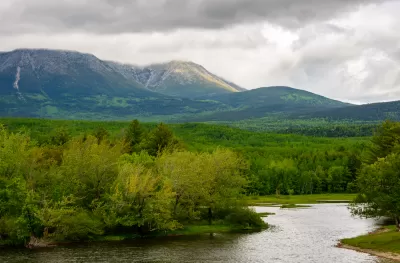
Brady Dennis reports on the efforts of Roxanne Quimby, "the wealthy, polarizing co-founder of Burt’s Bees," to donate 88,000 acres of "Maine’s pristine North Woods" for preservation as a national park.
"Her effort has bitterly divided this corner of New England," writes Dennis "where shuttered paper mills have led to crippling unemployment and a shrinking population, and where distrust of the federal government runs as deep as the rivers and streams."
The occasion for Dennis's coverage of the controversy was a visit to the area by National Park Service Director Jonathan Jarvis, who encountered both support and anger.
According to Dennis, however, residents have voted against the park, the governor and legislature are opposed the proposal, and "Maine’s congressional delegation refuses to introduce the measure necessary to create a national park." The only option, then, is for President Obama to declare the land a national monument using authority from the Antiquities Act.
The article includes a lot more detail about the effort by Quimby and her son, Lucas St. Clair, to build support for the proposal.
Read the full story: Proposed national park is a multimillion-dollar gift wrapped up in distrust
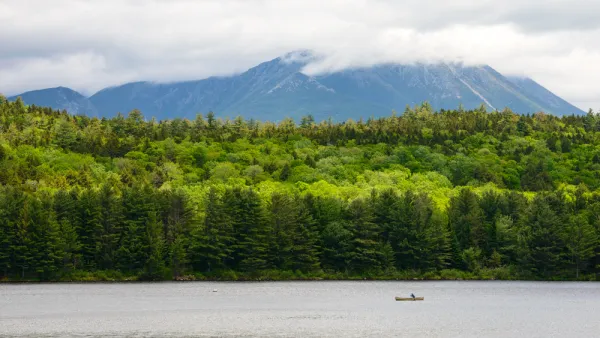
President Obama Designates New National Monument in Maine
The announcement that 87,500 acres of land in Maine's North Woods would become a national monument came the day before the centennial of the National Park Service. The designation is also sure to be controversial.

New River Gorge is America's Newest National Park
The 72,000-acre West Virginia gem joins an illustrious list as the 63rd U.S. national park.
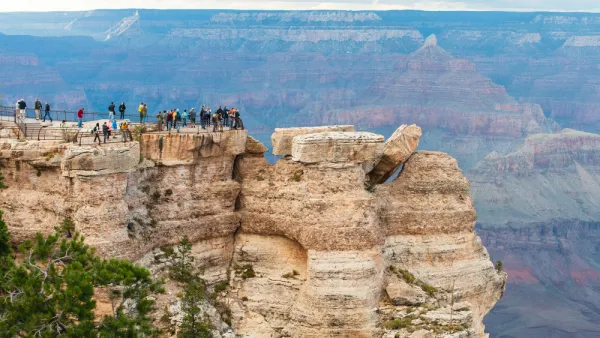
Maybe National Park Entrance Fees Won't Triple After All
After public outcry, Department of the Interior officials seem to have changed their mind about raising the price of entrance fees into National Parks.

Planetizen Federal Action Tracker
A weekly monitor of how Trump’s orders and actions are impacting planners and planning in America.

Eastern Nebraska is running out of electricity
Data centers and electrification are straining eastern Nebraska’s grid, throttling economic development.

Study reveals best places in the U.S. for cycling, walking
New research from Streetlight Data examines bicycle and pedestrian miles per capita in the 100 largest U.S. cities by population.

Officials look to alter BART extension as price goes through the roof
Tariffs and the war with Iran are behind the rising cost.

To power data centers, Utah company may build hundreds of nuclear reactors on state land
In its permit application, Valar asked for the county to confirm that changes within its outlined plan would still be covered by the permit.

San Antonio is using environmental review to stall ICE detention center
San Antonio sued last month to pause work on the new detention center until the federal government studied its effect on the surrounding area.

FREE Course: Walkable City 1: Why Walkability?
After describing his path towards focusing on walkability as the essence of good planning, Jeff Speck marches through his five principal reasons for making more walkable places.
Reinventing Malls: Planning Alchemy—Turning Gray Fields Into Gold
The course focuses on the opportunities and imperatives that shape reinvention of mall sites.

City of Charlotte
City of Rosemead
Rutgers University, Edward J. Bloustein School of Planning and Public Policy
University of Michigan School for Environment and Sustainability (SEAS)
Hunter College, City University of New York (CUNY)
The Architects Foundation
City of Cambridge
The Pocatello Development Authority
The Urban Renewal Agency of the City of Pocatello