Middle class African-Americans are fleeing Chicago due to crime, not due to being priced out, as is common elsewhere. "On average more than 10,000 African-Americans leave the city every," reports Brandis Friedman of WTTW for the PBS NewsHour.


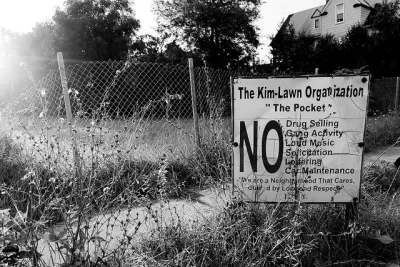
"Researchers are beginning to call this migration 'black flight," states Friedman in the newscast (with accompanying text). And like the post-World War II white flight (that began decades earlier, notes Emily Badger in The Washington Post Wonkblog), they are going to the suburbs, taking with them their tax base, exacerbating Chicago's financial problems. [See comments below from Urban League president.]
From 2000 and 2014, just over 200,000 African-Americans left Chicago, that’s roughly one out of every five blacks.
Gun violence is key factor explaining out-migration, states University of Illinois at Chicago urban planning professor Janet Smith. And the first to move are families with children, as opposed to single or two-person households.
The two families Friedland interviews express great satisfaction with their new suburban neighborhoods in Matteson and Dolton. However, Friedland doesn't indicate the racial composition of those two suburbs, which would probably make for an entirely new show as they are overwhelmingly African-American (65.99 percent and 82.4 percent, respectively, in 2000).
Chicago Urban League president Shari Runner says middle class black flight is hurting the city’s tax base. "So, if you’re thinking about being a city planner, you’re thinking about anticipating revenue from taxes from people who live and work in the city. All of those assumptions have to be re-looked at, and how does that impact city as a whole in terms of how is it going to make that up and provide the resources it needs as a city to provide for citizens."
Just how badly the black flight is impacting the city is one topic that Hari Sreenivasan, anchor of PBS NewsHour Weekend, discusses with his next guest, Aamer Madhani, Chicago-based correspondent for USA TODAY, in "Why neighborhood demographics are shifting in Chicago."
Black flight is by no means unique to Chicago, states Madhani. "[If] you look at the biggest African-American populations [in cities], nine of the 10 have seen this decline since 2000. And you have seen places like Detroit, New York, and Chicago, where it has been greatest.
But what is different about Detroit and Chicago, compared to New York, New York has a lot of gentrification going on, and you have seen violence nosedive a bit.
But, in Chicago, there is this dark cloud that comes with this huge flight that is going on. And you look at who is affected by violence...we’re on pace for 500-plus murders this year, and the vast majority of the people that will be killed have gang ties.
Too many guns, too few jobs.
Earlier this month, the Nabisco plant here in town on South Side that has a big African-American and Latino population that Donald Trump and Hillary Clinton and Bernie Sanders have been talking about, they just laid off 600 people.
Indeed, on a list of unemployment rates of metro areas with a 2010 Census population of one million or more, the Chicago-Naperville-Elgin, IL-IN-WI Metropolitan Statistical Area ranked #51 (highest) with a rate of 6.6 percent in March 2016 according to the Bureau of Labor Statistics.
However, the entire state is hurting. In January, the unemployment rate was 6.3 percent, reported the Chicago Tribune in March. "Only three other states plus the District of Columbia have unemployment rates worse than Illinois: Mississippi at 6.9 percent; Alaska at 6.6 percent; New Mexico at 6.5 percent; and D.C. at 6.5 percent."
Chilling Iraq comparison
Chicago's gun violence greatly stems from its high unemployment rate among young males, explains Madhani. "Next to half of African-American men between 20 and 24 that are neither in school or employed in a city the size of Chicago. It is not dissimilar to what I remember seeing in Iraq post-2003, when Paul Bremer decided they would disband the Baathist Iraqi army."
Finally an update on Chicago's population loss, recently noted here on May 5, though those figures applied to the metro area. "The city of Chicago lost about 2,890 residents between 2014 and 2015, bringing the city's population down to 2,720,546, according to newly released data from the U.S. Census Bureau," reports Marwa Eltagouri for the Chicago Tribune on May 19.
Experts say the main factors in Chicago's population dip are the exodus of African-Americans and the aging of the Mexican immigrant population.
Here comes Houston, Texas
The nation's fourth-most-populated city, Houston, saw the second-largest increase among major cities, gaining 40,032 residents between 2014 and 2015. While Houston's population, about 2.3 million, is still about 424,000 residents behind Chicago, experts say that if the trends continue, Houston could eclipse Chicago's population in about 10 years.
"But William Frey, a demographer with the Brookings Institution who analyzes census data," expressed some doubts, writes Eltagouri. "It's certainly possible," Frey said..."If you project those (populations) out, then it'll be close to 10 years before there's a convergence. But that's not likely to be the case."
See the chart showing population changes numerically among the 15 most populous cities from 2014-2015. Every city showed population gains > 10,000 except:
- Philadelphia: +5,880
- Indianapolis: +4,121
- Chicago: -2,890
See #BlackFlight on Twitter for more comments and information.
FULL STORY: Chicago’s high murder rates drive exodus of black middle class

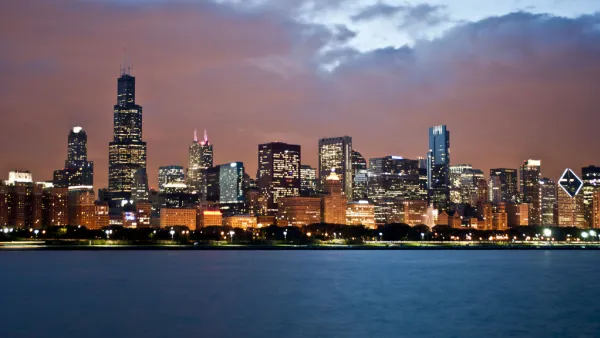
Leaving Chicago
Why are folks fleeing from the city and the state in record numbers? Is domestic migration to blame for the Chicago region's population loss last year of over 6,000 and the state's loss of over 22,000 people?
Urban Millennials Stuck in the Three Largest U.S. Metros
For a variety of economic reasons in addition to urban preferences, young people are not leaving the country's three major metropolitan areas: New York, Los Angeles, and Chicago, and that's not good for the nation's economy nor the individuals.
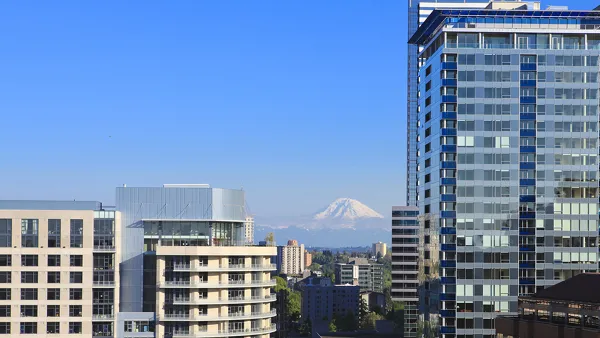
2020 Population Growth Rates for the 50 Biggest U.S. Cities
The Census Bureau released new data on May 27 that includes the first four months of the pandemic. Seattle tops the growth rate at 2.2% from July 1, 2019, to July 1, 2020, while Baltimore and San Francisco land at the bottom with -1.4%.

The state-sanctioned urbicide of Austin
People don’t kill cities. Freeways do.

US to reduce Colorado River water deliveries to Mexico
A new Colorado Treaty amendment reduces Mexico’s Colorado River water allocation by 250,000 acre feet.

New Jersey’s second-largest city bans standalone data centers
Jersey City will continue to allow co-location facilities, such as those meant for research institutions that store their own data.

Amtrak not solely to blame for New Jersey commuter rail's unreliability, report finds
A new study from the Garden State Initiative found that NJ Transit’s budget grew 20% across a 4 year period, but reliability declined significantly over the same period.

EPA erases limits on planet-warming pollution from power plants
Under Monday’s plan, power plants would still have some limits on how much mercury, arsenic and other contaminants they can emit.

Phoenix announces new on-demand transit service, more frequent RAPID buses
Both new services will launch in October, and are part of Phoenix's Project Effective Access Solutions for Easing Congestion.

FREE Course: Walkable City 1: Why Walkability?
After describing his path towards focusing on walkability as the essence of good planning, Jeff Speck marches through his five principal reasons for making more walkable places.
Reinventing Malls: Planning Alchemy—Turning Gray Fields Into Gold
The course focuses on the opportunities and imperatives that shape reinvention of mall sites.

Eagle County Government
Harvard University Graduate School of Design
Nashville Planning Department
The Architects Foundation
University of Cincinnati Online
The Pocatello Development Authority
The Urban Renewal Agency of the City of Pocatello
Journal of the American Planning Association