Could the cancellation the New York Metropolitan Transportation Authority's membership in the American Public Transportation Association be the wakeup call the transit industry needs?


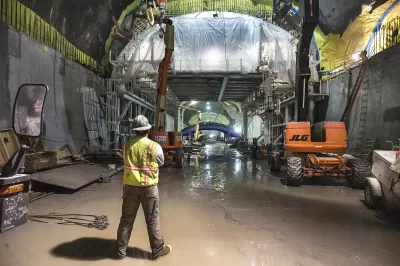
"The country’s largest transit agency is withdrawing from the country’s main transit trade association," according to an article on the TransitCenter website. The agency in question is the New York Metropolitan Transportation Authority (MTA), which accounted for 35 percent of all transit ridership in the United States. "The idea of a transit industry association that doesn’t include the MTA is akin to an OPEC without Saudi Arabia," adds the post.
"The essence of the MTA’s complaint is that APTA is not worth the investment. In the letter, officials noted the agency pays $400,000 per year because of its size but in return has little influence within the organization," according to the post.
The post goes into more detail, revealingly, about the discontent also surrounding the way transit is funded at the federal level, with some transit organizations happy to applaud the silver linings of policies like the FAST Act instead of fighting for fundamental reforms in transportation funding. "These issues were not likely root causes of the MTA’s decision to leave APTA. But the agency’s withdrawal nonetheless presents an opportunity to re-examine the way the conversation around public transportation has developed both in Washington and peer-to-peer within the industry."
Read the full story: MTA Pulls The Plug On APTA
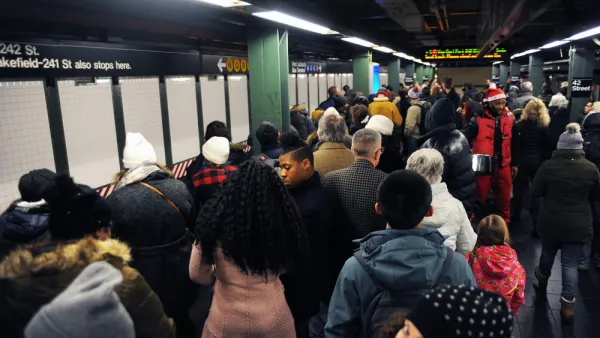
The NYC Subway's Uneven Recovery
As subway riders return in fits and starts, some stations are experiencing a much faster recovery than others.
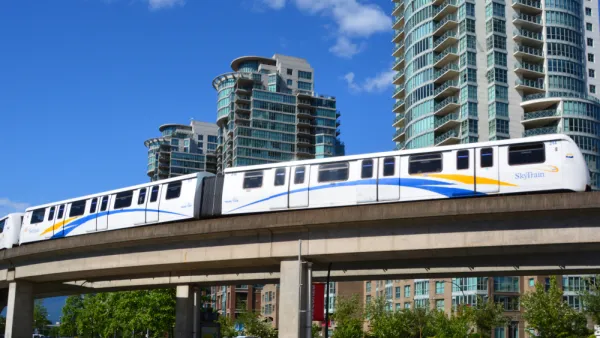
Vancouver's TransLink Named Best Transit System in North America
The American Public Transportation Association (APTA) named TransLink in Vancouver the best transit system in North America.

Automated Vehicles Pose 'Political Threat' to Transit
TransitCenter's Steven Higashide argues that despite all the hype around self-driving vehicles, traditional high-capacity transit still has some distinct advantages. As long, that is, as transit agencies are willing to recognize them.

Planetizen Federal Action Tracker
A weekly monitor of how Trump’s orders and actions are impacting planners and planning in America.

California plans to bury El Niño’s downpour
If the state plays its cards right, it may be able to store a billion acre-feet of El Niño’s water in aquifers.

Desperate measures: Advocates weigh draining Lake Powell to fill Colorado River
Draining the reservoir could reduce evaporation losses by a couple hundred thousand acre-feet.

Chicago voters approve permanent festival grounds, penalty for vacant property owners
Currently, major summer and fall festivals take over public parks for weeks at a time, drawing criticism from nearby residents

NYC votes to cut outdoor dining red tape, speed up permitting
New York City also voted to allow the Department of Transportation to begin work on urgent projects before notifying elected officials.

California appears to reject Prop. 45
The proposition would have expanded the projects that qualify for a streamlined environmental review, effectively paring down the California Environmental Quality Act.

FREE Course: Walkable City 1: Why Walkability?
After describing his path towards focusing on walkability as the essence of good planning, Jeff Speck marches through his five principal reasons for making more walkable places.
Reinventing Malls: Planning Alchemy—Turning Gray Fields Into Gold
The course focuses on the opportunities and imperatives that shape reinvention of mall sites.

City of Rosemead
Rutgers University, Edward J. Bloustein School of Planning and Public Policy
One Hundred Miles
Hunter College, City University of New York (CUNY)
The Architects Foundation
University of Cincinnati Online
City of Cambridge
Montrose County
The Pocatello Development Authority