Boston is the latest of a growing number of cities that could end the use of cash to may for transit tickets. The change does not come without some concern for riders.


"Massachusetts Bay Transportation Authority officials want to eventually phase out using cash to pay on board its buses and trains, allowing riders to use their cellular phones, credit cards, and new CharlieCards instead," reports Nicole Dungca.
"The change would not take effect for at least two years and would need approval from the authority’s fiscal control board," adds Dungca. "But at Monday’s board meeting, MBTA officials said they plan to aggressively pursue a new fare-collection system that would be more user-friendly and speed up boarding times."
The article includes discussion fo the demographic concerns raised by the proposal (i.e., low-income riders are more likely to use cash), next steps in the planning process, and the example set by other transit systems in adopting similar technologies (e.g., Transport for London and the Chicago Transit Authority). According to Dungca, "[s]uch a fare-collection system would allow the T to easily charge different prices for different times of day, or for different distances traveled by a customer."
FULL STORY: MBTA to phase out cash tickets on buses, trains

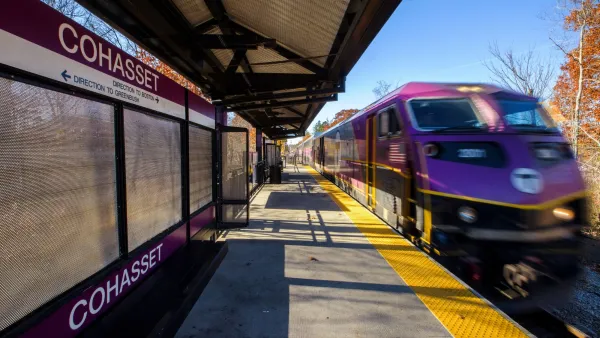
MBTA extends commuter rail discounts and lowers express bus fare to keep passengers riding into the fall
Boston-area commuters can access half-price monthly passes through November.
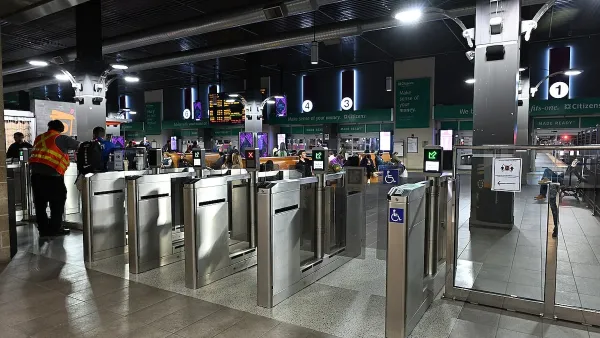
MBTA Fare Collection Jumped 35% At Stations With ‘Engagement Reps’
Boston’s transit agency is taking a firmer stance against fare evasion, cautioning riders it will begin issuing citations beginning September 8.
Boston Transit Board Approves Low-Income Fare, but Funding is Unclear
The board voted to include the T’s on-demand paratransit service in the discount program, prompting concerns about cost.

Planetizen Federal Action Tracker
A weekly monitor of how Trump’s orders and actions are impacting planners and planning in America.

The state-sanctioned urbicide of Austin
People don’t kill cities. Freeways do.

US to reduce Colorado River water deliveries to Mexico
A new Colorado Treaty amendment reduces Mexico’s Colorado River water allocation by 250,000 acre feet.

Brightline West’s future may rely on $6 billion federal loan
The company has until Nov. 2 to make a $400 million equity investment into its proposed high-speed rail line.

LA Metro’s ultimatum: no extra buses for LA28 if federal funding isn’t imminently secured
If Metro does not provide additional buses, LA28 organizers will have to find a new way to manage Olympic traffic. LA28’s budget does not include a line item for transit.

Colorado’s Largest Data Center Could Rise Next to Homes — Without a Public Hearing
The proposed campus would consume 11 times the power of Denver International Airport; as it has across the country, opposition mounts.

FREE Course: Walkable City 1: Why Walkability?
After describing his path towards focusing on walkability as the essence of good planning, Jeff Speck marches through his five principal reasons for making more walkable places.
Reinventing Malls: Planning Alchemy—Turning Gray Fields Into Gold
The course focuses on the opportunities and imperatives that shape reinvention of mall sites.

Eagle County Government
Harvard University Graduate School of Design
Nashville Planning Department
The Architects Foundation
University of Cincinnati Online
The Pocatello Development Authority
The Urban Renewal Agency of the City of Pocatello
Journal of the American Planning Association