The U.S. ranked 19 out of 20 for countries with high speed rail service according to a new survey by GoEuro.



Ben Adler writes about how the deficits in the U.S. rail transport system compares to the rest of the world:
"GoEuro ranked all countries with high-speed rail lines (as defined by its slightly complex criteria) and made some arbitrary choices as to which factors matter most. It put the biggest emphasis on population coverage, as it should, but its second most important factor was record speed, which is silly. America would benefit more from 10 train lines that can go 150 miles per hour than one that can go 250. Operating speed, which is the third most valued factor in this ranking, is more useful."
"Ranked on population coverage alone, the U.S. is also second-to-last, with only 3.7 percent of the population served by high-speed rail. Arguably, the U.S. should not have been included on the list at all, as its sole operational high-speed rail service, the Acela on the Northeast corridor, only attains the 150-mile-per-hour speeds that GoEuro ascribes to it on a tiny portion of its route. Still, the basic truth that the U.S. has fallen far behind Asia and Europe is accurately captured here."
Read the full story: The U.S. is just pathetic on high-speed rail
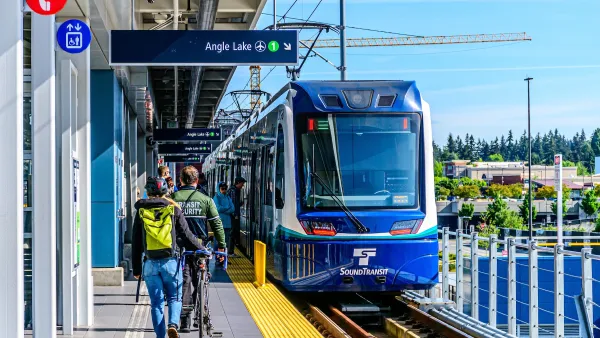
Sound Transit says train to Ballard is still coming
Agency officials say reports of the line's demise are exaggerated and that it remains in its plans.
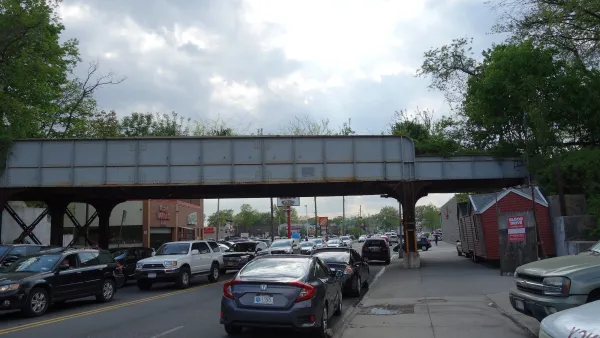
Mamdani Budget Funds Queensway, Dimming Hope for Reactivated Long Island Rail
Supporters of a proposed rail extension say building the elevated park as proposed would make it harder to bring trains back to this part of Queens.
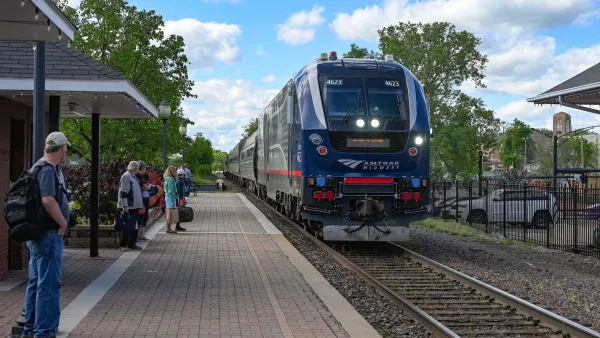
FRA Wants to Split Amtrak in 3, Sparking Privatization Fears
A proposal to restructure the rail agency could streamline accountability — or add more bureaucracy.

Planetizen Federal Action Tracker
A weekly monitor of how Trump’s orders and actions are impacting planners and planning in America.

Eastern Nebraska is running out of electricity
Data centers and electrification are straining eastern Nebraska’s grid, throttling economic development.

Move over, LA: St. Louis gears up for Olympics, invests millions in downtown redevelopment
The Missouri city will host the 2028 Olympic soccer group stage and knockout matches.

Dallas releases zoning code overhaul to officials
The drafted overhaul is over 400 pages long.

NYC renovations for dangerous, ‘mercilessly crammed’ street delayed until 2027
Construction was supposed to begin this fall.

San Diego’s Midway Rising project gets greenlight from city council
The project looks to become the largest affordable housing development in California's history.

FREE Course: Walkable City 1: Why Walkability?
After describing his path towards focusing on walkability as the essence of good planning, Jeff Speck marches through his five principal reasons for making more walkable places.
Reinventing Malls: Planning Alchemy—Turning Gray Fields Into Gold
The course focuses on the opportunities and imperatives that shape reinvention of mall sites.

City of Rosemead
Rutgers University, Edward J. Bloustein School of Planning and Public Policy
One Hundred Miles
University of Michigan School for Environment and Sustainability (SEAS)
Hunter College, City University of New York (CUNY)
The Architects Foundation
City of Cambridge
The Pocatello Development Authority
The Urban Renewal Agency of the City of Pocatello