The fixed costs of infrastructure projects leave cities like Flint struggling to pay their bills with fewer people pooling their resources.


Alana Semuels examines either side of the vast chasm separating American communities: "The contrast between San Jose and Flint illuminates a truism about regional inequality in America: The cities that are struggling the most also have the least resources to deal with their problems."
The article goes into a detailed comparison between the benefits of having a growing population, workforce, and tax base, like in San Jose, and the drawbacks of a shrinking population, like in Flint. The imbalance between the two regions is put into even more stark perspective when considering the Californian drought compared to the city of Flint's proximity to the Great Lakes, which also happens to be the largest supply of freshwater in the world. Yet, Flint's water is expensive and toxic, while San Jose is investing huge sums in new water infrastructure.
Semuels also shares news that the U.S. Senate is considering legislation that would provide relief to communities struggling to cover the expenses of infrastructure that provides the basic human services:
A bill introduced by Michigan Senators Debbie Stabenow and Gary Peters, both Democrats, would authorize the federal Drinking Water State Revolving Fund to make up to $100 million in subsidized loans or grants for infrastructure improvements to any state that receives an emergency declaration because of a public-health threat due to contaminants in a public drinking-water system.
The article includes more examples of infrastructure challenges that compare to Flint's, as well as more discussion about how shrinking cities can take a page from San Jose in approaching their infrastructure challenges.
Read the full story: A Tale of Two Water Systems

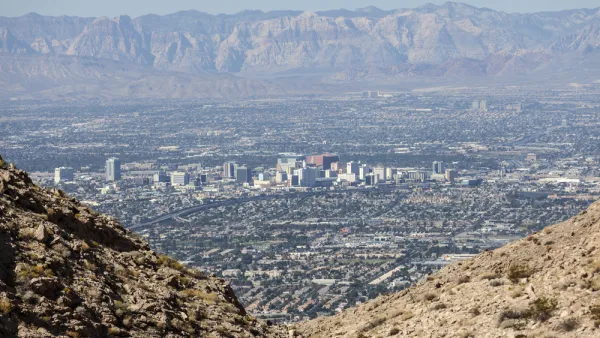
Sales Tax to Fund Water Projects Extended in Las Vegas Region
The Clark County Commission is extending a sales tax, created in 1998, which could have drawn to a close after raising $2.3 billion or the year 2025, whichever came first. The tax will remain in place indefinitely.
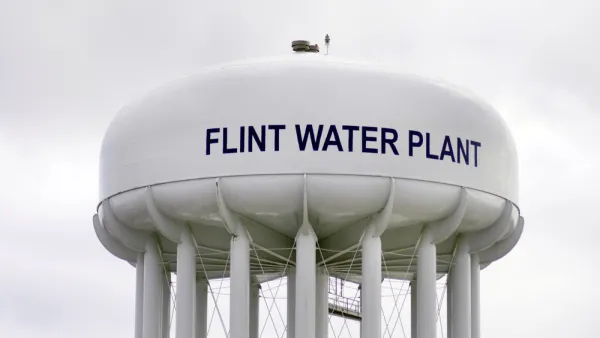
Michigan Suing Flint to Force Long-Term Water Contract
The news from Michigan serves as a reminder that the Flint drinking water tragedy, which started in 2014, still has not been resolved. The health of Flint residents is still at risk.

$300 Million for a Tunnel to Deliver Water to New York City
After navigating some confusion about construction timelines last year, Mayor Bill de Blasio took steps this week to ensure New York City's water security.

Planetizen Federal Action Tracker
A weekly monitor of how Trump’s orders and actions are impacting planners and planning in America.

Amtrak, CN end decades-long dispute with eight-year agreement
The new operating agreement establishes an updated framework for the companies to work together, including processes to resolve disputes.

Judges permit Denver to divert 77,000 acre feet from the Colorado River for reservoir expansion
Overuse and climate change have caused the Colorado River’s water levels to plummet.

NYC DOT wants faster, more permanent street upgrades
The city is examining ways to build more concrete infrastructure without getting entangled in 'decades-long' projects.

'Something we’ve never seen before:' rising utility rates could strain city finances nationwide
Data centers, climate change and other factors have caused utility rates in the United States to increase by 38% since 2020.

Trump to overrule local leaders, lease millions of acres of America’s Pacific Island territories’ seafloors to mining companies
International law says that the Indigenous people of America’s territories have a right to prior and informed consent regarding projects that impact their countries.

FREE Course: Walkable City 1: Why Walkability?
After describing his path towards focusing on walkability as the essence of good planning, Jeff Speck marches through his five principal reasons for making more walkable places.
Reinventing Malls: Planning Alchemy—Turning Gray Fields Into Gold
The course focuses on the opportunities and imperatives that shape reinvention of mall sites.

Harvard University Graduate School of Design
KFH Group Inc.
Greater Baltimore Committee
The Architects Foundation
University of Cincinnati Online
The Pocatello Development Authority
The Urban Renewal Agency of the City of Pocatello