The news from Michigan serves as a reminder that the Flint drinking water tragedy, which started in 2014, still has not been resolved. The health of Flint residents is still at risk.


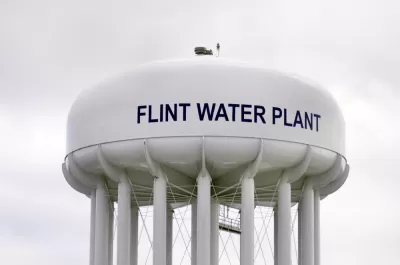
David Eggert reports for the Associated Press that the state of Michigan sued the city of Flint this week, due to a decision by the Flint City Council to forego a long-term water deal with Great Lakes Water Authority.
Instead of a 30-year contract, the city decided instead on a short-term contract. The state's Department of Environmental Quality (DEQ) is suing to force Flint into a long-term contract.
Another article by Paul Egan says the "lawsuit is a striking turnabout for the DEQ, the agency that investigations have shown was largely to blame for the city's disastrous switch away from Detroit water to the Flint River as a temporary drinking source in April 2014."
Read the full story: Michigan sues Flint after council refuses to OK water deal

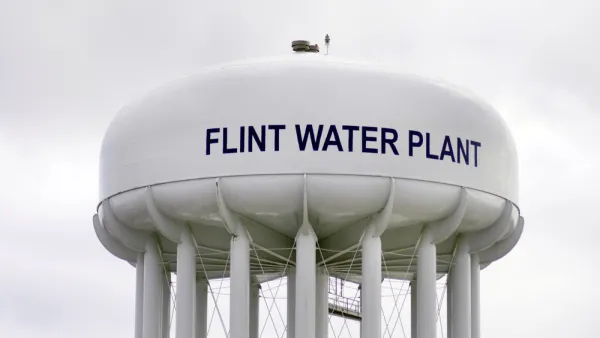
$170 Million for Flint Water Pipes a Step Closer to Congressional Funding
An amendment to the Water Resources Development Act (WRDA) that would provide $170 million to replace contaminated water pipes is headed to the 11th hour of the Congressional session.
A Tale of Two Cities: San Jose and Flint
The fixed costs of infrastructure projects leave cities like Flint struggling to pay their bills with fewer people pooling their resources.
How the U.S. Environmental Protection Agency Failed the People of Flint
While blame squarely lays with Michigan state officials, agencies, and possibly Gov. Rick Snyder himself, the EPA also played a role by both detecting the cause of the problem but not acting on the reports of improper treatment of river water.

Planetizen Federal Action Tracker
A weekly monitor of how Trump’s orders and actions are impacting planners and planning in America.

Amtrak, CN end decades-long dispute with eight-year agreement
The new operating agreement establishes an updated framework for the companies to work together, including processes to resolve disputes.

Judges permit Denver to divert 77,000 acre feet from the Colorado River for reservoir expansion
Overuse and climate change have caused the Colorado River’s water levels to plummet.

NYC DOT wants faster, more permanent street upgrades
The city is examining ways to build more concrete infrastructure without getting entangled in 'decades-long' projects.

'Something we’ve never seen before:' rising utility rates could strain city finances nationwide
Data centers, climate change and other factors have caused utility rates in the United States to increase by 38% since 2020.

Trump to overrule local leaders, lease millions of acres of America’s Pacific Island territories’ seafloors to mining companies
International law says that the Indigenous people of America’s territories have a right to prior and informed consent regarding projects that impact their countries.

FREE Course: Walkable City 1: Why Walkability?
After describing his path towards focusing on walkability as the essence of good planning, Jeff Speck marches through his five principal reasons for making more walkable places.
Reinventing Malls: Planning Alchemy—Turning Gray Fields Into Gold
The course focuses on the opportunities and imperatives that shape reinvention of mall sites.

Harvard University Graduate School of Design
KFH Group Inc.
Greater Baltimore Committee
The Architects Foundation
University of Cincinnati Online
The Pocatello Development Authority
The Urban Renewal Agency of the City of Pocatello