The big anchor businesses of malls are bleeding business and closing stores, dragging the rest of the mall business down with them.


"The rise of online shopping and changing consumer habits are battering the big department stores known as anchors that once lured shoppers to malls—leaving landlords with empty space and forcing them to undertake expensive overhauls to stay relevant," according to an article by Liam Pleven.
"Macy’s, which reported a 31% decline in fourth-quarter earnings on Tuesday, in January said it would be closing nearly 40 locations. Sears Holdings Corp. and J.C. Penney Co., which report fourth-quarter earnings later this week, also are closing stores," adds Pleven.
In total, report Pleven, anchor stores, like the department stores listed above, are experiencing a great contraction of the foot traffic necessary to drive sales: "Department-store chains would need to close about 500 stores—equal to about 15% of all anchor space at U.S. malls—to generate as much sales a square foot as they did in 2006, according to a recent report from Green Street Advisors, a real-estate research firm."
The article begins with an anecdote from the Ridgmar Mall in Fort Worth in Texas and concludes by examining the effect of anchor closures on the business model of malls there and elsewhere around the country.
Read the full story: Anchors Aweigh: Malls Lose More Department Store Tenants
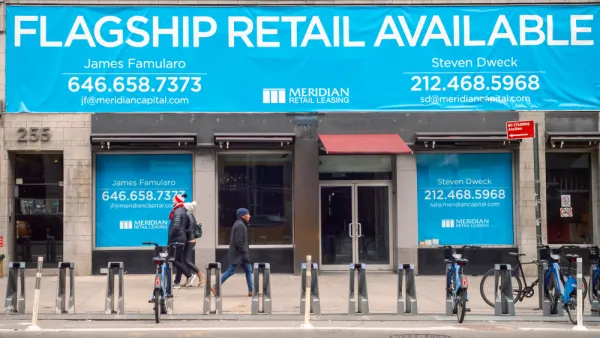
A Death Knell for Department Stores
The latest chapter of the retail apocalypse is not a happy one.
New Jersey affordable housing requirements spur infill development across the state
A 50-year-old law continues to reshape development around housing goals.
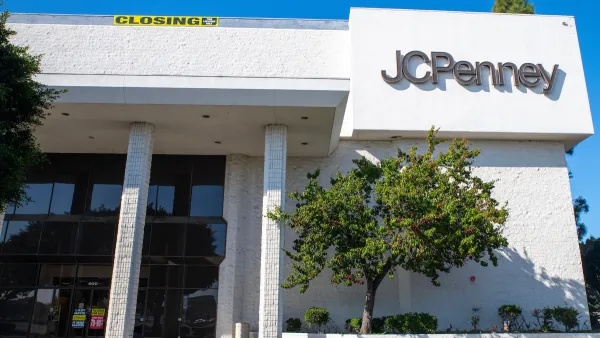
Thousands of new homes are replacing Orange County's dead malls
Southern California cities are adjusting their zoning codes to support mixed-use and residential developments that are replacing dying shopping malls.

Planetizen Federal Action Tracker
A weekly monitor of how Trump’s orders and actions are impacting planners and planning in America.

Washington state to charge fee to drivers with fuel-efficient cars
Revenue from the fee will go towards supporting the state’s highways.

Illinois considers spending $1 billion in taxpayer money on data center
A quantum computing campus and data center are currently under construction in Chicago.

Senate passes bill overhauling permitting
The bill still needs to pass the House.

Did data centers change how voters cast their ballots?
Texas, Ohio, and Georgia all flipped party control. But in rural counties, the effect of local data centers was mixed.

Amtrak invests in eight new Airo trainsets
The new trainsets will begin serving passengers in 2031.

FREE Course: Walkable City 1: Why Walkability?
After describing his path towards focusing on walkability as the essence of good planning, Jeff Speck marches through his five principal reasons for making more walkable places.
Reinventing Malls: Planning Alchemy—Turning Gray Fields Into Gold
The course focuses on the opportunities and imperatives that shape reinvention of mall sites.

City of Charlotte
City of Rosemead
Rutgers University, Edward J. Bloustein School of Planning and Public Policy
University of Michigan School for Environment and Sustainability (SEAS)
Hunter College, City University of New York (CUNY)
The Architects Foundation
University District Partnership