With more driving comes a lot more deaths on the nation's roads. The question is why traffic deaths increase at a greater rate than vehicle miles traveled.


Joe Cortright analyses new data from the National Highway Traffic Safety Administration (NHTSA) showing "traffic related deaths are up 11.3 percent for the first nine months of 2015, as compared to the same period a year earlier."
Describing those findings as an "ominous trend," Cortright is willing to go further than the NHTSA in identifying a culprit for the increasing numbers of fatalities on the nation's roadways: the recent increase in driving.
What’s striking about the new NHTSA numbers is that road crash deaths are increasing much faster than total miles driven. As a result, the number of deaths per mile driven—which has been declining for decades—jumped up in the first three quarters of 2015, from 1.05 deaths per 100 million miles to 1.10 deaths per 100 million miles.
Cortright notes that the relationship between vehicle miles traveled (VMT) and driving deaths isn't new. In fact, " the same kind of disproportionate change occurred when gas prices increased in 2007-08. At that time, miles driven fell sharply—and traffic deaths fell even faster. In 2008, total vehicle miles traveled declined by 0.7% and in 2009, they declined a further 1.5 percent."
Cortright isn't alone in analyzing these trends, searching for the reasons why the relationship between traffic deaths and VMT is non-linear. Angie Schmitt reported on the same statistics for Streetsblog USA, sharing the theory of David Levinson about why deaths increase so much when VMT increases: "when gas prices fall, collisions rise faster than mileage because people who don’t ordinarily drive much, like teenagers, start driving more." Cortright also mentions research that shows high fuel prices inspire some motorists to slow down, thus reducing the number of fatal collisions.
FULL STORY: More driving means more dying

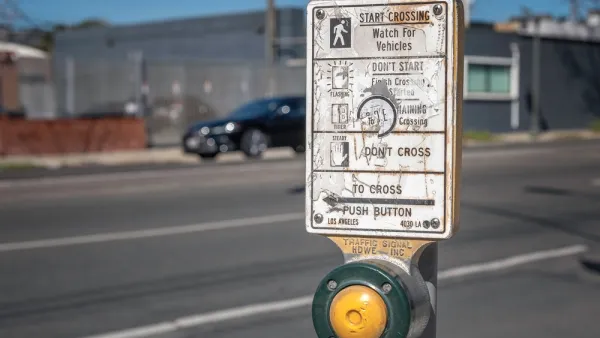
Report: Racial Gap in Traffic Deaths Persists
Communities of color have significantly higher rates of traffic fatalities, according to federal research.

Acceptable Deaths
What can we learn from our Covid response?
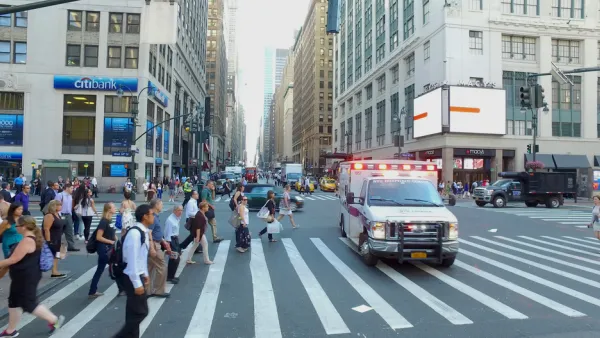
New York City Traffic Fatalities Pass 2019 Totals
The visions of a car-free utopia that might have seemed like a potential silver lining in March and April have given away to a tragic reality.

Planetizen Federal Action Tracker
A weekly monitor of how Trump’s orders and actions are impacting planners and planning in America.

The state-sanctioned urbicide of Austin
People don’t kill cities. Freeways do.

US to reduce Colorado River water deliveries to Mexico
A new Colorado Treaty amendment reduces Mexico’s Colorado River water allocation by 250,000 acre feet.

5 New England states march closer to 800 megawatt wind energy project
Securing federal approval for the project may be complicated under the Trump administration, which has historically been hostile towards domestic wind power.

Baltimore to break ground on $50 million Transit Priority Project
The project will bring faster bus trips, safer streets and better bike connections to Baltimore.

Airbnb launches $250 million 'last-dollar financing' housing accelerator, makes first investment in Austin
The company will put $6.4 million towards affordable housing development in Texas’ capital.

FREE Course: Walkable City 1: Why Walkability?
After describing his path towards focusing on walkability as the essence of good planning, Jeff Speck marches through his five principal reasons for making more walkable places.
Reinventing Malls: Planning Alchemy—Turning Gray Fields Into Gold
The course focuses on the opportunities and imperatives that shape reinvention of mall sites.

Eagle County Government
Harvard University Graduate School of Design
Nashville Planning Department
The Architects Foundation
University of Cincinnati Online
The Pocatello Development Authority
The Urban Renewal Agency of the City of Pocatello
Journal of the American Planning Association