Guest blogger Joshua Drucker discusses his new research critiquing current practices in economic impact analysis.



Guest Blogger: Joshua Drucker, PhD
Economic impact analyses are prospective estimates of how an event or action will affect a regional economy. They are most often short-to-medium term estimates (from one to ten years), and are used for a variety of purposes: to promote a business development, to analyze a shift in the structure of an economy, to justify an economic development policy, or to support a grant application for intergovernmental assistance, among others. Economic impact analyses are employed by many types of actors and are a crucial tool in economic development planning.
The way in which we currently conduct and apply economic impact analyses is problematic. All of the methods commonly used for assessing economic impacts assume in important ways that the future will be like the past. Yet economic impact analyses are used most—and are most useful—when and where substantial change is occurring. This means that analysts and policymakers often rely on inaccurate or undependable information.
I illustrate this predicament in my new research, published in the Journal of Planning Education and Research, with examples of the impacts of defense industry adjustments on American military communities. These communities frequently absorb major changes in their anchor institutions, and the large size and public nature of defense establishments means that substantial effort is applied to economic development analyses in order to understand the impacts of base closure, reuse, and related public assistance.
Policy makers want and need to know what will happen to regional economies as the result of major events, whether planned or catastrophic, and what strategies can mitigate those consequences. Consultants and planners rely on a standard analytical toolbox—that includes input-output modeling, econometric modeling, and generalizing from case studies—containing instruments that extend observed associations or embody expectations about how the future will emulate the past. The failure of the future to continue from the past can distort or bias the information derived from economic impact analyses.

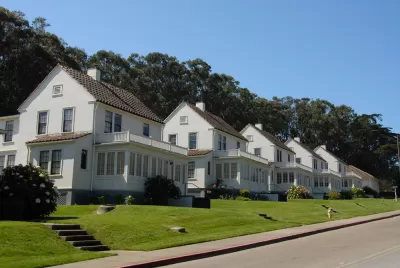
Roosevelt Roads Station closed in 2000s. Base closure in Puerto Rico has contributed to systemic economic problems.
Tools like input-output models can be particularly problematic, because they fail to account for capacity constraints or for the reorganization of economic activities. For example, a study of the recent tremendous expansion of Fort Lee, near Petersburg, Virginia, could not account for existing venues being unable to meet the anticipated surge in demand for lodging, food, and entertainment services. However, by explicitly acknowledging this failing, the analysts were able to bring attention to the need for additional economic development policies for these sectors.

Ideally, analysts and policymakers ought to understand how assumptions of continuity affect the veracity, accuracy, and reliability of the information generated from economic impact analyses in order to support making reasonable decisions. But these assumptions rarely are made explicit by analysts or in the software packages in common use, and even more infrequently are the implications assessed directly in analytical reports. Instead, the quantitative outputs produced by economic impact analyses often are conveyed with little or no sense of the uncertainty involved.
There is no magic solution. Economic impact analyses are enormously valuable in practice and there is no suitable replacement for the information they provide. Our best methods do now and will continue to require continuity assumptions. Nevertheless, there are pragmatic ways to improve both the results of economic impact analyses and the comprehension of elected officials and decision-makers. These generally rely on strategies to make models more transparent and to compare the result of conceptually different analysis. I offer a list of strategies for analysts and planners:
- Reduce False Precision
- Disaggregate Impacts by Category
- Triangulate through Multiple Methods
- Make Comparisons
- Build and Explain Different Scenarios
By focusing on conveying more nuanced interpretations of both the products and limitations of the methods, planners can lead in becoming better purveyors and consumers of economic impact analyses. These approaches are less cut-and-dry, but ultimately will provide a richer view of the complexities that decision makers should consider when planning for community economic resilience after a base reorganization or other economic shock.
For a link to the PDF of the Article: Drucker, Joshua. 2015. Economic impact analysis amid rapid change: Challenges, strategies, and examples from defense communities. Journal of Planning Education and Research.


Historically Redlined Neighborhoods Have Higher Rates of Pedestrian Deaths, Study Says
The consequences of historic redlining continue to have consequences in the present day United States. Add another example to the list.

Formerly Redlined Neighborhoods Continue to Suffer Disparate Air Pollution
How did ZIP codes become such powerful determinants of public health? New new evidence of the disparate air pollution of redlined neighborhoods partly answers that question.

Study Links Transportation Noise to High Rates of Dementia and Alzheimer's
A large nationwide cohort study in Denmark found "transportation noise from road traffic and railways to be associated with an increased risk of all-cause dementia and dementia subtypes, especially Alzheimer’s disease."

Planetizen Federal Action Tracker
A weekly monitor of how Trump’s orders and actions are impacting planners and planning in America.

California plans to bury El Niño’s downpour
If the state plays its cards right, it may be able to store a billion acre-feet of El Niño’s water in aquifers.

Chicago breaks ground on $3 billion megadevelopment
The new neighborhood, titled Foundry Park, will one day host 3,700 residences.

Satanic Place Names
From streams and lakes to valleys and canyons, I mapped more than 1,000 places named after the Devil.

California High-Speed Rail Authority CEO resigns after $600,000 scandal
Under Ian Choudri, the authority used taxpayer dollars to fund first class flights and trips to nightclubs.

Want to study the Missouri River? Soon, you may need unanimous approval from 10 states
Legislation would require 10 governors’ permission to study or build projects moving water outside the basin.

FREE Course: Walkable City 1: Why Walkability?
After describing his path towards focusing on walkability as the essence of good planning, Jeff Speck marches through his five principal reasons for making more walkable places.
Reinventing Malls: Planning Alchemy—Turning Gray Fields Into Gold
The course focuses on the opportunities and imperatives that shape reinvention of mall sites.

City of Rosemead
Rutgers University, Edward J. Bloustein School of Planning and Public Policy
One Hundred Miles
Hunter College, City University of New York (CUNY)
The Architects Foundation
University of Cincinnati Online
City of Cambridge
Montrose County
The Pocatello Development Authority

