The #LoveThatLot campaign is the Center for Community progress' way of celebrating the hard work of transforming vacant, blighted properties into neighborhood assets and amenities.


The Center for Community progress recently announced their second annual #LoveThatLot campaign. To share the love for revitalized spaces, the campaign calls on social media users to "send some Valentine’s Day love to the people who have transformed vacant lots into community gems," like pop-up parks, urban gardens, public art, rain gardens, rehabbed houses, or more.
The campaign even offers an e-valentine to share with the object of your affection to help raise the profile of the campaign as well as the work going on cities around the country to revitalize vacant properties.
Last year's inaugural #LoveThatLot campaign produced a lot of really great images and appreciation, all collected in a post on the Center for Community Progress' website. This year's campaign is already feeling the love on Twitter—with ten days still to go until Valentine's Day!
Read the full story: #LoveThatLot: Public Displays of Affection for revitalization projects!

Pennsylvania Law Removes Obstacles to Blight Reduction
“We don’t need every old coal miner’s house” to stay standing, says Sen. David Argall (R-Schuylkill).
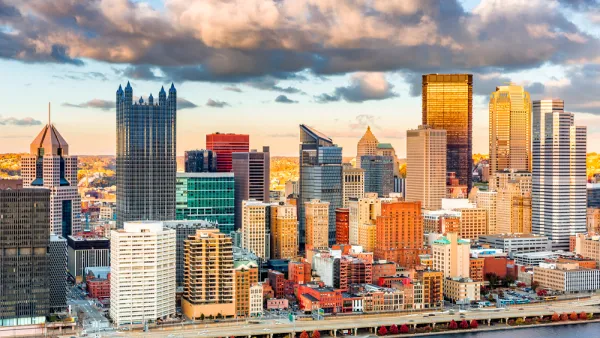
Pittsburgh Revitalization Plans Stuck on Blight
The Pittsburgh Post-Gazette recently published an investigation of the city's efforts to buy and rehabilitate vacant properties in the troubled neighborhood of Homewood.
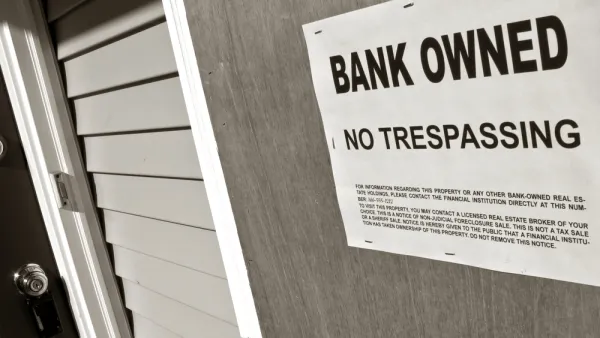
From Vacant Property to Affordable Housing Development
The city of St. Petersburg provides a model for transforming blight to a blessing.

Planetizen Federal Action Tracker
A weekly monitor of how Trump’s orders and actions are impacting planners and planning in America.

California plans to bury El Niño’s downpour
If the state plays its cards right, it may be able to store a billion acre-feet of El Niño’s water in aquifers.

Desperate measures: Advocates weigh draining Lake Powell to fill Colorado River
Draining the reservoir could reduce evaporation losses by a couple hundred thousand acre-feet.

Mamdani’s pied-à-terre tax survives legal challenge
A panel of judges found that the plaintiffs failed to demonstrate injury as a result of New York City's implementation of the tax.

Eastern Nebraska is running out of electricity
Data centers and electrification are straining eastern Nebraska’s grid, throttling economic development.

Seattle passes record-breaking transit services expansion
Proposition 1 will double the city’s transit tax to add 95,000 more bus trips and preserve 180,000 bus trips annually.

FREE Course: Walkable City 1: Why Walkability?
After describing his path towards focusing on walkability as the essence of good planning, Jeff Speck marches through his five principal reasons for making more walkable places.
Reinventing Malls: Planning Alchemy—Turning Gray Fields Into Gold
The course focuses on the opportunities and imperatives that shape reinvention of mall sites.

City of Rosemead
Rutgers University, Edward J. Bloustein School of Planning and Public Policy
One Hundred Miles
University of Michigan School for Environment and Sustainability (SEAS)
Hunter College, City University of New York (CUNY)
The Architects Foundation
City of Cambridge
Montrose County
The Pocatello Development Authority