Local officials accused of being "gullible" as they mull a proposed development deal that would redevelop an iconic downtown theater and knock down a derelict hotel in Midtown Anchorage, Alaska.


Anchorage Dispatch News Columnist Charles Wohlforth writes in an op-ed piece:
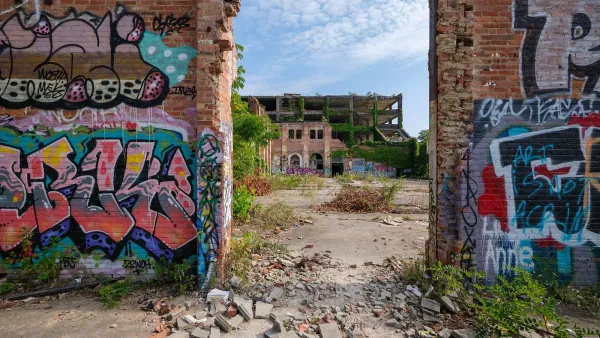
Anchorage’s worst eyesore, the derelict Northern Lights Hotel in Midtown, should have been gone last summer, according to what developer Joe Fang told the Anchorage Assembly in May, when he was asking for rich tax incentives for another project. The Assembly agreed, but the hotel is still there.
At Fang's request, the Assembly declared a chunk of his downtown property deteriorated, making it potentially eligible for a decade of tax exemptions that would be approved at a later date. Among the 'deteriorated' properties are the historic 4th Avenue Theatre and the nine-story Key Bank Building at Fifth Avenue and F Street, which is full of upscale lawyers’ offices and other professional tenants.
What all this points to is that development incentives need to, according to the International Economic Development Council (IEDC), reduce business cost, influence business decisions, advance social and environmental welfare, and connect with well-established best practices in economic development. It remains to be seen whether or not the deal under contemplation by Anchorage officials meets this economic development incentive litmus test.
Read the full story: Derelict Anchorage hotel plays pawn in developer's quest for rich tax breaks
Cleveland announces new Midline industrial investment district
The plan calls for at least 1.5 million square feet of new industrial and commercial space alongside housing.

Report: California's density bonus is a 'win-win' for developers and affordable housing
Almost half of new multifamily projects in 2024 relied on a density bonus.

Idaho Bill Would Offer More Property Tax Breaks to Affordable Housing Developers
The proposal would loosen regulations on developments with rent affordable to households making 60% AMI or less.

Planetizen Federal Action Tracker
A weekly monitor of how Trump’s orders and actions are impacting planners and planning in America.

California plans to bury El Niño’s downpour
If the state plays its cards right, it may be able to store a billion acre-feet of El Niño’s water in aquifers.

Desperate measures: Advocates weigh draining Lake Powell to fill Colorado River
Draining the reservoir could reduce evaporation losses by a couple hundred thousand acre-feet.

Los Angeles just elected an urban planner as its mayor
Transportation analysts are optimistic that Raman will be more aggressive in addressing transit issues than Bass.

Mamdani’s pied-à-terre tax survives legal challenge
A panel of judges found that the plaintiffs failed to demonstrate injury as a result of New York City's implementation of the tax.

Eastern Nebraska is running out of electricity
Data centers and electrification are straining eastern Nebraska’s grid, throttling economic development.

FREE Course: Walkable City 1: Why Walkability?
After describing his path towards focusing on walkability as the essence of good planning, Jeff Speck marches through his five principal reasons for making more walkable places.
Reinventing Malls: Planning Alchemy—Turning Gray Fields Into Gold
The course focuses on the opportunities and imperatives that shape reinvention of mall sites.

City of Rosemead
Rutgers University, Edward J. Bloustein School of Planning and Public Policy
One Hundred Miles
University of Michigan School for Environment and Sustainability (SEAS)
Hunter College, City University of New York (CUNY)
The Architects Foundation
City of Cambridge
Montrose County
The Pocatello Development Authority