When charrettes and public design workshops reach their most inclusive and transparent forms, do they become social innovation labs? Hazel Borys thinks so.


"When you think social innovation, you might think micro loans in developing countries, or hand-ups to help people in from the fringes here at home. Or a wide range of ways to build social capital or how charitable institutions backstop community with philanthropy. But for those of you who are working in the city planning trenches every day, using collaborative design workshops to engage the people, you’re really running a form of social innovation lab."
"You’re drawing from diverse perspectives, co-creating solutions, and taking on a systems approach to problem solving. You’re helping the community use design thinking married up to community development to tell their own stories and make their own places, inviting participants who will use the design to be part of its creation process. You’re asking someone to help set the table, instead of inviting them to dinner that’s already been set. Making for more durable solutions to social innovation. And for way more resilient places."

Image credit: City of Las Cruces, NM
Read the full story: Charrette: A Social Innovation Lab
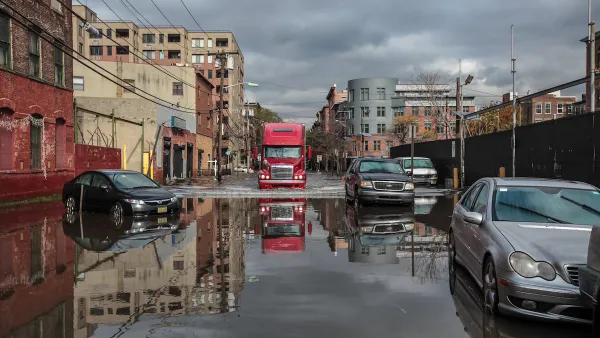
Social Connections and Resilience
Are we growing more connected, yet further and further apart? And how does this bode for the resilience of the communities we share? Scott Doyon finds promise as of yet unfulfilled.

Building Bridges to the Future: Preparing the Next Generation of Planners
Discover the importance of preparing the next generation of urban planners to build a sustainable and thriving future.
Federal Government Announces National Climate Resilience Framework
The document is designed to guide federal investment into community-driven solutions tailored to local conditions and needs.

Planetizen Federal Action Tracker
A weekly monitor of how Trump’s orders and actions are impacting planners and planning in America.

California plans to bury El Niño’s downpour
If the state plays its cards right, it may be able to store a billion acre-feet of El Niño’s water in aquifers.

Desperate measures: Advocates weigh draining Lake Powell to fill Colorado River
Draining the reservoir could reduce evaporation losses by a couple hundred thousand acre-feet.

US buildings threatened, destroyed by fires set to triple by 2060
Researchers found a high fire risk for socioeconomically vulnerable neighborhoods in the American West.

LA residents may be allowed to paint their own crosswalks
Councilwoman Katy Yaroslavsky put out a motion instructing the Los Angeles Department of Public Transportation to study the feasibility of allowing volunteers to paint crosswalks.

Dallas moves to overhaul its zoning code
The city's zoning reform will allow more multi-family and mixed-use developments.

FREE Course: Walkable City 1: Why Walkability?
After describing his path towards focusing on walkability as the essence of good planning, Jeff Speck marches through his five principal reasons for making more walkable places.
Reinventing Malls: Planning Alchemy—Turning Gray Fields Into Gold
The course focuses on the opportunities and imperatives that shape reinvention of mall sites.

City of Rosemead
Rutgers University, Edward J. Bloustein School of Planning and Public Policy
One Hundred Miles
Hunter College, City University of New York (CUNY)
The Architects Foundation
University of Cincinnati Online
City of Cambridge
Montrose County
The Pocatello Development Authority