This is cool: a Brazilian publisher created pocket books that double as transit tickets—and gave away 10,000 of them, each loaded with ten free transit rides.


Ticket Books "are exactly what they sound like," according to an article by Josh Jones: "books that work as subway tickets."
Brazilian publisher L&PM gave away 10,000 books for free at subway stations across São Paulo, each with ten free trips already loaded, on the occasion of World Book Day in April 2015.
"Riders could then recharge them and use the books again or pass them on to others to encourage more reading, an important public service given that Brazilians only read two books per year on average," according to Jones.
"With subway map-inspired covers designed by firm Agência Africa, the books include The Great Gatsby, The Art of War, Hamlet, Murder Alley by Agatha Christie, Hundred Love Sonnets by Pablo Neruda, and more (including comic collections from Charles Schulz and Garfield’s Jim Davis)." See more on the Ticket Books in the video below.
Ticket Books from Agência Africa on Vimeo.
Read the full story: Brazil Gives Out Books That Double as Subway Tickets, Promoting Literacy & Mass Transit at Once

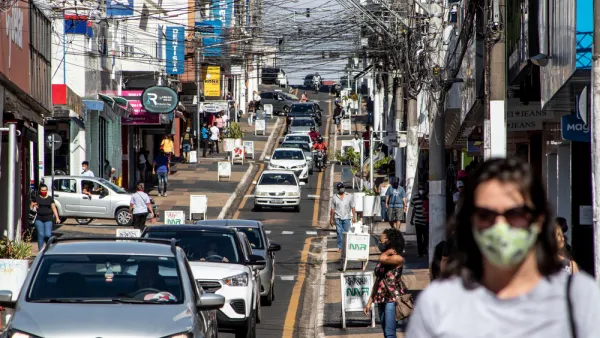
The World's Worst COVID Outbreak
Brazil has surpassed the U.S. and led the world in the daily average of COVID-19 deaths and coronavirus infections during the last week. Experts point to a coronavirus variant and the lack of a federal strategy, leaving states without assistance.
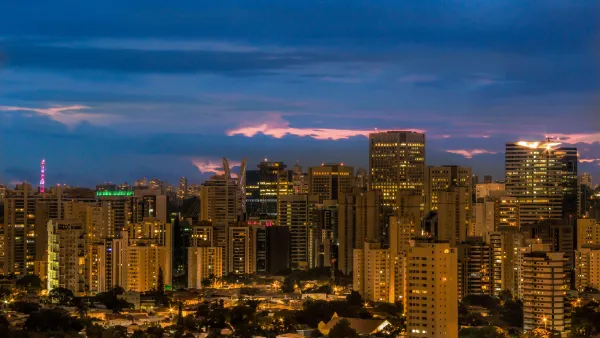
Can a New Master Plan Fix What Ails São Paulo, Brazil?
Facing an ever expanding shortage of affordable housing and growing inequality, São Paulo's new master plan hopes to change the face of the city.
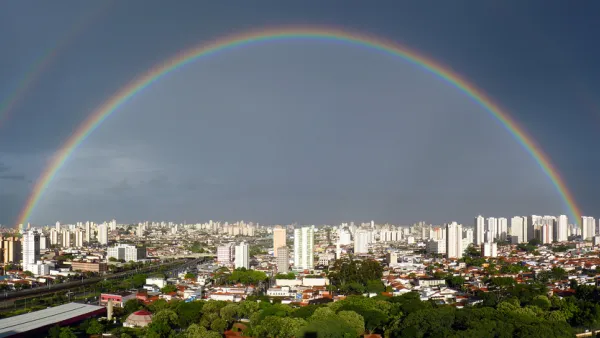
Age Of Water Scarcity Arrives In Brazil
Ecologists and planners have been warning that water may be the oil of the 21st century. With oil prices plunging, water is getting more dear in some places. Sao Paulo, Brazil's great megacity and economic heart, is already facing a dire shortage.

Planetizen Federal Action Tracker
A weekly monitor of how Trump’s orders and actions are impacting planners and planning in America.

California plans to bury El Niño’s downpour
If the state plays its cards right, it may be able to store a billion acre-feet of El Niño’s water in aquifers.

Chicago breaks ground on $3 billion megadevelopment
The new neighborhood, titled Foundry Park, will one day host 3,700 residences.

California High-Speed Rail Authority CEO resigns after $600,000 scandal
Under Ian Choudri, the authority used taxpayer dollars to fund first class flights and trips to nightclubs.

Want to study the Missouri River? Soon, you may need unanimous approval from 10 states
Legislation would require 10 governors’ permission to study or build projects moving water outside the basin.

Desperate measures: Advocates weigh draining Lake Powell to fill Colorado River
Draining the reservoir could reduce evaporation losses by a couple hundred thousand acre-feet.

FREE Course: Walkable City 1: Why Walkability?
After describing his path towards focusing on walkability as the essence of good planning, Jeff Speck marches through his five principal reasons for making more walkable places.
Reinventing Malls: Planning Alchemy—Turning Gray Fields Into Gold
The course focuses on the opportunities and imperatives that shape reinvention of mall sites.

City of Rosemead
Rutgers University, Edward J. Bloustein School of Planning and Public Policy
One Hundred Miles
Hunter College, City University of New York (CUNY)
The Architects Foundation
University of Cincinnati Online
City of Cambridge
Montrose County
The Pocatello Development Authority