An unfamiliar title for a familiar collection of concepts, psychogeography examines the good and bad effects of environments on the thoughts and feelings of people.



Ryan Holleywell interviews Colin Ellard, author of Places of the Heart: the Psychogeography of Everyday Life, about "the ways psychology, architecture, and urban design intersect."
The interview begins with the critical matter of defining the term psychogeography. Ellard explains: "The origins of the term were in a French philosophical movement some time ago. It was their intent to make people aware of the extent to which our surroundings, especially in cities, condition the things we do and think – and not necessarily in benevolent ways."
Thus psychogeography would certainly be a concern of planners and urban designers of various stripes. As an example of the possible meaning to be drawn from examining places though the lens of psychogeography, Ellard references a story he recently wrote describing how boring cityscapes increase depression, addiction, and disease-related stress.
Ellard's main message for planners and architects: "we have to make considerations for the psychological well being of urban residents." Those considerations, however, have taken a back seat until recently. Such considerations, argues Ellard, are just as important as transportation and other forms of infrastructure.
Read the full story: Why Cities Should Embrace “Psychogeography”


Children in 55 countries are redesigning their cities in Minecraft
A U.N.-backed program lets students and community members reimagine sites in their neighborhoods in the game — and translate them into real-life buildings.
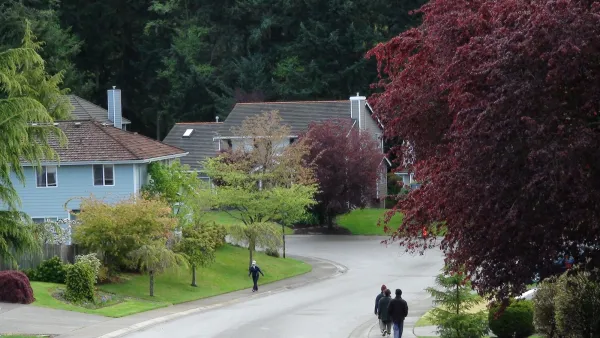
Move over, zoning. Housing’s unsung hero is better street design.
The physical layout of infrastructure is the quiet force that shapes housing supply.
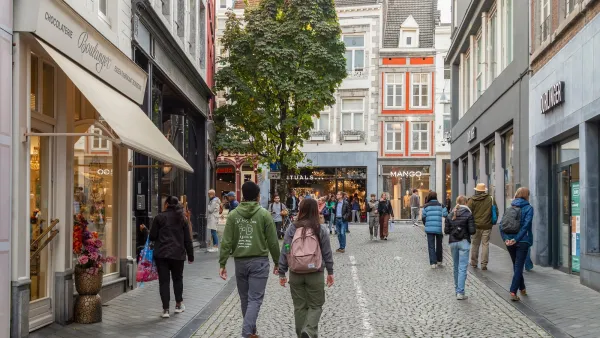
Planning for Love, Part 3: Enhancing human connection through walkability
In the third and final installment of this series, author Hannah Kosoff examines what her research findings say about modern dating and urban form.

Planetizen Federal Action Tracker
A weekly monitor of how Trump’s orders and actions are impacting planners and planning in America.

Amtrak, CN end decades-long dispute with eight-year agreement
The new operating agreement establishes an updated framework for the companies to work together, including processes to resolve disputes.

Judges permit Denver to divert 77,000 acre feet from the Colorado River for reservoir expansion
Overuse and climate change have caused the Colorado River’s water levels to plummet.

Boston has spent millions making the Green Line more accessible — and there’s no end in sight
While the city has invested millions into expanding and adding platforms to the Green Line to make it more accessible, new train cars set to arrive next year will be too tall for disabled passengers to board without raising the current platforms.

Idaho may see an 18% drop in federal surface transit funding — the largest estimated cut in the US
Transit systems in rural communities are much more reliant on federal funding to provide their services.

How ‘post-disaster gentrification’ alters neighborhoods after natural calamities
After hurricanes, fires or other calamities, the original residents of a community are often replaced by younger, wealthier residents.

FREE Course: Walkable City 1: Why Walkability?
After describing his path towards focusing on walkability as the essence of good planning, Jeff Speck marches through his five principal reasons for making more walkable places.
Reinventing Malls: Planning Alchemy—Turning Gray Fields Into Gold
The course focuses on the opportunities and imperatives that shape reinvention of mall sites.

City of Wisconsin Rapids
Harvard University Graduate School of Design
KFH Group Inc.
The Architects Foundation
University of Cincinnati Online
The Pocatello Development Authority
The Urban Renewal Agency of the City of Pocatello