For better or for worse, the tall, skinny towers that have helped to remake New York’s iconic skyline appear to be growing in popularity among developers.


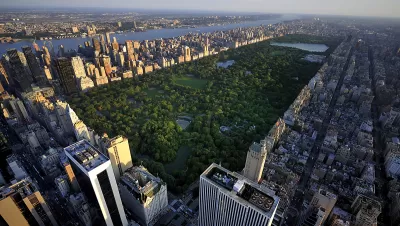
Matt A.V. Chaban of the New York Times reports on the skinny towers that have begun to sprout up around 56th and 57th streets, south of Central Park in what some have dubbed "Billionaires' Row." The new construction has seen the number of towers exceeding 1,000 feet jump from five to double that number in the past few years, with dozens more towers planned or under construction.
These slender cloud-busters would not have been built without the confluence of new technologies and wealthy buyers seeking a Manhattan address. Superstrong concrete and new wind testing made possible buildings like 432 Park, which, at 93 feet wide, is 15 times as tall as it is wide. In effect, developers now need only a lot the size of a brownstone or three to build a tower, rather than much of a block…
Opponents of the new towers believe developers are exploiting an out of date zoning code that allows for transfer of air rights. Chaban writes that opponents have complained that the new towers have led to overcrowding on subways and shadows falling on public spaces.
FULL STORY: As a New High Society Climbs in Manhattan, It’s a Race to the Top

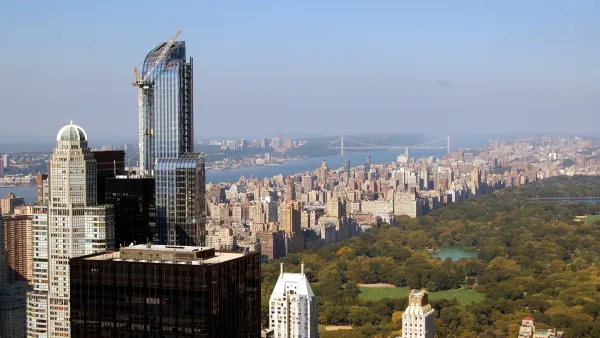
Billionaire Row's Newest Residents: Lawsuits and Foreclosures
The world's skinniest skyscraper, under construction on Manhattan "Billionaire's Row," is over budget with 60 stories left to build.
The Sun Also Hides Behind Skyscrapers
The Washington Post details the concern over the shadows cast by skyscrapers on the city street below. The latest high-profile case study of the ability of skyscrapers to block the sun: New York's Midtown.
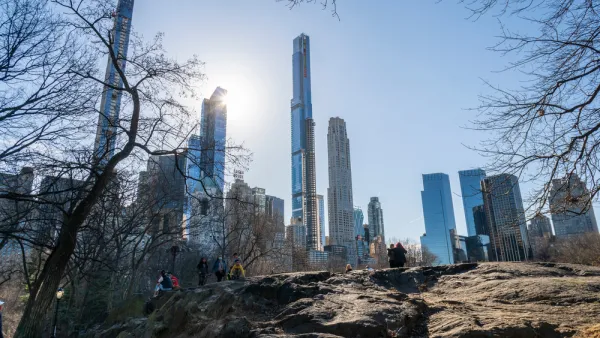
World's Tallest Residential Building Nears Completion in Manhattan
Central Park Tower, coming soon to New York City's "Billionaires' Row" was designed by Adrian Smith + Gordon Gill architecture.

Planetizen Federal Action Tracker
A weekly monitor of how Trump’s orders and actions are impacting planners and planning in America.

The state-sanctioned urbicide of Austin
People don’t kill cities. Freeways do.

US to reduce Colorado River water deliveries to Mexico
A new Colorado Treaty amendment reduces Mexico’s Colorado River water allocation by 250,000 acre feet.

5 New England states march closer to 800 megawatt wind energy project
Securing federal approval for the project may be complicated under the Trump administration, which has historically been hostile towards domestic wind power.

Baltimore to break ground on $50 million Transit Priority Project
The project will bring faster bus trips, safer streets and better bike connections to Baltimore.

Airbnb launches $250 million 'last-dollar financing' housing accelerator, makes first investment in Austin
The company will put $6.4 million towards affordable housing development in Texas’ capital.

FREE Course: Walkable City 1: Why Walkability?
After describing his path towards focusing on walkability as the essence of good planning, Jeff Speck marches through his five principal reasons for making more walkable places.
Reinventing Malls: Planning Alchemy—Turning Gray Fields Into Gold
The course focuses on the opportunities and imperatives that shape reinvention of mall sites.

Eagle County Government
Harvard University Graduate School of Design
Nashville Planning Department
The Architects Foundation
University of Cincinnati Online
The Pocatello Development Authority
The Urban Renewal Agency of the City of Pocatello
Journal of the American Planning Association