Responding to aggravated parkers in Los Angeles, a citizen's advisory committee has come up with a raft of recommendations to make parking fines fairer and to add technological innovation for finding a parking space and avoiding tickets.


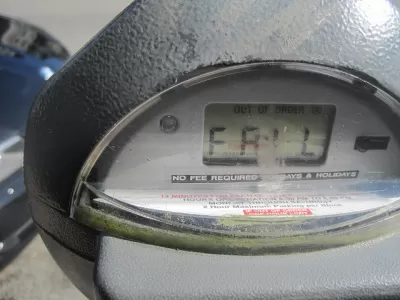
A citizens advisory committee put together by Los Angeles Mayor Eric Garcetti has come out with their list of recommendations to fix Los Angeles' somewhat antiquated parking system. Mechan McCarty of KPCC reports that the panel has attempted to balance the needs of deterrence with the quest for a kinder, gentler parking enforcement system. Among the recommendations include reducing fines and expanding the use of variable-rate parking meters that will change how much they charge based on demand. Another recommendation would seek to create alerts to a person’s cell phone when they’ve parked in a spot beyond their allotted time.
"One of the most ambitious parking proposals involves "coding" all of the parking areas in the city to transmit alerts to smartphones. The notices tell drivers when they have parked illegally or if they are nearing the end of their time limits."
Read the full story: LA city parking improvement ideas moving ahead
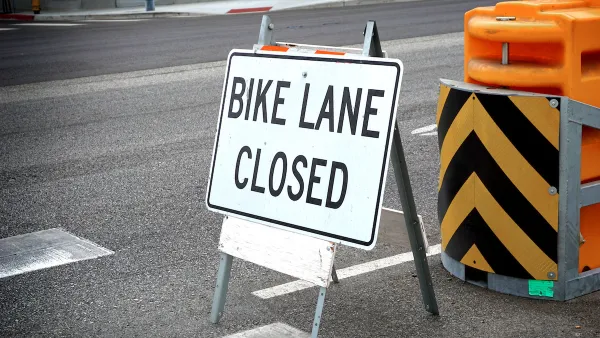
Los Angeles Is Quietly Losing Bike Lanes
While adding new bike lanes can be a long and contentious process, removing them in favor of parking requires no public process.
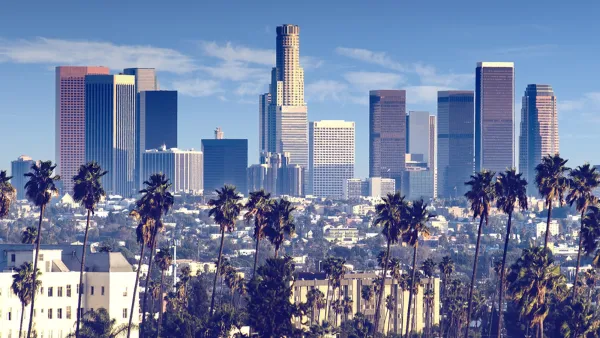
L.A. Reimagines Parking for New Uses
In famously car-centric Los Angeles, developers and city officials are changing the way they view parking space, opting instead to allocate the space to more effective uses.
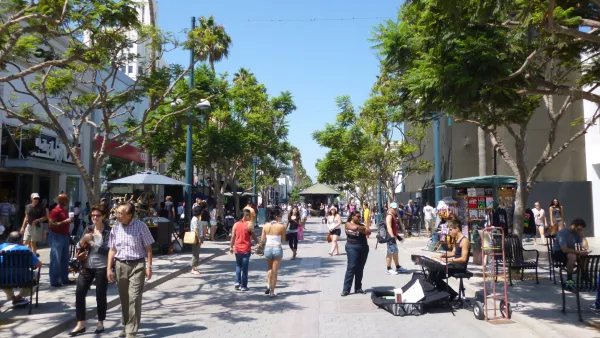
Businesses Oppose Conversion of Parking Structure Into Affordable Housing
Business owners in downtown Santa Monica have filed a lawsuit opposing the city's planned replacement of a parking structure with housing, despite city studies showing that the city's downtown parking supply far exceeds demand.

Planetizen Federal Action Tracker
A weekly monitor of how Trump’s orders and actions are impacting planners and planning in America.

Washington state to charge fee to drivers with fuel-efficient cars
Revenue from the fee will go towards supporting the state’s highways.

Trump to blast ‘hydrocarbon highway’ through ‘world’s longest art gallery’
Environmental and historic preservation groups are suing to stop the project.

Minnesota Gold Line extension now has launch date
Plans to extend the Gold Line have existed since 2025.

Data centers need power – lower income, rural residents pay the price
In 2025, data centers paid only 38% of the energy infrastructure costs linked to their growth, with households, especially rural and low-income residents, bearing the remaining burden.

MBTA Green Line project moved to next phrase of CIG program
The modernization effort will cost $4.08 billion.

FREE Course: Walkable City 1: Why Walkability?
After describing his path towards focusing on walkability as the essence of good planning, Jeff Speck marches through his five principal reasons for making more walkable places.
Reinventing Malls: Planning Alchemy—Turning Gray Fields Into Gold
The course focuses on the opportunities and imperatives that shape reinvention of mall sites.

City of Charlotte
City of Rosemead
Rutgers University, Edward J. Bloustein School of Planning and Public Policy
University of Michigan School for Environment and Sustainability (SEAS)
Hunter College, City University of New York (CUNY)
The Architects Foundation
University District Partnership