Congress could have had a landmark moment—but it stopped short of passing the Wildfire Disaster Funding Act. Meanwhile the wildfire season is wrapping up as the most expensive ever.


"The 2015 wildfire season is now the costliest on record," reports Doyle Rice. The U.S. Forest Service announced earlier this week that the cost of fighting fires had reached $1.71 billion. "The previous record of $1.67 billion, adjusted for inflation, was set in fiscal year 2002," adds Rice.
2015 also came close to setting a record for total area covered by fires. According to data from the National Interagency Fire Center, 9.8 million acres burned in 2015, compared to 9.87 million acres in 2006.
Rice also notes the failure of the Wildfire Disaster Funding Act in Congress. The "bipartisan effort that would have treated wildfires more like other natural disasters and ended the transfer of money from other programs to battle the blazes," but it didn't make it into the omnibus spending bill.
In a separate article, Jeff Mapes provides more background on the close-but-no-cigar effort to reform wildfire funding at the federal level. Mapes provides more details about the reforms included in the bill as well as details about why the legislation failed.
FULL STORY: 2015 now USA's costliest wildfire season on record


Forest Service Rescinds Tree Planting Grants
The $75 million program fell victim to the federal government’s purge of ‘DEI’-related projects.
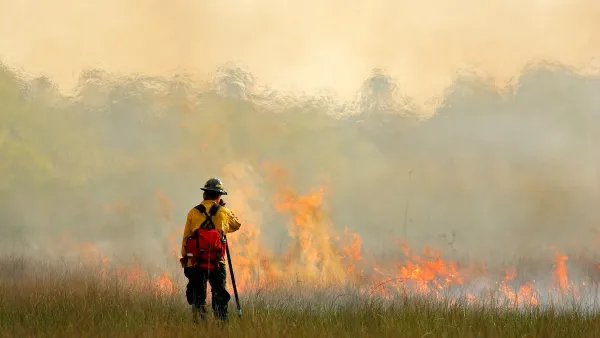
Federal Funding Cuts Spark Concern Among Wildland Firefighters
Federal firefighting forces, already underresourced, are being slashed even as wildfires become a year-round problem.
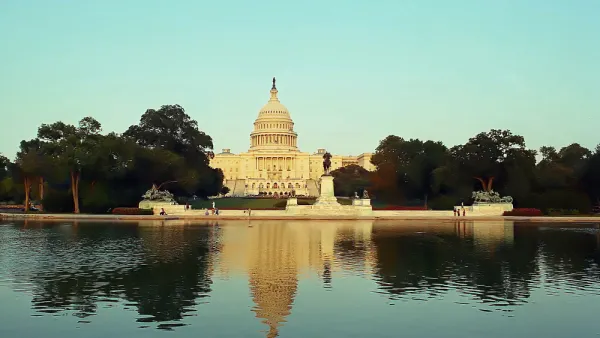
The Lesser-Known Programs in the Infrastructure Bill
While the focus has been on flashier components of the infrastructure bill, some smaller initiatives could have outsized impacts by shifting priorities and funding resilience efforts.

Planetizen Federal Action Tracker
A weekly monitor of how Trump’s orders and actions are impacting planners and planning in America.

The state-sanctioned urbicide of Austin
People don’t kill cities. Freeways do.

US to reduce Colorado River water deliveries to Mexico
A new Colorado Treaty amendment reduces Mexico’s Colorado River water allocation by 250,000 acre feet.

5 New England states march closer to 800 megawatt wind energy project
Securing federal approval for the project may be complicated under the Trump administration, which has historically been hostile towards domestic wind power.

Baltimore to break ground on $50 million Transit Priority Project
The project will bring faster bus trips, safer streets and better bike connections to Baltimore.

Airbnb launches $250 million 'last-dollar financing' housing accelerator, makes first investment in Austin
The company will put $6.4 million towards affordable housing development in Texas’ capital.

FREE Course: Walkable City 1: Why Walkability?
After describing his path towards focusing on walkability as the essence of good planning, Jeff Speck marches through his five principal reasons for making more walkable places.
Reinventing Malls: Planning Alchemy—Turning Gray Fields Into Gold
The course focuses on the opportunities and imperatives that shape reinvention of mall sites.

Eagle County Government
Harvard University Graduate School of Design
Nashville Planning Department
The Architects Foundation
University of Cincinnati Online
The Pocatello Development Authority
The Urban Renewal Agency of the City of Pocatello
Journal of the American Planning Association