There's still a long way to go to get to the finish line on the conversion of a rail corridor into a bike trail that could connect important parts of the city, but Cincinnati is currently pulling lots of purse strings to make it happen.


Chris Wetterich reports on the goings on with the proposed Wasson Way bike trail in Cincinnati, where local officials recently sent a request for funding from the state to help make the plan a reality.
Mayor John Cranley and City Manager Harry Black sent the letter, which sums up the ambition of the project:
"The trail utilizes an existing, unused rail corridor and, when completed, will connect eight Cincinnati neighborhoods and the communities of Norwood, Mariemont and Fairfax and 83,000 people living within 1 mile of the trail….It will provide alternative access to five major development sites, including sites at Xavier University and near Uptown, and will help make our community more attractive to families and to the talented skilled workforce that will propel the economy of the region."
So far the project has brought in a $500,000 grant from the Ohio Department of Natural Resources and a $12 million purchase agreement with Norfolk Southern Railroad Co. "to buy 4.1 miles of track needed for the project," according to Wetterich. The article includes more details about the funding requirements for the project, along with some maps and conceptual renderings of the potential addition to the city.
Read the full story: Cincinnati identifies a new source to fund Wasson Way

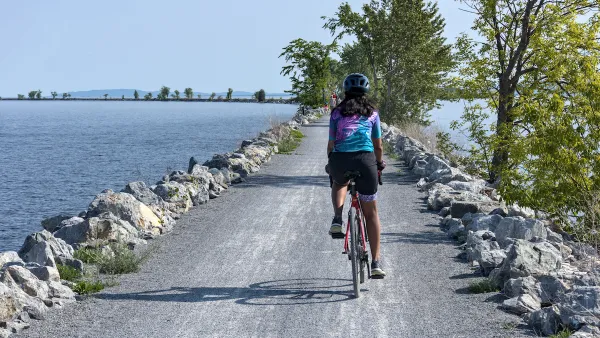
A National Bike Trail Network Is Slowly Growing
Around the United States, new bike lanes and trails are connecting communities via two (or three) wheels.
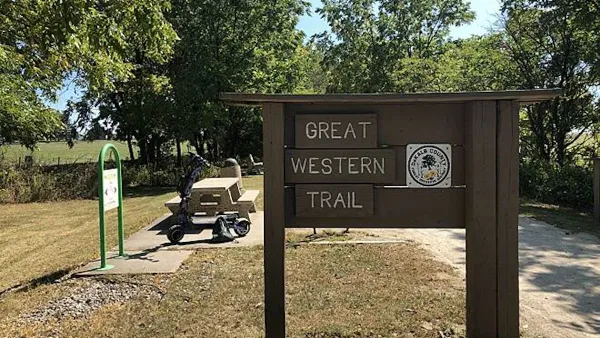
Advocates Champion the Great Western Trail
A Chicago walking and biking trail along a former railroad right-of-way has been a labor of love for local residents.
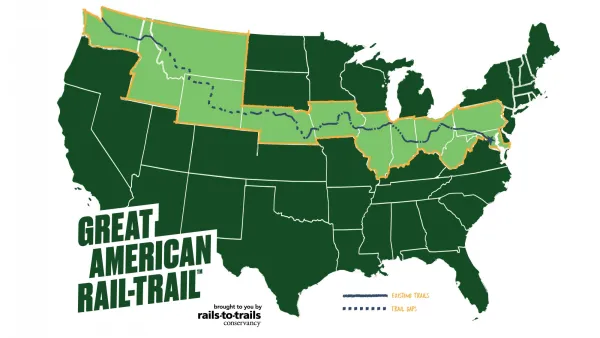
Revealed: A Plan to Build a Continuous Bike Trail Across the United States
Motorists have been able to drive across the country for more than a century. People on bikes will get their day soon, too.

Planetizen Federal Action Tracker
A weekly monitor of how Trump’s orders and actions are impacting planners and planning in America.

Amtrak, CN end decades-long dispute with eight-year agreement
The new operating agreement establishes an updated framework for the companies to work together, including processes to resolve disputes.

Judges permit Denver to divert 77,000 acre feet from the Colorado River for reservoir expansion
Overuse and climate change have caused the Colorado River’s water levels to plummet.

NYC DOT wants faster, more permanent street upgrades
The city is examining ways to build more concrete infrastructure without getting entangled in 'decades-long' projects.

'Something we’ve never seen before:' rising utility rates could strain city finances nationwide
Data centers, climate change and other factors have caused utility rates in the United States to increase by 38% since 2020.

Trump to overrule local leaders, lease millions of acres of America’s Pacific Island territories’ seafloors to mining companies
International law says that the Indigenous people of America’s territories have a right to prior and informed consent regarding projects that impact their countries.

FREE Course: Walkable City 1: Why Walkability?
After describing his path towards focusing on walkability as the essence of good planning, Jeff Speck marches through his five principal reasons for making more walkable places.
Reinventing Malls: Planning Alchemy—Turning Gray Fields Into Gold
The course focuses on the opportunities and imperatives that shape reinvention of mall sites.

Harvard University Graduate School of Design
KFH Group Inc.
Greater Baltimore Committee
The Architects Foundation
University of Cincinnati Online
The Pocatello Development Authority
The Urban Renewal Agency of the City of Pocatello