Research from the Global Commission on the Economy and Climate recommends an emissions reduction program that might pay off big in the long term. Inter-city exchange and transit planning are key strategies.


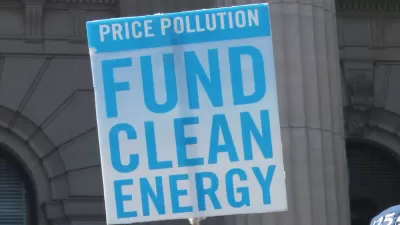
According to a report from New Climate Economy, "Investing in lower-emission public transport, using more renewable energy, and increasing efficiency in commercial buildings and waste management in cities across the globe could generate $17 trillion in savings in current dollars by 2050."
"[Author] Nick Godfrey said the report—the first global analysis of projected savings from carbon reductions in cities—is intended to influence decisions at the climate summit in Paris in December." Godfrey stresses the importance of meaningful inter-city cooperation and real efforts to embrace transit and bikes.
Policy and investment decisions in major cities may set the tone for society at large. From the article: "The leading place of cities in today's world led the report to note that 'the infrastructure investments made in cities over the new few decades will lock the world into a higher- or lower-carbon path.'"
The report also discusses the short-term drawbacks of cleaner, more compact cities. "The resulting artificial shortage of land for building forces housing prices up, makes housing unaffordable for some, and leaves everyone with less money for other things, throwing some into poverty and causing income inequality to rise."
Read the full story: Hidden Advantages of Lower-Carbon Emission Cities: $17 Trillion in Possible Savings
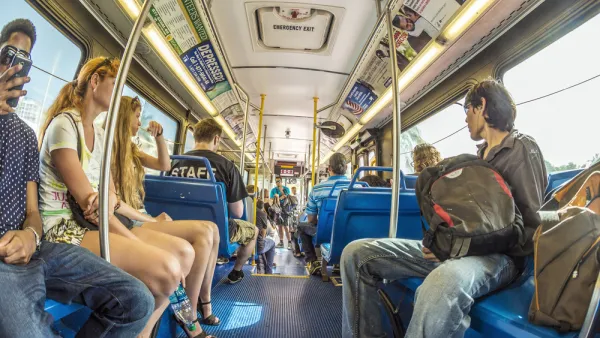
To Fight Climate Change, Support Public Transit
Electric cars may garner a lot of attention these days, but significantly reducing carbon emissions and urban congestion means investing in high-quality mass transit.
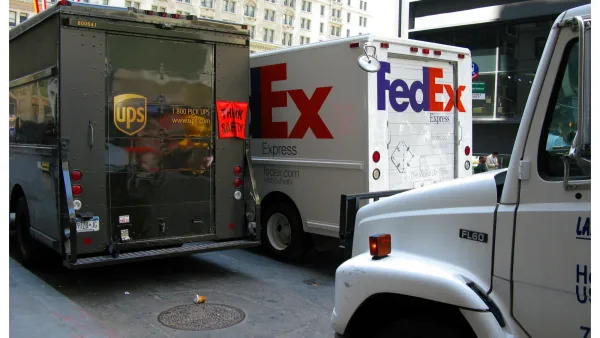
How Street Configuration Impacts Equity
With urban pollution and traffic violence disproportionately affecting communities of color, better management of public space and streets could improve equity in cities.
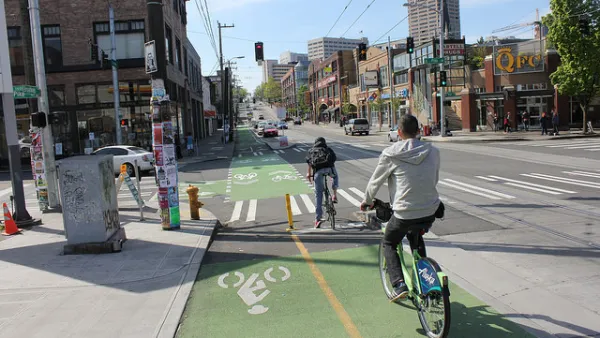
The Uncertain Future of Seattle's Bicycle Master Plan
By prioritizing a multi-modal approach and preserving existing vehicle space, the Seattle Department of Transportation risks abandoning the goals of its bicycle master plan.

Planetizen Federal Action Tracker
A weekly monitor of how Trump’s orders and actions are impacting planners and planning in America.

California plans to bury El Niño’s downpour
If the state plays its cards right, it may be able to store a billion acre-feet of El Niño’s water in aquifers.

Desperate measures: Advocates weigh draining Lake Powell to fill Colorado River
Draining the reservoir could reduce evaporation losses by a couple hundred thousand acre-feet.

Mamdani’s pied-à-terre tax survives legal challenge
A panel of judges found that the plaintiffs failed to demonstrate injury as a result of New York City's implementation of the tax.

Eastern Nebraska is running out of electricity
Data centers and electrification are straining eastern Nebraska’s grid, throttling economic development.

Seattle passes record-breaking transit services expansion
Proposition 1 will double the city’s transit tax to add 95,000 more bus trips and preserve 180,000 bus trips annually.

FREE Course: Walkable City 1: Why Walkability?
After describing his path towards focusing on walkability as the essence of good planning, Jeff Speck marches through his five principal reasons for making more walkable places.
Reinventing Malls: Planning Alchemy—Turning Gray Fields Into Gold
The course focuses on the opportunities and imperatives that shape reinvention of mall sites.

City of Rosemead
Rutgers University, Edward J. Bloustein School of Planning and Public Policy
One Hundred Miles
University of Michigan School for Environment and Sustainability (SEAS)
Hunter College, City University of New York (CUNY)
The Architects Foundation
City of Cambridge
Montrose County
The Pocatello Development Authority