Access to campus is a primary obstacle for low-income, minority students to overcome in attending college. The College of Staten Island has found a simple solution that applies in less urban communities as well.


"The national conversation about helping more low-income students of color…go to college has produced a complex set of potential solutions. But on Staten Island, a simple blue shuttle bus seems to have opened doors that administrators had been struggling to unlock for years," according to an article by Meredith Kolodner.
The proof of the shuttle bus's success is found in the College of Staten Island's enrollment numbers: "Overall enrollment at the college, which is part of the City University of New York, has risen by only 15 percent since the shuttle began operating — but the numbers of black and Latino students have shot up by 49 and 43 percent respectively."
Kolodner is careful not to credit all of those numbers just to the shuttle, but the new access available to students in all of the city boroughs has been a key contributor, according to college leadership.
The model has inspired another colleges, including Queens College in New York and Asnuntuck Community College in Hartford, to launch similar transportation systems.
FULL STORY: How a College of Staten Island shuttle bus increased diversity

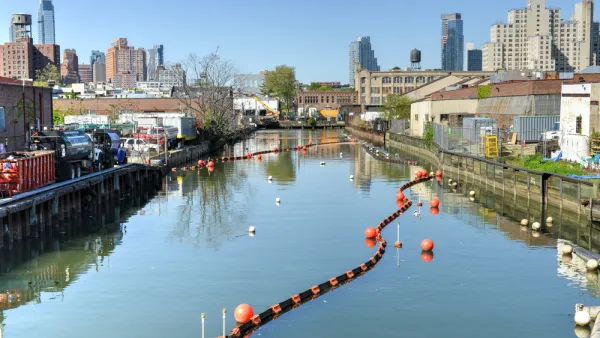
Gowanus Racial Impact Study Predicts Increased Diversity After Rezoning
The report outlines the potential impacts on the neighborhood's racial diversity and the availability of below-market housing units.
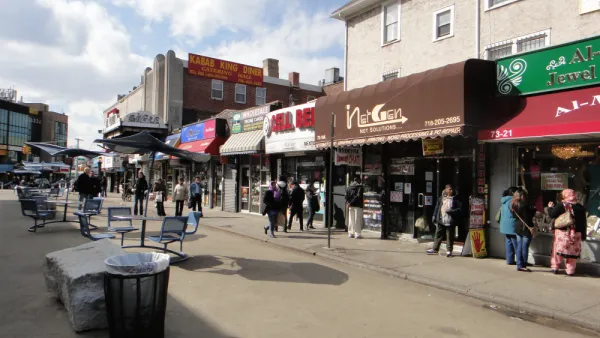
A Tour of New York City's Most Culturally Diverse Neighborhood
New York is a city of superlatives. A new series of walking tours around the city, led by the New York Times architecture critic, draws out the many examples of the city's exceptionalism.
Design Collective Using Black-Centered Approaches to Transform Cities
BlackSpace seeks to empower Black practitioners and change the way planning and design happens in and affects Black communities.

Planetizen Federal Action Tracker
A weekly monitor of how Trump’s orders and actions are impacting planners and planning in America.

The state-sanctioned urbicide of Austin
People don’t kill cities. Freeways do.

US to reduce Colorado River water deliveries to Mexico
A new Colorado Treaty amendment reduces Mexico’s Colorado River water allocation by 250,000 acre feet.

5 New England states march closer to 800 megawatt wind energy project
Securing federal approval for the project may be complicated under the Trump administration, which has historically been hostile towards domestic wind power.

Baltimore to break ground on $50 million Transit Priority Project
The project will bring faster bus trips, safer streets and better bike connections to Baltimore.

Airbnb launches $250 million 'last-dollar financing' housing accelerator, makes first investment in Austin
The company will put $6.4 million towards affordable housing development in Texas’ capital.

FREE Course: Walkable City 1: Why Walkability?
After describing his path towards focusing on walkability as the essence of good planning, Jeff Speck marches through his five principal reasons for making more walkable places.
Reinventing Malls: Planning Alchemy—Turning Gray Fields Into Gold
The course focuses on the opportunities and imperatives that shape reinvention of mall sites.

Eagle County Government
Harvard University Graduate School of Design
Nashville Planning Department
The Architects Foundation
University of Cincinnati Online
The Pocatello Development Authority
The Urban Renewal Agency of the City of Pocatello
Journal of the American Planning Association