The report outlines the potential impacts on the neighborhood's racial diversity and the availability of below-market housing units.



A "first-of-its-kind study" on the potential racial impact of a proposed rezoning plan found that Gowanus could become more diverse if the rezoning is implemented, reports Rachel Holliday Smith. "The study also offers the first glimpse at the potential value of a Council bill passed just weeks ago requiring 'racial equity reports on housing and opportunity' for rezonings in the future."
"The 'Racial Equity Report,' produced by Columbia urban planning professor Lance Freeman, concluded that the rezoning would likely cause Gowanus, currently one of the whitest neighborhoods in the five boroughs, to 'much more closely match the diversity of New York City rather than the [current] population of the local area.'" According to the report, "under the zoning proposal, the neighborhood could gain as many as 2,950 housing units rented at below-market-rate prices through the city’s affordable housing lottery, out of a total 8,495 newly constructed apartments." The zoning change "follows years of protests over rezonings that looked very different from the one in majority-white and wealthy Gowanus — an outlier in the recent history of neighborhood land use proposals."
Although "[t]he Gowanus report has come late in the rezoning process, which has been in the works for years and has already begun the formal Uniform Land Use Review Procedure, or ULURP, necessary to get a final green light," it "calls for more efforts to preserve and maintain Gowanus’ public housing complexes, lowering income levels on future affordable housing and investing more in workforce development services to make up for industrial and auto-related jobs the rezoning will likely displace."
FULL STORY: Gowanus could become more diverse after rezoning, racial impact study finds


Rezoning a Wealthy Neighborhood in the Name of Equity
An opinion piece makes the case that a rezoning proposal for the Brooklyn neighborhood of Gowanus has a higher potential for new affordable housing and lower risk of displacement compared to other rezoning plans in the city.
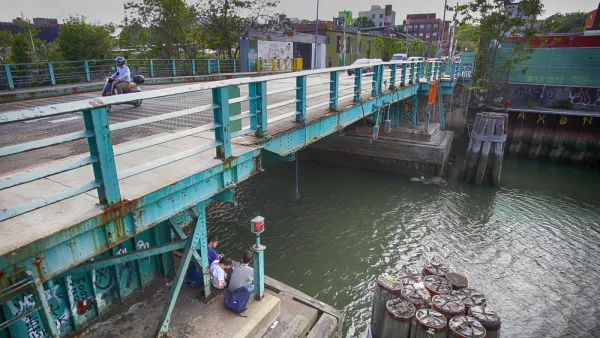
Neighborhoods Push for Benefits in New York Zoning Plan
The Brooklyn neighborhood of Gowanus was recently added to Mayor de Blasio’s sweeping zoning reform plan. But Gowanus also has plans of its own.
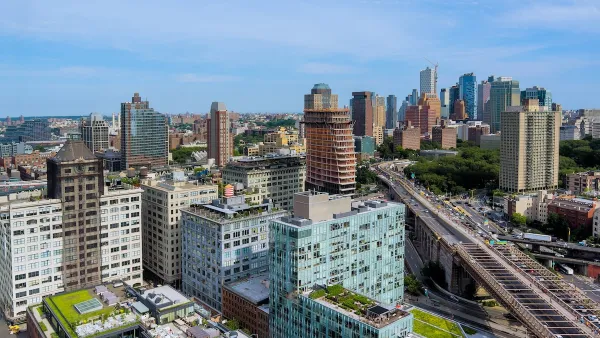
Brooklyn Built 3,700 Homes in 6 Months — and It’s Nowhere Near Done
Since its rezoning in 2004, downtown Brooklyn has added close to 27,000 new housing units.

Planetizen Federal Action Tracker
A weekly monitor of how Trump’s orders and actions are impacting planners and planning in America.

The state-sanctioned urbicide of Austin
People don’t kill cities. Freeways do.

US to reduce Colorado River water deliveries to Mexico
A new Colorado Treaty amendment reduces Mexico’s Colorado River water allocation by 250,000 acre feet.

5 New England states march closer to 800 megawatt wind energy project
Securing federal approval for the project may be complicated under the Trump administration, which has historically been hostile towards domestic wind power.

Baltimore to break ground on $50 million Transit Priority Project
The project will bring faster bus trips, safer streets and better bike connections to Baltimore.

Airbnb launches $250 million 'last-dollar financing' housing accelerator, makes first investment in Austin
The company will put $6.4 million towards affordable housing development in Texas’ capital.

FREE Course: Walkable City 1: Why Walkability?
After describing his path towards focusing on walkability as the essence of good planning, Jeff Speck marches through his five principal reasons for making more walkable places.
Reinventing Malls: Planning Alchemy—Turning Gray Fields Into Gold
The course focuses on the opportunities and imperatives that shape reinvention of mall sites.

Eagle County Government
Harvard University Graduate School of Design
Nashville Planning Department
The Architects Foundation
University of Cincinnati Online
The Pocatello Development Authority
The Urban Renewal Agency of the City of Pocatello
Journal of the American Planning Association