Many communities that want more transit oriented development are still struggling to build the political will and the financing mechanisms necessary to deliver. Here are four ideas about how to make TOD happen.


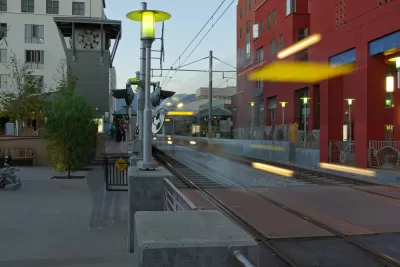
A post by Alex Rogala provides for takeaways from the recent Transit Oriented Development and Urban Real Estate Conference, organized by the TOD Institute and held in Washington, D.C.
The event's proceedings assumed the many benefits of TOD, while exploring "regional examples of successful TOD" and methods for "marketing 'the TOD lifestyle' to federal transport policy." According to Rogala, four main themes emerged from the event:
- Put "the T" in TOD
- Walkability Makes All the Difference
- Work with What You Have
- Get Creative with Financing
The article goes into more detail on each of these points, also providing examples and case studies to back up the arguments inherent in each.
Read the full story: From BIDs to Bikes: 4 Takeaways from the TOD and Urban Real Estate Conference

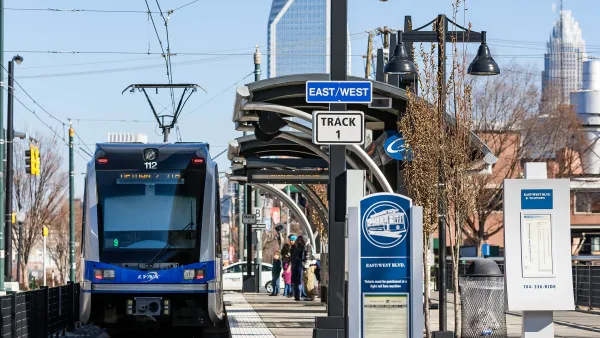
The triumph and tragedy of light rail in Charlotte
Like the iPhone, Charlotte's Blue Line represents a missed opportunity for the public to recoup the value it created.
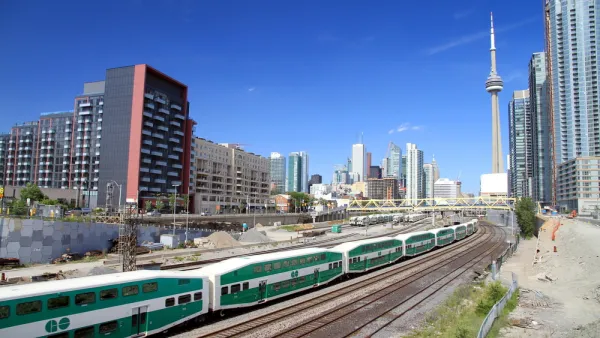
In Canada, Suburban Transit-Oriented Development on the Rise
Transit expansions are providing incentives to companies to locate outside of city centers, upending traditional housing, work, and commute patterns.

Plans for TOD Housing at Berkeley BART Station
The city is behind plans to turn parking lots around the North Berkeley BART station into much-needed housing.

Planetizen Federal Action Tracker
A weekly monitor of how Trump’s orders and actions are impacting planners and planning in America.

Amtrak, CN end decades-long dispute with eight-year agreement
The new operating agreement establishes an updated framework for the companies to work together, including processes to resolve disputes.

Judges permit Denver to divert 77,000 acre feet from the Colorado River for reservoir expansion
Overuse and climate change have caused the Colorado River’s water levels to plummet.

Boston has spent millions making the Green Line more accessible — and there’s no end in sight
While the city has invested millions into expanding and adding platforms to the Green Line to make it more accessible, new train cars set to arrive next year will be too tall for disabled passengers to board without raising the current platforms.

Idaho may see an 18% drop in federal surface transit funding — the largest estimated cut in the US
Transit systems in rural communities are much more reliant on federal funding to provide their services.

How ‘post-disaster gentrification’ alters neighborhoods after natural calamities
After hurricanes, fires or other calamities, the original residents of a community are often replaced by younger, wealthier residents.

FREE Course: Walkable City 1: Why Walkability?
After describing his path towards focusing on walkability as the essence of good planning, Jeff Speck marches through his five principal reasons for making more walkable places.
Reinventing Malls: Planning Alchemy—Turning Gray Fields Into Gold
The course focuses on the opportunities and imperatives that shape reinvention of mall sites.

City of Wisconsin Rapids
Harvard University Graduate School of Design
KFH Group Inc.
The Architects Foundation
University of Cincinnati Online
The Pocatello Development Authority
The Urban Renewal Agency of the City of Pocatello