Describing the Federal Reserve Bank of Philadelphia's recent study on gentrification in that city.




This month, the Federal Reserve Bank of Philadelphia came out with a study on "Gentrification and Residential Mobility in Philadelphia." This paper included some findings about displacement (or the lack thereof) in gentrifying neighborhoods.
The study described 56 Philadelphia census tracts as "gentrifying" based on a variety of criteria. Some of the questions the study sought to answer were:
- Are poorer residents of these tracts more likely to leave these neighborhoods than other city neighborhoods? Persons with the lowest credit scores (the study's surrogate for poverty) were about equally likely to leave gentrifying and non-gentrifying tracts. So if moving equals gentrification-related displacement, it does not seem especially frequent in gentrifying areas. Similarly, longtime residents (those living in the tract for over five years) were actually less likely to leave gentrifying tracts than other city neighborhoods.
- Were low-credit-score movers from gentrifying tracts forced into suburbia? A map of movers showed that high-credit-score movers were scattered throughout the region, while almost all low-credit score movers stayed within the city of Philadelphia. So it appears that despite media coverage of suburban poverty, few poor people moved from gentrifying areas to suburbs. (Of course, this pattern may be less true in high-cost central cities like New York and Washington.)
- Did low-scoring movers from gentrifying tracts shift to areas poorer than those gentrifying tracts? The study's answer to that question: No. The average low-score mover moved from a census tract with a median household income of $33,000 to one with a median income of $44,000. When intercity movers are excluded, this gap is narrower; even so, the movers wound up in areas with about a 10 percent higher median income than that of their former home (from $32,000 to $35,600). On the other hand, the "receiving" neighborhoods had lower home values than the gentrifying tracts, and fairly similar crime rates, and movers from some neighborhoods were less likely to move to richer areas. (Postscript: I also should have noted that intracity low-credit-score movers from non-gentrifying tracts improved their neighborhood status to a greater extent than those from gentrifying tracts; the average mover in this category left an area with a median income of just over $26,000 and moved to an area with a median income of almost $32,000- a 20 percent increase but still a lower median income, I note, than the movers from gentrifying tracts. This point seems to have created some confusion among readers: because movers from gentrifying tracts improved neighborhood quality to a lesser degree than movers from nongentrifying tracts, readers may have believed that movers from gentrifying tracts were objectively worse off than they had been had they not moved.)
In sum, it appears that at least in Philadelphia, many gentrification-related stereotypes are not consistently true. Low-credit score residents of gentrifying tracts were not especially mobile, nor did they always move to poorer areas when they did move.
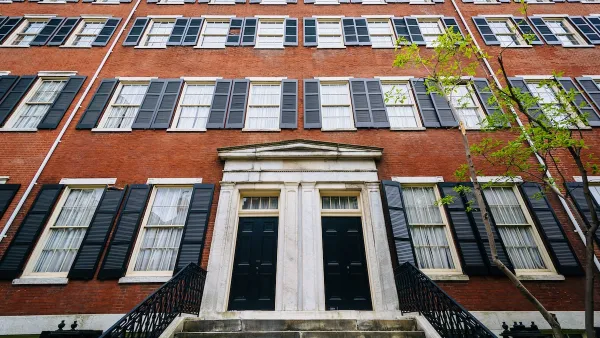
Philly Residents Push Back on New Historic Preservation District
Some residents of Philadelphia’s newly designated Washington Square West Historic District say the community was left out of the decision-making process that could impact housing costs and building requirements.
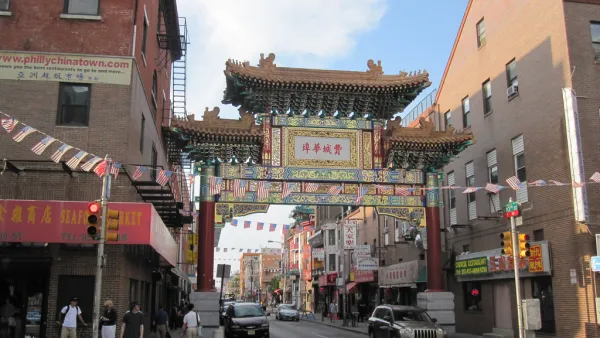
Equitable Development Plan Aims To Protect Philly's Chinatown
As the historic neighborhood experiences increased redevelopment around the new Rail Park, community activists are working to ensure older residents and businesses aren't displaced in the process.
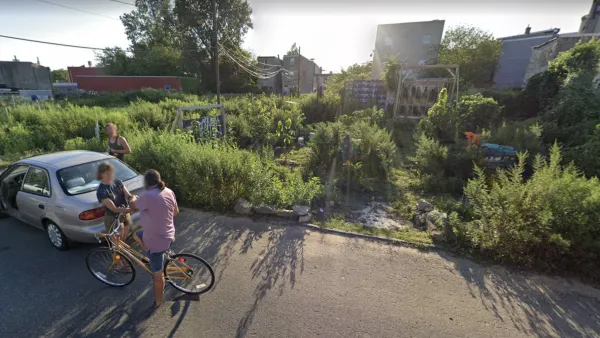
Community Opposition and a Rezoning Controversy in Philadelphia
The local councilmember is seeking a rezoning from commercial to residential in the Kensington neighborhood of Philadelphia, but local community members say the development will be priced out of their range.

Planetizen Federal Action Tracker
A weekly monitor of how Trump’s orders and actions are impacting planners and planning in America.

Eastern Nebraska is running out of electricity
Data centers and electrification are straining eastern Nebraska’s grid, throttling economic development.

Washington state to charge fee to drivers with fuel-efficient cars
Revenue from the fee will go towards supporting the state’s highways.

Instead of building new housing, LA developers are turning mansions into mega-mansions
In the richest areas, the number of houses valued at $30 million with demolition permits has skyrocketed since 2018.

Illinois considers spending $1 billion in taxpayer money on data center
A quantum computing campus and data center are currently under construction in Chicago.

As development costs rise, Boston moves to lessen affordable housing requirements
The Boston Zoning Commission and the City Council still need to approve Boston Mayor Michelle Wu’s proposed changes

FREE Course: Walkable City 1: Why Walkability?
After describing his path towards focusing on walkability as the essence of good planning, Jeff Speck marches through his five principal reasons for making more walkable places.
Reinventing Malls: Planning Alchemy—Turning Gray Fields Into Gold
The course focuses on the opportunities and imperatives that shape reinvention of mall sites.

City of Charlotte
City of Rosemead
Rutgers University, Edward J. Bloustein School of Planning and Public Policy
University of Michigan School for Environment and Sustainability (SEAS)
Hunter College, City University of New York (CUNY)
The Architects Foundation
City of Cambridge
The Pocatello Development Authority
The Urban Renewal Agency of the City of Pocatello


