A hearing on pedestrian infrastructure in Dallas—which is proving exceptionally deadly this year—reveals the sharp political divide on how to make streets safe for walking.


"So far in 2015, 32 pedestrians have been killed while trying to cross Dallas streets — the same number killed during all of 2014, according to a briefing presented to the Dallas City Council’s Public Safety Committee," reports Robert Wilonsky.
The rub: some have a difference of opinion of why so many pedestrians have died. "That very same briefing, prepared and presented by Dallas police and the Department of Street Services, maintains that 24 of this year’s fatalities were caused when a pedestrian failed to yield to a vehicle. And, further down: 'A majority of pedestrian fatalities in the City are due to pedestrian error.'"
On the other side of the argument is Council member Philip Kingston, who says "pedestrians aren’t to blame when they get run over. It’s 'the infrastructure that places the pedestrian in harm’s way' that’s to blame. 'It’s not people being stupid,' he said. Beat. 'Occasionally, sure.' But not always. Not most of the time."
Read the full story: As fatalities rise, says Philip Kingston, Dallas must stop ‘building streets that hurt pedestrians’
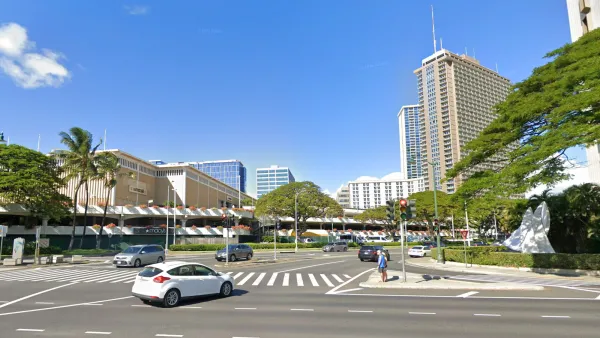
Hawaii DOT takes action after reporters call attention to dangerous crosswalk
The state made changes to a treacherous intersection after reporting revealed that traffic light timing was posting a threat to pedestrians.
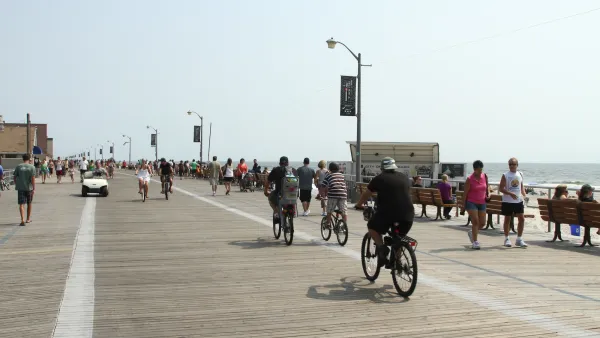
Long Beach, New York pledges $600K for pedestrian safety
The city will use $500,000 in community block development grant funding to improve pedestrian infrastructure.
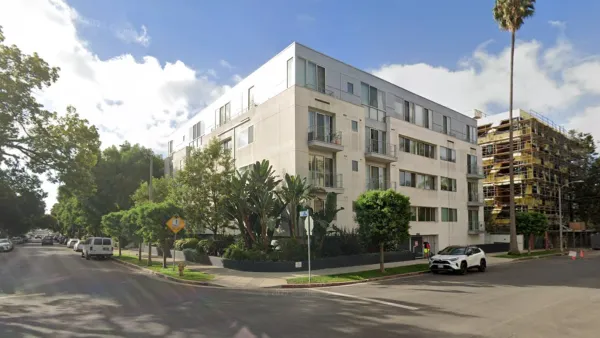
LA Cites Guerilla Crosswalk Painter With Vandalism
The LA Police Department stopped a group of volunteers who was painting missing crosswalks in a Westwood intersection.

Planetizen Federal Action Tracker
A weekly monitor of how Trump’s orders and actions are impacting planners and planning in America.

California plans to bury El Niño’s downpour
If the state plays its cards right, it may be able to store a billion acre-feet of El Niño’s water in aquifers.

Desperate measures: Advocates weigh draining Lake Powell to fill Colorado River
Draining the reservoir could reduce evaporation losses by a couple hundred thousand acre-feet.

Housing is the top priority of Seattle’s sole new councilmember
Jenks campaigned on building 1,000 new units of affordable housing.

New tax cuts may slash $1.5 billion in funding for Miami transit, public parks
Amendment 3 will save Miami-Dade homeowners $2,700 in 2028.

Arizona, Wisconsin, Pennsylvania hope to finally advance climate goals post-midterms
The three states have spent years under Republican or divided control.

FREE Course: Walkable City 1: Why Walkability?
After describing his path towards focusing on walkability as the essence of good planning, Jeff Speck marches through his five principal reasons for making more walkable places.
Reinventing Malls: Planning Alchemy—Turning Gray Fields Into Gold
The course focuses on the opportunities and imperatives that shape reinvention of mall sites.

City of Rosemead
Rutgers University, Edward J. Bloustein School of Planning and Public Policy
One Hundred Miles
University of Michigan School for Environment and Sustainability (SEAS)
Hunter College, City University of New York (CUNY)
The Architects Foundation
City of Cambridge
Montrose County
The Pocatello Development Authority