As the nation abandons old-school West Virginia coal, a scarred and cratered landscape remains. Can residents build a new economy and overcome the legacy of an often-brutal industry?


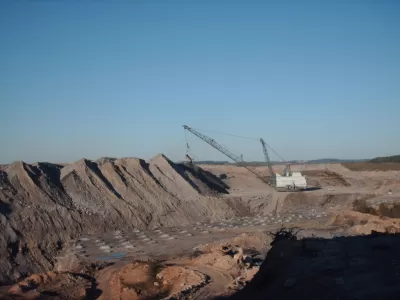
In a piece for Grist, "Even though the industry in West Virginia is in the grips of an unprecedented collapse that threatens to dethrone King Coal once and for all, this 14-year-old and all the other children growing up in the shadow of these 'blank spaces' will never see the decapitated peaks return to thickly forested mountaintops."
While the Appalachian mines are shutting down, fossil fuels extraction is still big business. "The price of coal has been plummeting as utility companies shift to significantly cheaper shale gas, extracted through the drilling process known as hydraulic fracturing, or fracking, to produce power."
But in West Virginia the damage has been done, both to the environment and to the region's economy. "The coalfields are filled with now-abandoned company towns, where the industry once employed hundreds of thousands of men to work in underground mines."
The scars on Appalachia's mountains are probably permanent. But with the coal industry gone, perhaps residents can build a new lifestyle. "These days, as the coal industry crumbles, West Virginians are rallying in support of what's being called 'transition work' — the building, that is, of a new economy based on agriculture, local arts, wineries, and the like."
Read the full story: In Appalachia, the coal industry is in collapse, but the mountains aren’t coming back


Planetizen Federal Action Tracker
A weekly monitor of how Trump’s orders and actions are impacting planners and planning in America.

‘Going backwards:’ Baltimore mayor, students rally against state's transit funding plan
Maryland's proposed six-year plan provides no funding for Baltimore’s BMORE bus program and reduces its road maintenance funding.

Detroit to transform waterfront with $2.2 billion investment
Developers will convert about 18 acres of unused parking lot space into civic spaces.

HUD modernizes 50-year-old manufactured housing framework
The Next Generation Manufactured Housing Action Plan establishes new energy-efficiency standards for manufactured homes, and new guidelines for anchoring them.

New CA housing laws tear down development red tape
Recently-signed legislation makes building starter homes and ADUs cheaper and faster in California.

Metrolink finishes first expansion in 20 years
The transit agency is now one of very few in the United States to connect two major airports.

FREE Course: Walkable City 1: Why Walkability?
After describing his path towards focusing on walkability as the essence of good planning, Jeff Speck marches through his five principal reasons for making more walkable places.
Reinventing Malls: Planning Alchemy—Turning Gray Fields Into Gold
The course focuses on the opportunities and imperatives that shape reinvention of mall sites.

One Hundred Miles
County of Mendocino
planning NEXT
The Architects Foundation
University of Cincinnati Online
Montrose County
Northern Illinois Transit Authority (NITA)
The Pocatello Development Authority